
f you constantly feel like you are running out of content ideas, the problem may not be creativity. The problem may be inefficiency. Many bloggers write a great article, publish it once, and then move on to something new. Meanwhile, that blog post still has value that can be reused multiple times.
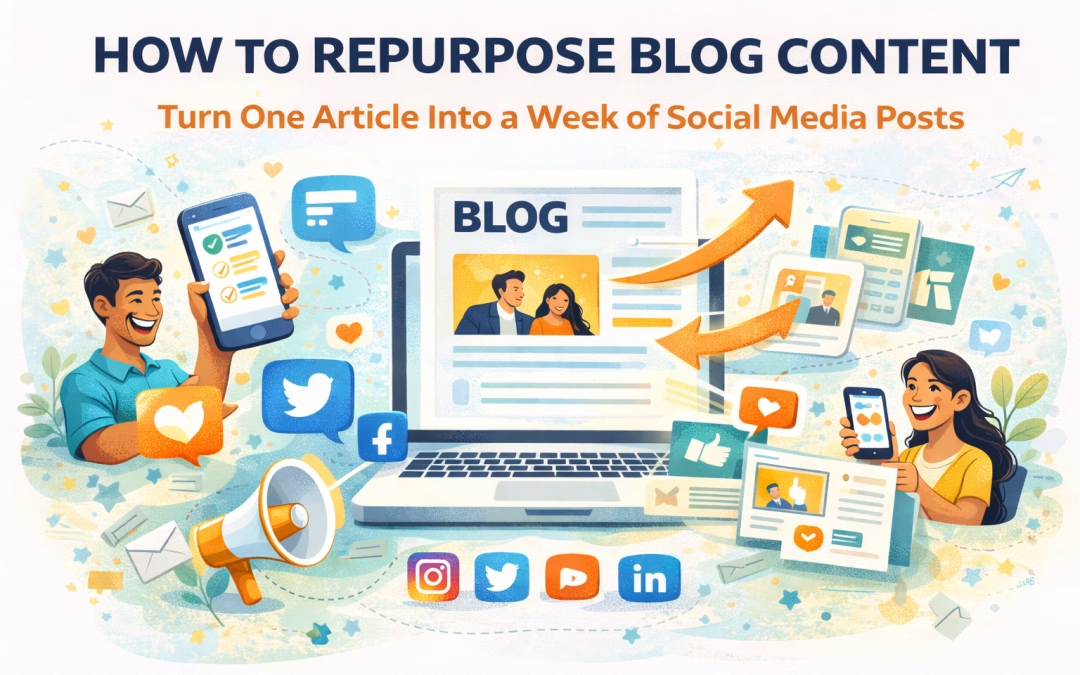
Learning how to repurpose blog content allows you to turn one article into a full week of social media posts without starting from scratch. Instead of creating new content every day, you build a content system that stretches your effort further.
In this guide, you will learn a simple content repurposing strategy that helps you reuse blog content efficiently, increase visibility, and maintain consistency across platforms.
Why Repurposing Blog Content Matters

Before diving into the framework, it helps to understand why repurposing works so well. When you publish a blog post, only a small percentage of your audience sees it immediately. Social media algorithms limit reach. Email open rates vary. Many people miss your content the first time.
Repurposing helps you:
- Extend the lifespan of your content
- Reach new segments of your audience
- Reinforce key ideas multiple times
- Reduce burnout from constant creation
- Stay consistent without overworking
Instead of producing more content, you produce smarter content. If your goal is to grow your blog and social presence together, learning how to repurpose content is essential.
Step 1: Treat Your Blog Post as the Foundation
The biggest mindset shift is this. Your blog is the main asset. Social media is the distribution channel. Your article should contain the full value. It should include:
- The complete explanation
- The step by step breakdown
- Real examples
- Practical takeaways
Social posts do not need to repeat everything. They act as invitations that point back to the full article. When you view your blog post as the foundation, repurposing becomes simple extraction instead of reinvention.
Step 2: Extract High-Impact Snippets
One of the easiest ways to repurpose blog content is to identify strong lines or insights inside your article. Look for:
- Bold statements
- Contrarian ideas
- Clear definitions
- Short frameworks
- Actionable tips
Turn these into standalone social posts. For example, if your blog includes this idea: “Consistency beats creativity when building long term traffic.” That line alone can become:
- A LinkedIn post with explanation
- A Facebook caption with a short story
- A carousel slide with visual emphasis
You are not creating something new. You are isolating what already works.
Step 3: Break the Article Into Micro-Content
If you want to turn blog posts into social media content systematically, break the article into smaller segments. Here is a simple structure you can follow.
If your blog post contains:
- 5 main points
- 3 mistakes
- 4 steps
- 1 case study
Each of those can become individual posts. For example:
Day 1: Share the core idea
Day 2: Post point number one
Day 3: Post point number two
Day 4: Share a common mistake
Day 5: Share a practical tip
Day 6: Tell a story from the article
Day 7: Summarize and link back
This creates a full blog to social media workflow without creating new ideas.
Step 4: Adapt the Format, Not the Message
Repurposing is not copy and paste. It is adapting the format while keeping the message consistent.
For written platforms:
- Rewrite blog sections into shorter posts
- Simplify language
- Add a conversational hook
For visual platforms:
- Turn key points into carousel slides
- Highlight quotes
- Use bold headlines
For video platforms:
- Explain one tip in 60 seconds
- Expand on one section verbally
- Share behind the scenes context
The message remains the same. The packaging changes. This is what makes a content repurposing strategy sustainable.
Step 5: Create a Weekly Repurposing Workflow
Consistency becomes easier when you follow a predictable rhythm. Here is a simple weekly workflow you can use.
Day 1
Publish your blog post.
Day 2
Share a strong quote or bold statement from the article.
Day 3
Turn one section into a short tip post.
Day 4
Share a mistake readers should avoid.
Day 5
Post a short story or example from the blog.
Day 6
Create a summary carousel or thread.
Day 7
Send an email recap linking back to the article.
This system allows you to reuse blog content across multiple platforms without burnout.
Practical Example of Repurposing Blog Content
Let’s say your article is about how to get traffic to your blog. Here is how you could repurpose it.
Blog post
Full guide with 2,000 words explaining four traffic sources.
Social post 1
“Most beginners struggle with traffic because they rely on one platform only.”
Social post 2
One tip about search engine optimization.
Social post 3
A quick explanation of why communities are underrated.
Social post 4
A short story about your early blogging mistakes.
Email
Summary of the four traffic sources with a link to the full guide.
That is one article generating at least six additional pieces of content.
Common Mistakes When You Repurpose Blog Content
Even with a clear strategy, many creators make these mistakes. Posting without linking back to the blog If you never direct people to your article, you miss deeper engagement.
- Overcomplicating every platform. You do not need elaborate graphics or daily videos. Simplicity wins.
- Trying to go viral. Virality does not equal sustainability. Helpful content builds long term growth.
- Inconsistent workflow. Repurposing works best when done weekly, not randomly.
If you want to turn blog posts into social media content efficiently, focus on systems rather than spikes.
Beginner Action Plan for Content Repurposing
If you are just starting, follow this simple plan.
Week 1
Publish one blog post and create three social posts from it.
Week 2
Publish another blog post and create four social posts from it.
Week 3
Start tracking which repurposed posts get the most engagement.
Week 4
Refine your formatting and double down on what works.
The goal is not perfection. The goal is momentum.
Final Thoughts on How to Repurpose Blog Content
Learning how to repurpose blog content is one of the most powerful productivity shifts a blogger can make. Instead of asking, “What should I post today?” you ask, “What can I extract from my latest article?”
One well written blog post can fuel:
- Multiple social posts
- Short videos
- Email newsletters
- Visual carousels
- Community discussions
When you build a repeatable blog to social media workflow, consistency becomes natural. Create once. Distribute many times. Grow steadily. That is how sustainable content works.