
by Digital Juan | Feb 6, 2026 | Content Strategy
f you constantly feel like you are running out of content ideas, the problem may not be creativity. The problem may be inefficiency. Many bloggers write a great article, publish it once, and then move on to something new. Meanwhile, that blog post still has value that can be reused multiple times.
Learning how to repurpose blog content allows you to turn one article into a full week of social media posts without starting from scratch. Instead of creating new content every day, you build a content system that stretches your effort further.
In this guide, you will learn a simple content repurposing strategy that helps you reuse blog content efficiently, increase visibility, and maintain consistency across platforms.
Why Repurposing Blog Content Matters

Before diving into the framework, it helps to understand why repurposing works so well. When you publish a blog post, only a small percentage of your audience sees it immediately. Social media algorithms limit reach. Email open rates vary. Many people miss your content the first time.
Repurposing helps you:
- Extend the lifespan of your content
- Reach new segments of your audience
- Reinforce key ideas multiple times
- Reduce burnout from constant creation
- Stay consistent without overworking
Instead of producing more content, you produce smarter content. If your goal is to grow your blog and social presence together, learning how to repurpose content is essential.
Step 1: Treat Your Blog Post as the Foundation
The biggest mindset shift is this. Your blog is the main asset. Social media is the distribution channel. Your article should contain the full value. It should include:
- The complete explanation
- The step by step breakdown
- Real examples
- Practical takeaways
Social posts do not need to repeat everything. They act as invitations that point back to the full article. When you view your blog post as the foundation, repurposing becomes simple extraction instead of reinvention.
Step 2: Extract High-Impact Snippets
One of the easiest ways to repurpose blog content is to identify strong lines or insights inside your article. Look for:
- Bold statements
- Contrarian ideas
- Clear definitions
- Short frameworks
- Actionable tips
Turn these into standalone social posts. For example, if your blog includes this idea: “Consistency beats creativity when building long term traffic.” That line alone can become:
- A LinkedIn post with explanation
- A Facebook caption with a short story
- A carousel slide with visual emphasis
You are not creating something new. You are isolating what already works.
Step 3: Break the Article Into Micro-Content
If you want to turn blog posts into social media content systematically, break the article into smaller segments. Here is a simple structure you can follow.
If your blog post contains:
- 5 main points
- 3 mistakes
- 4 steps
- 1 case study
Each of those can become individual posts. For example:
Day 1: Share the core idea
Day 2: Post point number one
Day 3: Post point number two
Day 4: Share a common mistake
Day 5: Share a practical tip
Day 6: Tell a story from the article
Day 7: Summarize and link back
This creates a full blog to social media workflow without creating new ideas.
Step 4: Adapt the Format, Not the Message
Repurposing is not copy and paste. It is adapting the format while keeping the message consistent.
For written platforms:
- Rewrite blog sections into shorter posts
- Simplify language
- Add a conversational hook
For visual platforms:
- Turn key points into carousel slides
- Highlight quotes
- Use bold headlines
For video platforms:
- Explain one tip in 60 seconds
- Expand on one section verbally
- Share behind the scenes context
The message remains the same. The packaging changes. This is what makes a content repurposing strategy sustainable.
Step 5: Create a Weekly Repurposing Workflow
Consistency becomes easier when you follow a predictable rhythm. Here is a simple weekly workflow you can use.
Day 1
Publish your blog post.
Day 2
Share a strong quote or bold statement from the article.
Day 3
Turn one section into a short tip post.
Day 4
Share a mistake readers should avoid.
Day 5
Post a short story or example from the blog.
Day 6
Create a summary carousel or thread.
Day 7
Send an email recap linking back to the article.
This system allows you to reuse blog content across multiple platforms without burnout.
Practical Example of Repurposing Blog Content
Let’s say your article is about how to get traffic to your blog. Here is how you could repurpose it.
Blog post
Full guide with 2,000 words explaining four traffic sources.
Social post 1
“Most beginners struggle with traffic because they rely on one platform only.”
Social post 2
One tip about search engine optimization.
Social post 3
A quick explanation of why communities are underrated.
Social post 4
A short story about your early blogging mistakes.
Email
Summary of the four traffic sources with a link to the full guide.
That is one article generating at least six additional pieces of content.
Common Mistakes When You Repurpose Blog Content
Even with a clear strategy, many creators make these mistakes. Posting without linking back to the blog If you never direct people to your article, you miss deeper engagement.
- Overcomplicating every platform. You do not need elaborate graphics or daily videos. Simplicity wins.
- Trying to go viral. Virality does not equal sustainability. Helpful content builds long term growth.
- Inconsistent workflow. Repurposing works best when done weekly, not randomly.
If you want to turn blog posts into social media content efficiently, focus on systems rather than spikes.
Beginner Action Plan for Content Repurposing
If you are just starting, follow this simple plan.
Week 1
Publish one blog post and create three social posts from it.
Week 2
Publish another blog post and create four social posts from it.
Week 3
Start tracking which repurposed posts get the most engagement.
Week 4
Refine your formatting and double down on what works.
The goal is not perfection. The goal is momentum.
Final Thoughts on How to Repurpose Blog Content
Learning how to repurpose blog content is one of the most powerful productivity shifts a blogger can make. Instead of asking, “What should I post today?” you ask, “What can I extract from my latest article?”
One well written blog post can fuel:
- Multiple social posts
- Short videos
- Email newsletters
- Visual carousels
- Community discussions
When you build a repeatable blog to social media workflow, consistency becomes natural. Create once. Distribute many times. Grow steadily. That is how sustainable content works.

by Digital Juan | Feb 3, 2026 | Content Strategy
Most guides look helpful. They explain the process. They list the steps. They cover the topic. But when someone actually tries to follow them, something breaks.
They get stuck. They lose track. They stop halfway. That’s the difference between explaining and guiding. And if you’re building a blog around digital products, that difference matters more than anything.
Explaining vs Guiding
Explaining is about information. Guiding is about action.
Most beginner guides focus on explaining:
- What something is
- Why it matters
- What steps exist
But beginners don’t just need information.
They need to know:
- Where to start
- What to do next
- How to keep going
Guides that work are built for execution, not just understanding.
Step 1: Start From the Reader’s Real Starting Point
Before writing anything, ask:
Where is the reader right now?
Not where you are. Where they are.
Are they:
- Completely new?
- Slightly familiar but confused?
- Overwhelmed with too many options?
This determines everything. If you start too advanced, they drop off. If you start too basic, they disengage.
Step 2: Define a Clear Outcome
Every guide should lead to something specific. Not a vague understanding. A result.
For example:
- A published blog post
- A simple content plan
- A list of blog ideas
When the outcome is clear:
- Your guide stays focused
- Your reader stays motivated
They know what they’re working toward.
Step 3: Break the Process Into Simple Steps
This is where most guides fail.
They:
- Skip steps
- Combine too much into one step
- Assume knowledge
A strong guide breaks things down.
Each step should:
- Do one thing
- Be easy to follow
- Move the reader forward
If a step feels heavy, split it. Clarity beats efficiency.
Step 4: Add Clarity Inside Each Step
Listing steps is not enough. Each step needs explanation. But not too much.
Just enough to answer:
- What do I do?
- How do I do it?
- What should I expect?
This reduces hesitation. And hesitation is what slows people down.
Step 5: Reduce Friction and Confusion
Think about where people might get stuck. That’s where your guide needs to help more.
Common friction points:
- Unclear instructions
- Too many options
- Missing context
Your job is to remove those. Make the path as smooth as possible.
Step 6: Guide the Next Step
A good guide doesn’t end abruptly. It transitions.
After finishing, the reader should feel:
- Clear
- Capable
- Ready for more
So show them:
- What to do next
- Where to go deeper
- How to continue
This is where your broader content or product fits naturally.
Why This Matters for Digital Products
Step-by-step guides build trust faster than any other content.
Because they:
- Show your thinking
- Demonstrate your method
- Help people get results
Even small results matter. Because progress creates belief. And belief is what leads to action.
Guidance Builds Trust
When your guides are clear and usable, something changes.
Your content:
- Feels more helpful
- Builds more trust
- Keeps people coming back
Because they’re not just reading. They’re progressing.
Actionable Takeaways
If you want to write better step-by-step guides, focus on this:
- Start from your reader’s actual starting point
- Define a clear outcome for your guide
- Break the process into small, focused steps
- Add just enough clarity inside each step
- Remove friction wherever possible
- Guide the reader toward a next step
- Keep your guide simple and actionable
Don’t just explain what to do.
Make it easy to actually do it.

by Digital Juan | Feb 2, 2026 | Content Strategy
If you are wondering how to get traffic to your blog, you are not alone. Many beginners publish helpful content but struggle to attract readers. The problem is not always quality. Often, it is visibility. You can write excellent blog posts, but people still need a way to discover them. Blog traffic is not random. It follows clear and repeatable pathways. Once you understand the main blog traffic sources, you can stop guessing and start building a system that consistently brings readers to your content.
In this guide, you will learn four proven traffic sources every beginner should understand and how to use them to increase blog visitors over time.
Why Getting Traffic to Your Blog Matters
Before diving into strategies, let’s clarify something important. Traffic is not just about numbers. It represents:
- Real people reading your ideas
- Potential customers discovering your offers
- Email subscribers joining your list
- Opportunities for authority and income
If you want to grow a blog long term, learning how to get traffic to your blog is not optional. It is foundational. The good news is that you do not need to master everything at once. You just need to understand the four core traffic sources and focus on one or two consistently.
Traffic Source 1: Search Engines
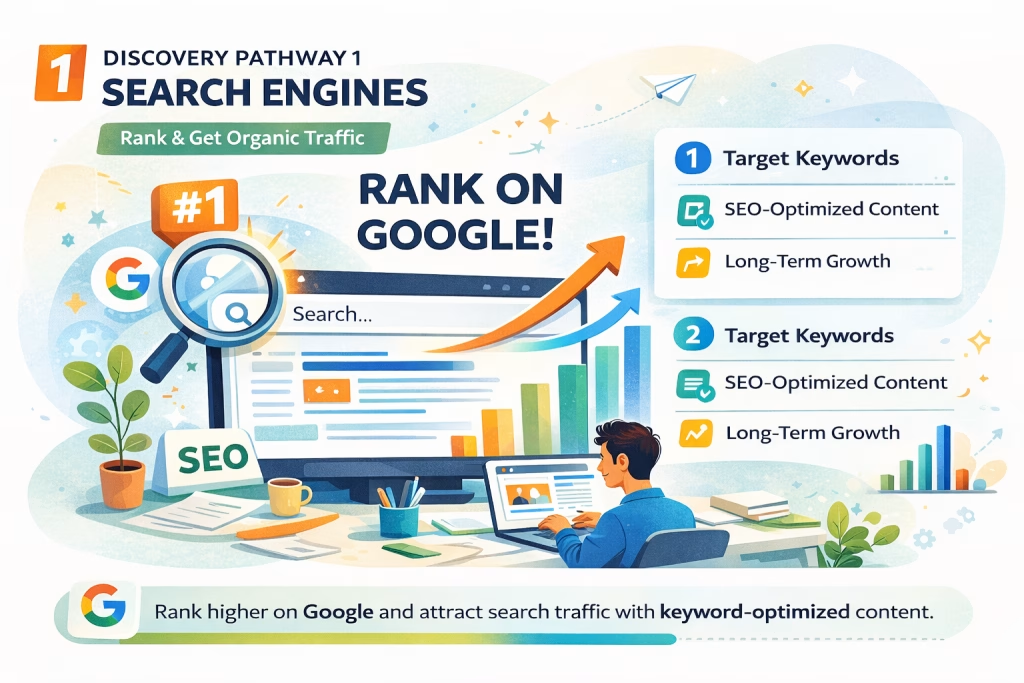
Search engines are one of the most powerful ways to drive traffic to your blog, especially for beginners who want long term growth. It is simple:
- Someone types a question into Google.
- Google looks for pages that answer that question.
- It ranks the best answers at the top.
If your blog post clearly answers a specific question, you have a chance to appear in those results. That is why targeting vague topics rarely works. Instead of writing “Tips for Productivity,” write “How to Build a 2 Hour Morning Routine for Remote Workers.” Specific problems attract specific searches.
How to Get Organic Blog Traffic from Search
Focus on:
- Targeting clear keywords beginners are searching for
- Writing detailed, helpful content
- Using structured headings
- Answering questions directly
- Creating evergreen posts
Evergreen content continues to generate traffic months or even years after publishing. This is how organic blog traffic compounds. Search traffic may feel slow at first, but it is one of the most reliable ways to increase blog visitors over time
Traffic Source 2: Social Media

If search captures intent, social media captures attention. People on social platforms are not actively searching for your blog. They are scrolling. Your job is to make them pause.
How to Promote Your Blog on Social Media
Instead of sharing your link repeatedly, extract value from your blog post and turn it into smaller pieces of content:
- A powerful quote
- A short tip
- A mini tutorial
- A relatable story
- A quick checklist
Each post should provide value on its own while inviting readers to click through for deeper insight.
Choose 1 to 2 Platforms
Trying to grow on every platform at once leads to burnout. Pick one or two that match your strengths:
- Writing focused creators may prefer LinkedIn or Facebook
- Visual thinkers may prefer Instagram
- Confident speakers may try short form video
Consistency matters more than platform count. When used properly, social media becomes one of the easiest ways to drive traffic to your blog early on.
Traffic Source 3: Communities and Groups

Communities are often overlooked but incredibly powerful for beginner blogging traffic. These include:
- Facebook groups
- Online forums
- Discord communities
- Niche Slack groups
The key principle here is simple. Lead with value.
How Communities Drive Blog Traffic
Instead of posting your blog link immediately, do this:
- Answer questions thoroughly
- Share helpful advice
- Participate in discussions
- Offer insights based on your experience
Over time, members become curious. They click your profile. They discover your blog naturally. When people see you consistently providing value, authority builds. Trust builds. Clicks follow. Communities work best when you focus on contribution rather than promotion.
Traffic Source 4: Word of Mouth

Word of mouth is the most organic and powerful traffic source, but it cannot be forced. It happens when readers share your content because it genuinely helped them. Shareable content usually:
- Solves a clear problem
- Explains something simply
- Offers practical steps
- Feels relatable
- Delivers real results
You can encourage sharing by adding small prompts like:
- “If this helped you, share it with someone who needs it.”
- “Send this to a friend starting a blog.”
Over time, helpful content builds trust. Trust leads to recommendations. Recommendations bring new readers without additional effort. If you are serious about how to get traffic to your blog long term, focus on being genuinely useful. Word of mouth growth is slow at first but powerful over time.
The Best Blog Traffic Strategy for Beginners
Now the big question. Where should you start? For most beginners, the strongest combination is: Search engines plus social media. Search builds long term organic blog traffic. Social media brings immediate visibility and feedback.
Here is a simple 90 day plan:
Month 1
- Publish one SEO-focused blog post per week
- Choose one primary social platform
- Share 3 value-based posts per week
Month 2
- Improve older blog posts with better structure
- Refine headlines and introductions
- Increase consistency on social
Month 3
- Track which topics generate the most clicks
- Double down on what works
- Start lightly engaging in one relevant community
Master one pathway before expanding. Depth beats distraction.
Common Blog Traffic Mistakes to Avoid
Even strong content can fail if you make these mistakes. Trying to master every traffic source at once Spreading yourself too thin leads to inconsistent output.
Chasing trends instead of solving problems Trends create spikes. Problem solving builds loyalty.Publishing inconsistently
Traffic compounds through repetition and reliability.
If you want to increase blog visitors, focus on sustainable systems instead of short bursts of intensity.
Final Thoughts on How to Get Traffic to Your Blog
Learning how to get traffic to your blog is less about hacks and more about understanding pathways. Readers discover blogs through:
- Search engines
- Social media
- Communities
- Word of mouth
When you consistently solve real problems and show up in the right places, visibility increases naturally. Consistency plus value equals discoverability. Start with one traffic source. Master it. Then expand. Traffic is not magic. It is method.

by Digital Juan | Jan 23, 2026 | Content Strategy
Ideas feel powerful at the start. You see the angle. You understand the point. It feels clear. But when you try to turn that idea into a blog post, something shifts. It becomes harder to explain.
The structure feels loose.
The message loses strength. And by the end, the post doesn’t feel as good as the original idea. This is where most bloggers get stuck. Not at the idea stage. At the translation stage.
The Real Problem: Unstructured Thinking
Ideas don’t come in order. They come as fragments:
- Insights
- Observations
- Connections
- Half-formed conclusions
But blog posts require sequence.
They need:
- A clear starting point
- A logical progression
- A defined outcome
So the challenge isn’t writing. It’s structuring your thinking before you write.
Layer 1: Expansion (Fully Develop the Idea)
Before you organize anything, expand. Take your idea and unpack it completely.
Ask:
- What does this actually mean?
- What are the key points inside it?
- What examples support it?
- What questions does it answer?
This stage is messy on purpose. You’re not trying to be clear. You’re trying to be complete. Because you can’t organize what you haven’t fully expressed.
Layer 2: Distillation (Find What Matters)
Now you reduce. From everything you wrote, identify:
What is essential?
Not what’s interesting. Not what sounds good. What actually matters. This is where most people struggle.
Because cutting ideas feels like losing value. But it’s the opposite. Clarity comes from focus.
Layer 3: Reframing (Make It About the Reader)
At this point, your idea is still internal.
Now you shift outward.
Ask:
- What problem does this solve?
- Where is the reader struggling?
- What do they need to understand first?
This step transforms your content. Because it aligns your idea with real demand. Without this, your post might be clear.
But it won’t connect.
Layer 4: Sequencing (Design the Flow)
Now you build structure. Not by grouping randomly. But by designing progression.
Think in terms of movement:
- Where does the reader start?
- What do they need next?
- What leads to clarity?
Each section should:
- Answer a specific question
- Build on the previous idea
- Move toward the main message
This is what creates flow.
Layer 5: Compression (Remove Friction)
Now you refine.
Look at your draft and remove:
- Repetition
- Overcomplication
- Sections that don’t connect
This is where good content becomes strong content. Because clarity is not just about what you include. It’s about what you remove.
Turning This Into a Workflow
Once you understand these layers, you can turn them into a repeatable system:
- Expand your idea fully
- Distill it into a clear message
- Reframe it around the reader
- Sequence it into a logical flow
- Compress it into clear, focused content
This removes guesswork. And makes writing faster over time.
Depth vs Clarity
A common mistake is choosing between depth and simplicity. But strong content does both. It goes deep. But presents ideas clearly. This is what structure allows.
Without it, depth becomes overwhelming. With it, depth becomes valuable.
Why This Matters for Digital Products
If your goal is to sell digital products, your content needs to do more than inform.
It needs to:
- Build trust
- Show your thinking
- Guide decisions
When your ideas are structured clearly:
- Your authority increases
- Your message becomes stronger
- Your content becomes more persuasive
And that makes your product easier to sell.
Where Most Writers Break Down
Even experienced bloggers struggle with:
1. Skipping expansion
They don’t fully develop the idea.
2. Avoiding distillation
They try to include everything.
3. Weak sequencing
Ideas don’t build on each other.
4. No compression
The post feels heavy.
Each of these reduces clarity.
Structure Creates Thinking Clarity
When your process improves, your thinking improves. You don’t just write better. You think more clearly. And that clarity shows up in your content.
Actionable Takeaways
If you want to turn ideas into organized blog posts at a deeper level, focus on this:
- Fully expand your idea before trying to structure it
- Distill your content into one clear message
- Reframe everything around the reader’s problem
- Sequence your ideas into a logical path
- Remove anything that creates friction
- Turn this into a repeatable writing workflow
- Focus on clarity without sacrificing depth
Don’t wait for better ideas.
Build a system that turns ideas into something that works.

by Digital Juan | Jan 17, 2026 | Content Strategy
Most content plans don’t fail because they’re wrong. They fail because they don’t last. They look good at the start. Organized. Detailed. Structured. But after a few weeks, they break. Not because you lost motivation. But because the system wasn’t built for consistency.
If you’re serious about blogging, especially for digital products, your goal isn’t just to create a plan. It’s to build something you can keep using.
The Difference Between a Plan and a System
A plan is static. A system is flexible. A plan tells you what to post. A system helps you decide what to post next.
This is the shift.
Because blogging is not a one-time activity. It’s ongoing. So your structure needs to support that.
Layer 1: Direction (What Your Content Leads To)
Everything starts here. If your content doesn’t lead somewhere, planning becomes random.
For Digital Juan, the direction is clear:
- Help people create content
- Help them build an audience
- Help them turn that into digital products
This direction simplifies decisions. Because every post either supports it or doesn’t. That removes a lot of noise.
Layer 2: Structure (Pillars and Clusters)
Once direction is clear, structure becomes easier. You organize your content into pillars. Then break those into clusters. But here’s the deeper layer. You don’t just list topics. You build depth.
Each cluster should:
- Explore one problem fully
- Include multiple angles
- Connect internally
This is what turns your plan into something that compounds.
Layer 3: Flow (How Content Gets Created)
This is where most plans break. They focus on what to write. But not how writing actually happens. You need a flow.
A simple one works best:
- Capture ideas (from signals, problems, patterns)
- Refine into topics
- Write with clear intent
- Publish and connect to existing content
That’s it.
No complexity. Just repeatable steps.
Layer 4: Feedback (How Your Plan Evolves)
Your content plan should not stay the same. It should respond.
As you publish, you’ll notice:
- Which topics resonate
- Which ones don’t
- Where people get stuck
This feedback is valuable. Because it tells you what to create next.
Not randomly. But based on real response.
Weekly Execution Without Overthinking
At a practical level, you don’t need a heavy schedule. You need a simple rhythm.
Each week:
- Look at your pillars
- Identify a gap or next step
- Choose one topic
- Write and publish
That’s enough.
You don’t need to plan months ahead. You need to stay in motion.
Plan for Depth, Not Just Output
One of the biggest mistakes in content planning is chasing volume. More posts. More topics. More coverage. But growth doesn’t come from spreading out. It comes from going deeper.
When you revisit and expand topics:
- Your authority increases
- Your SEO improves
- Your content becomes more useful
So instead of asking:
“What new topic should I cover?”
Ask:
“What can I deepen?”
Connect Your Plan to Your Product
If your goal is to sell digital products, your content plan should reflect that. Each pillar should connect to a potential offer. Each cluster should support that offer.
Each post should prepare the reader. This creates alignment. So when you eventually introduce a product, it fits naturally.
Simple Systems Create Consistency
At the end of it all, the goal is simple. Make your content plan easy to follow. Because complexity leads to hesitation. And hesitation leads to inconsistency.
When your system is clear:
- You know what to write
- You know why it matters
- You keep moving
And that’s what builds results over time.
Actionable Takeaways
If you want to build a simple content plan that scales, focus on this:
- Define a clear direction for your blog
- Organize your content into pillars and clusters
- Create a simple, repeatable content flow
- Use feedback to guide what you create next
- Focus on depth instead of constant new topics
- Align your content with your future products
- Keep your system simple enough to sustain
Don’t just plan content. Build something you can keep using.

by Digital Juan | Jan 16, 2026 | Content Strategy
Many people believe blogging is mainly about writing. They think success comes from publishing frequently, choosing the right niche, or mastering SEO strategies. While those things matter, they are not the foundation of a successful blog. The real foundation is much simpler.
Every successful blog grows because it consistently creates value for readers. Without value, content becomes noise. With value, content becomes useful, memorable, and shareable. Readers return not because you posted something new, but because your content genuinely helped them.
This is the turning point for every blogger who wants to grow beyond a hobby. When you stop asking “What should I write today?” and start asking “How can I help someone today?” your blog begins to change. Your writing becomes more intentional. Your ideas become clearer. Your audience becomes more engaged.
That shift is the heart of becoming a blogger entrepreneur.
Why Value Is the Core of Blogging as a Business
When people talk about growing a blog, they often focus on strategies like SEO, traffic growth, and social media promotion. Those tactics matter, but they only amplify what is already there. If the underlying content is not valuable, more traffic will not solve the problem. Value is what transforms ordinary content into something worth returning to. Creating value as a blogger means your content helps readers move forward in some way. It may solve a problem, provide clarity, or make something difficult easier to understand.
Value can take many forms, including:
- Practical solutions that help readers fix a problem
- Clear explanations that simplify complex ideas
- Stories or experiences that help people feel understood
- Frameworks or guides that give structure to confusing topics
- Encouragement or insight that inspires someone to take action
When readers consistently experience this kind of value from your blog, something important happens. They begin to trust you. And trust is the foundation of every successful blogging business.
The Servant Mindset: The Foundation of Valuable Content
One of the most powerful mindset shifts in blogging is adopting what many creators call the servant mindset. This mindset changes how you approach writing entirely. Instead of writing primarily to express yourself, you begin writing to help someone else. Your focus moves away from performance and toward service.
You begin asking different questions before publishing content:
- What problem is my reader facing right now?
- What confusion can I help clarify?
- What mistake can I help someone avoid?
- What knowledge can I share that makes things easier?
When you approach blogging from this perspective, your content becomes naturally valuable.
A servant mindset encourages you to create:
- Helpful tutorials
- Step by step guides
- Real life examples
- Clear explanations
- Honest lessons learned
Readers quickly recognize when content is written with genuine intention to help. That authenticity builds loyalty faster than clever marketing.
You Do Not Need to Be an Expert to Create Value
One of the biggest reasons people hesitate to start blogging is the belief that they need to be an expert first. They assume they must know everything about a topic before they are qualified to teach it. But blogging does not require perfect expertise.
It requires honest progress.
Many of the most helpful blogs online are written by people who are simply a few steps ahead of their readers. They share what they are learning in real time. They document their journey. They explain solutions that worked for them. This type of content can be extremely valuable because it is relatable and practical.
- You can create value by sharing:
- Lessons from your own experiences
- Solutions you recently discovered
- Mistakes you learned from
- Resources that helped you grow
- Systems or workflows that improved your process
When you frame your content around helping others navigate challenges you have faced, your blog becomes a guide rather than a lecture. Readers appreciate that authenticity.
How Value Turns Readers Into Loyal Supporters

When readers repeatedly find helpful information on your blog, something important begins to happen. Your content stops feeling like random posts. Instead, it begins to feel like a reliable resource. People begin returning to your blog when they need answers. They start recommending your content to others. They subscribe to your email list because they do not want to miss what you publish next.
This progression typically follows a simple pattern:
- Discovery
A reader finds your blog through search or social media.
- Helpfulness
They find content that solves a real problem.
- Trust
They return because your content consistently delivers value.
- Support
They subscribe, share your work, or buy your products.
Trust is the bridge between content and income. Without trust, monetization is difficult. With trust, it becomes natural.
Why Value Leads Naturally to Digital Products
When you consistently create valuable content, you begin to notice something interesting. Certain questions appear repeatedly. Readers ask for deeper explanations. They request structured guidance. They want resources they can use step by step.
This is where digital products for bloggers become a natural next step. Instead of scattering helpful ideas across many blog posts, digital products allow you to organize those insights into clear, structured resources.
Common digital products created by bloggers include:
- Checklists
- Templates
- Worksheets
- Guides or mini ebooks
- Resource toolkits
- Structured learning frameworks
These products do not require entirely new knowledge. They simply package the value you already created.
For example:
A blog post explaining how to start a blog could become:
- A blog launch checklist
- A step by step beginner guide
- A blog planning worksheet
This is why digital products are one of the most natural revenue streams for bloggers. They are built directly from value you have already shared.
The Simple Path to Creating Value
If you are just starting your blogging journey, creating value may feel abstract at first. But the process is simpler than it seems. Start by focusing on the people you want to help.
Ask yourself:
- What problems do they face regularly?
- What questions do beginners often ask?
- What mistakes do people commonly make?
- What would make their life easier?
Then create content that answers those questions.
A simple framework for value driven blogging looks like this:
Step 1: Identify a problem your audience faces
Step 2: Share a clear explanation or solution
Step 3: Provide practical examples
Step 4: Offer simple steps readers can follow
Step 5: Encourage action or reflection
Over time, this approach builds a blog that people trust and return to. And that trust becomes the foundation of a sustainable blogging business.
Start With Helping One Person
At its core, blogging is not about publishing content. It is about helping people. Every successful blog grows because the creator consistently asks one simple question:
“How can I make someone’s day easier, clearer, or better?”
If you start with that mindset, everything else becomes easier. Your writing becomes more focused. Your ideas become more useful. Your audience becomes more engaged.
And eventually, the value you create can grow into something much bigger:
- A loyal community
- A trusted platform
- A library of helpful content
- A collection of digital products
- A sustainable online business
The journey begins with something small. Help one person today. Then help another tomorrow.
That is how blogging grows.