by Digital Juan | Apr 6, 2026 | Content Strategy
Most SEO advice feels fragmented. You learn about keywords in one place. Headings in another. Backlinks somewhere else.
And while each piece is useful, it doesn’t always connect. So you end up knowing what to do…
But not how it all works together.
If you’re building a blog to grow traffic and sell digital products, that gap matters. Because SEO is not a tactic. It’s a system.
SEO Is a Distribution System for Your Content
At a deeper level, SEO is not about rankings. It’s about distribution. It’s how your content gets placed in front of the right people at the right time.
Think of it this way:
- You create content → SEO distributes it
- People find it → content builds trust
- Trust builds → products become easier to sell
Without SEO, your content depends on you to promote it. With SEO, your content works on its own.
That’s the leverage.
How Search Engines Actually Evaluate Content
Search engines are not trying to reward “optimized” content. They’re trying to serve the best answer.
So when someone searches, the system evaluates:
- Relevance → Does this match the query?
- Clarity → Is it easy to understand?
- Depth → Does it fully solve the problem?
- Structure → Is it organized well?
- Authority → Is this source reliable?
Most beginners focus only on keywords. But ranking comes from alignment across all of these.
Search Intent: The Foundation Most People Miss
Search intent is the reason behind a search. And it’s one of the biggest factors in SEO.
For example:
- “What is SEO” → learning
- “How to do SEO” → action
- “Best SEO tools” → comparison
If your content doesn’t match intent, it won’t perform. Even if your keywords are correct. This is why understanding your reader matters as much as understanding SEO.
Because you’re not writing for search engines. You’re writing for people who are searching.
Content Depth Builds Authority
Most blogs stay shallow. They touch topics once, then move on. But SEO rewards depth.
Not just long posts. Connected content.
When you:
- Cover a topic from multiple angles
- Link related posts together
- Build clusters around key ideas
You signal authority. Search engines start to recognize your blog as a resource. And that increases your chances of ranking across multiple topics.
On-Page SEO Is About Clarity, Not Tricks
On-page SEO often gets overcomplicated. But at its core, it’s simple. It’s about making your content easy to understand.
This includes:
- Clear titles that reflect the topic
- Headings that guide the reader
- Keywords used naturally
- Logical flow of ideas
You’re not trying to “optimize.” You’re trying to communicate clearly. And clarity is what both readers and search engines reward.
Internal Linking Builds a Content Network
This is one of the most overlooked parts of SEO. Your blog should not be a set of isolated posts. It should be a network.
When you link related content:
- Readers stay longer
- Ideas become clearer
- Authority increases
This also helps search engines understand how your content connects. And connection is what turns individual posts into a system.
SEO and Digital Products
If your goal is to sell digital products, SEO becomes even more valuable.
Because it brings in people who are already:
- Aware of a problem
- Looking for solutions
- Open to learning
Your content builds trust. Your product becomes the next step. This is why SEO traffic converts differently.
It’s not passive. It’s intentional.
What to Expect From SEO (Timeline Reality)
This is where expectations need to be clear. SEO is slow at the start. You might publish multiple posts and see little to no traffic.
That’s normal.
Because:
- Your site is new
- Your content needs time to be indexed
- Authority takes time to build
But if you stay consistent, something shifts. Traffic starts coming in.
Posts start ranking. And your content begins to compound.
SEO as Leverage
Once your system is in place, SEO becomes powerful.
Because:
- One post can bring traffic for months or years
- Multiple posts can support each other
- Your blog grows without constant promotion
This is what makes SEO different from other channels. It builds over time. And keeps working.
Actionable Takeaways
If you want to understand SEO at a deeper level, focus on this:
- Treat SEO as a distribution system, not a tactic
- Focus on solving real search intent
- Build depth through connected content, not isolated posts
- Prioritize clarity in your writing and structure
- Use internal linking to connect your content
- Align your SEO strategy with your digital product goals
- Be patient and consistent while your content compounds
Don’t chase SEO tricks.
Build a system that naturally aligns with how search works.
by Digital Juan | Mar 25, 2026 | Content Strategy
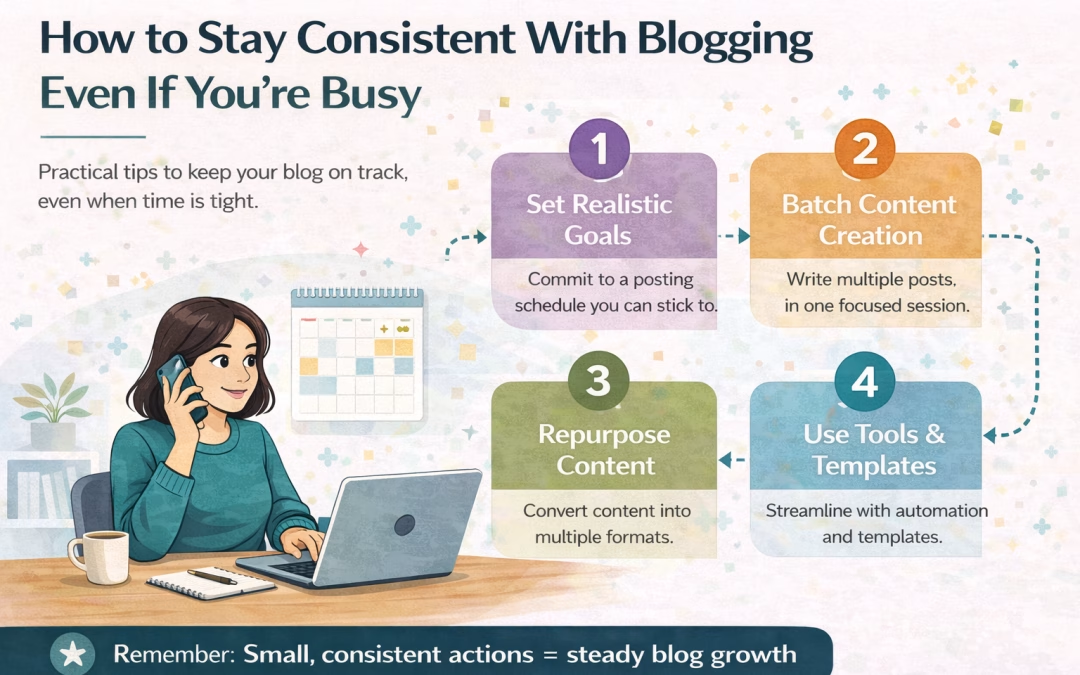
Consistency sounds simple. Write regularly. Publish often. Stay on track. But in reality, it is one of the hardest parts of blogging.You start strong. You have ideas. Maybe even a plan.
Then life gets in the way.
Work deadlines. Personal commitments. Low energy days. And suddenly, weeks pass without publishing anything. The problem is not that you are lazy or undisciplined. The problem is that most advice assumes you have unlimited time and focus.
You don’t.
And that is exactly why you need a different approach. This is not about forcing yourself to write more. It is about building a system that makes consistency feel manageable, even on your busiest weeks.
Why Consistency Feels So Hard
Let’s break this down honestly.
Blogging requires:
- Focus
- Time
- Creative energy
- Decision-making
And when you are busy, those are the exact things that are already stretched thin.
So what happens? You delay writing because it feels like a big task. You overthink what to write. You wait for the “right time.” And nothing gets published.
Key Insight:
Inconsistency is not a time problem. It is a friction problem. The more effort it takes to start, the less likely you are to follow through.
Stop Relying on Motivation
Motivation feels good. But it is unreliable. You might feel inspired on a Sunday afternoon, then completely drained on a Wednesday night. If your blogging depends on how you feel, it will always be inconsistent.
Instead, shift your focus to this:
Reduce the effort required to take action.
When writing feels easier to start, you do it more often. Not because you are motivated. But because it fits into your life.
Build a System, Not a Schedule
Most people try to fix consistency with a schedule.
“Post every Monday.”
“Write every day at 7 PM.”
That works for some. But for most busy people, it breaks quickly. A better approach is to build a flexible system.
Here’s a simple one:
- One idea bank
- One writing block per week
- One editing session
- One publishing day
No rigid daily expectations. Just a repeatable flow.
Key Concept:
Systems adapt. Schedules break.
The Minimum Viable Content Approach
Here’s where many bloggers get stuck. They think every post needs to be perfect. Deep. Long. Polished.
So they delay publishing. Instead, focus on minimum viable content.
Ask yourself:
“What is the simplest version of this idea that is still valuable?”
Sometimes that means:
- Shorter posts
- Simpler structure
- Less overthinking
Consistency comes from reducing scope, not increasing pressure. Done consistently beats perfect occasionally.
Time Blocking for Real Life
You do not need hours every day to blog. You need focused time, even if it is limited.
Instead of vague plans like “I’ll write when I have time,” try this:
- Block 60 to 90 minutes once or twice a week
- Treat it like a non-negotiable meeting
- Remove distractions during that window
Even one focused session per week can produce a full blog post. The key is intention.
Create Before You Consume
This one is subtle but powerful. If you spend your limited time scrolling, watching, or reading, your creative energy drops. And when it is time to write, you feel drained.
Try this shift:
Create first. Consume later.
Even 30 minutes of writing before anything else can build momentum. It signals to your brain that creating is a priority, not an afterthought.
Batch, Don’t Bounce
Context switching kills productivity. If you write a little, edit a little, research a little, and repeat, everything feels slower. Instead, batch your work.
For example:
- One session for outlining multiple posts
- One session for writing
- One session for editing
This reduces mental load. And makes the process feel smoother.
Focus compounds when you stay in one mode.
Lower the Friction to Start
Starting is always the hardest part. So make it easier.
Here are a few practical ways:
- Keep a running list of blog ideas
- Use simple templates for your posts
- Start with bullet points instead of full paragraphs
- Accept messy first drafts
The goal is not to write perfectly. The goal is to begin.
Action creates clarity. Not the other way around.
Track Progress That Actually Matters
If you only focus on publishing frequency, you might miss the bigger picture.
Instead, track:
- Number of posts published
- Consistency over time
- Traffic growth
- Engagement
Even small progress matters. Seeing momentum builds confidence. And confidence fuels consistency.
When You Fall Off, Restart Smart
At some point, you will fall off. Everyone does. The mistake is thinking you need to “catch up” or restart perfectly.
You don’t.
Just publish the next post. That’s it. No guilt. No overthinking.
Consistency is not about never missing. It is about returning quickly.
Actionable Takeaways
Staying consistent with blogging is not about pushing harder. It is about designing a process that works even when life gets busy.
Here’s your simple plan:
- Build a flexible content system, not a rigid schedule
- Focus on minimum viable content to reduce pressure
- Block focused time each week for writing
- Batch tasks to maintain momentum
- Lower the friction to start
- Track progress that reinforces consistency
- Restart quickly when you fall off
And most importantly:
Make blogging fit your life, not the other way around.
Because when your system works with your reality, consistency stops feeling like a struggle. It becomes something you can actually sustain.

by Digital Juan | Mar 5, 2026 | Content Strategy
Most Bloggers Think This Is About a Calendar
Ask most bloggers what content planning is, and you’ll hear the same answer:
“It’s creating a content calendar.”
“It’s scheduling posts in advance.”
“It’s staying consistent.”
That’s not wrong. But it’s incomplete. Because if content planning was just about scheduling, then consistency alone would lead to growth. And you already know that’s not true. There are bloggers who publish every week…
…and still feel stuck.
Still unsure what they’re building.
Still unsure how to make money from it.
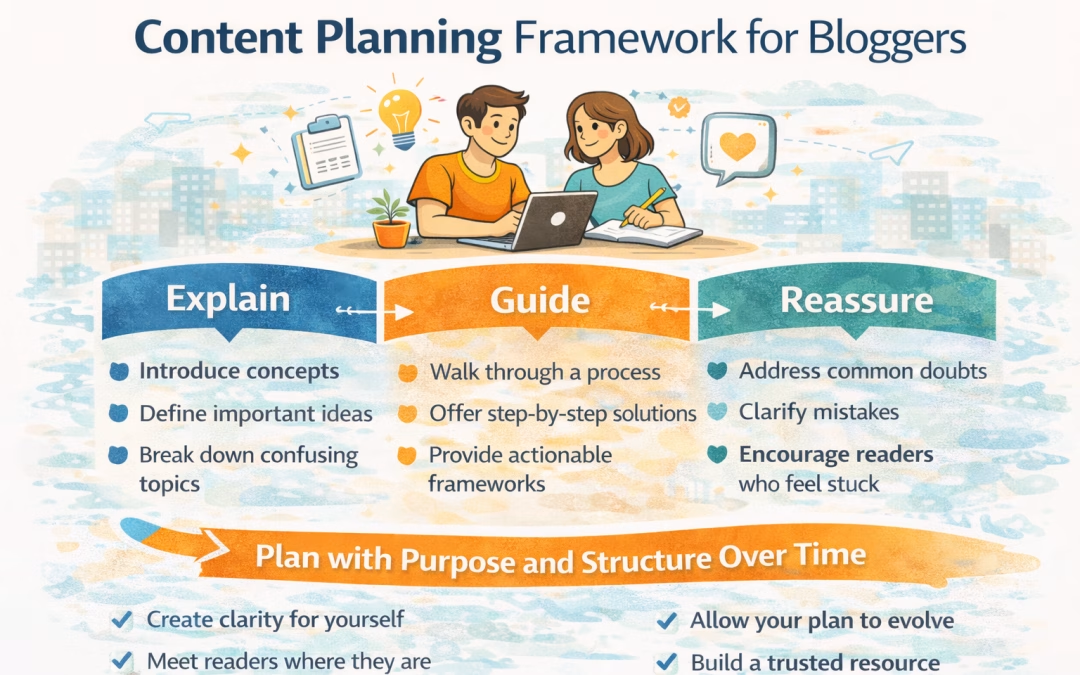
So clearly, something is missing. Content planning is not about filling your calendar. It’s about giving your content direction.
What Content Planning Actually Means
At its core, content planning is simple:
👉 It’s the process of deciding what to create, why it matters, and where it leads.
Not just:
- what you will publish
- but what that content is meant to do
A real content plan answers:
- What kind of content should I create?
- Who is this content for?
- What outcome should this lead to?
Without those answers, content becomes reactive. With them, content becomes intentional.
The Problem With How Most Bloggers Approach Content Planning
Most bloggers plan like this:
- think of an idea
- write a post
- repeat
There’s no structure. No connection between posts. No long-term direction. This leads to what looks like productivity…
…but is actually fragmentation.
You end up with:
- scattered topics
- inconsistent messaging
- no clear path to monetization
It feels like you’re moving. But you’re not progressing.
The Missing Piece: Content That Leads Somewhere
Here’s the real issue:
👉 Most content doesn’t lead anywhere
A reader lands on your post.
They get value.
Then they leave.
No next step. No deeper journey. No reason to stay. This is where content planning changes everything.
Because when your content is planned properly:
- each post connects to another
- each idea builds on the previous one
- each piece moves the reader forward
Now your blog becomes a system.
The Shift: From Posting Content to Building a System
Instead of thinking: “What should I post this week?”
Start thinking: “What system am I building with my content?”
Because content planning is not about individual posts. It’s about how those posts work together.
A Simple Example
Imagine a blog about personal finance. Without planning, it might look like:
- saving tips
- budgeting apps
- investing basics
All useful. But disconnected.
With planning, it becomes:
- how to start budgeting
- common budgeting mistakes
- a simple budgeting system
- a downloadable budget template
Now there’s a path.
Now there’s structure. Now there’s something you can build on.
How Content Planning Connects to Digital Products
This is where most explanations stop. But this is where things get interesting. Because content planning is not just about growth.
It’s about monetization.
When your content is structured:
- related posts can be combined
- ideas can be expanded
- systems can be packaged
This is how blog content becomes:
Not randomly. But naturally.
What a Real Content Planning System Includes
If you want content planning to actually work, it needs structure.
1. Content Direction
You need a clear idea of what you’re building toward. Not just topics. But outcomes.
2. Content Types
Your content should serve different roles:
- attracting new readers
- building trust
- guiding action
3. Content Structure
Your posts should connect. Not exist in isolation.
4. Content Repurposing Potential
Your content should be reusable. Not disposable. When these pieces come together, your blog stops feeling random.
And starts feeling intentional.
Why Content Planning Matters More Than Ever
Today, creating content is easy. Anyone can publish. Anyone can write. Anyone can use tools. That’s no longer the advantage.
The advantage is structure. Because structure creates:
- clarity
- consistency
- compounding growth
Without it, effort gets wasted. With it, effort multiplies.
The Common Misconception
Many bloggers believe:
👉 “I’ll figure this out later”
They focus on:
- writing first
- planning later
But by the time they think about structure…
They already have:
- scattered posts
- overlapping topics
- content that doesn’t connect
Fixing that is harder than building it right from the start.
A Better Way to Approach It
Instead of: 👉 content → traffic → confusion
Build this: 👉 content → structure → assets → products
Now everything has direction. Now everything has purpose.
Final Thought: Planning Is What Gives Content Power
Content by itself is just information. But when it’s planned properly, it becomes something more.
It becomes:
- a system
- an asset
- a foundation for income
Because the goal is not just to publish. The goal is to build something that grows over time.
If you want to see how to apply this step-by-step, read:
👉 Content Planning for Bloggers: How to Turn Blog Posts Into Digital Products and Passive Income
by Digital Juan | Feb 23, 2026 | Content Strategy
Most bloggers think they have a content problem. They don’t know what to write. They struggle to stay consistent. They feel like they’re always starting over.
But that’s not the real issue. The real problem is this:
👉 Your content is not leading anywhere
You’re publishing posts… but not building assets.
You’re sharing ideas… but not creating leverage.
You’re getting traffic… but not generating income.
And over time, that becomes frustrating. Because effort without direction doesn’t compound. This is where content planning changes everything. Not as a scheduling tool.
But as a system that turns your blog into a digital product engine.
What Content Planning Really Means (For Digital Product Creators)
Most advice will tell you to:
- create a calendar
- batch your posts
- stay consistent
That’s surface-level. Real content planning answers a different question:
👉 How does this piece of content move me closer to a product?
Because when your content is planned correctly, every post becomes:
- a building block
- a reusable asset
- a step toward something bigger
Instead of asking:
“What should I post this week?”
You start asking: “What am I building with this content?”
That shift alone separates hobby bloggers from creators who earn.
The Hidden Trap: Blogging Without a Product Path
Let’s be direct. Most blogs are built backwards.
They start with content.
Then chase traffic.
Then try to figure out monetization later.
That rarely works. Because content without a product path leads to:
- Traffic With No Direction - People read… and leave.
- Authority Without Income - You become helpful… but not profitable.
- Effort That Doesn’t Scale - You keep creating, but nothing compounds.
If you want your blog to generate income, your content must be planned with products in mind from the start.
The Shift: From Writing Posts to Building Assets
Here’s the shift that matters:
👉 Stop creating content
👉 Start building assets
An asset is something that can:
- attract traffic
- build trust
- be repurposed into a product
Every blog post should have that potential.
When you start thinking this way:
- your ideas become structured
- your content becomes reusable
- your blog becomes scalable
The Content-to-Product Framework
This is the core of your system.
1. Start With Product Direction
Before you plan content, you need a direction.
Ask:
- What kind of digital product can I create?
- What problem will it solve?
- Who is it for?
Examples:
- eBook
- course
- templates
- toolkits
You don’t need the full product yet. Just a clear direction. Because your content will build toward it.
2. Define Content Pillars That Support Products
Your pillars should not just be topics.
They should be product-aligned themes.
Example (fitness niche):
- Beginner Workouts
- Home Training Systems
- Nutrition Basics
- Workout Plans
Each of these can become a product later.That’s the key.
3. Structure Content Into Three Strategic Types
Now we align content with outcomes.
- Traffic Content - Brings people in from search. Example: “How to Start Working Out at Home”
- Authority Content - Builds trust and depth. Example: “A Simple Weekly Workout System”
- Conversion Content - Moves readers toward a product. Example: “30-Day Home Workout Plan”
Most bloggers stay stuck in traffic content. That’s why they struggle to earn.
4. Map Content Into a Product Funnel
Your content should guide readers through a journey:
- discover → learn → apply → buy
Not aggressively. But naturally.
For example:
- Blog post introduces a concept
- Another post expands it
- A resource helps apply it
- A product deepens the result
Now your content is working together.
5. Plan Content That Can Be Repurposed
This is where leverage happens. Instead of creating one-off posts, you create pieces that can be combined.
For example:
- 5–10 blog posts → one eBook
- tutorials → course modules
- guides → templates
Now your content is not disposable. It’s reusable.
A Real Example: Fitness Blog → Digital Product
Let’s make this practical. Imagine a beginner fitness blog.
Step 1: Traffic Content
- How to Start Working Out at Home
- Beginner Workout Tips
- Common Fitness Mistakes
These bring people in.
Step 2: Authority Content
- Weekly Workout Structure
- Simple Training System
- How to Stay Consistent
Now the blog builds trust.
Step 3: Conversion Content
- 30-Day Workout Plan
- Printable Routine
- Beginner Program
Now we introduce products.
What Happens Next?
Those posts can become:
- an eBook
- a paid workout program
- a subscription plan
All built from content.
That’s the system.
How to Build Your Content Plan (Step-by-Step)
Step 1: Choose 1–2 Product Ideas
Start with the end in mind. Decide what kind of digital product you want to create, even if it’s rough. This gives your content a clear direction instead of guessing topics.
Step 2: Create 3–5 Content Pillars
Group your ideas into core themes that support your future product. These pillars keep your blog focused and make your content easier to organize and expand.
Step 3: Brainstorm 10 Topics Per Pillar
List specific post ideas under each pillar. Think in terms of problems your audience wants solved, not just random topics.
Step 4: Label Each Topic (Traffic, Authority, Conversion)
Assign a role to every post. Some attract new readers, some build trust, and others lead to your product. This ensures your content works together as a system.
Step 5: Plan 4 Weeks of Content
Turn your ideas into a simple schedule. Focus on consistency and balance across content types rather than trying to publish everything at once.
Step 6: Link Posts Together Strategically
Connect related posts so readers naturally move from one to the next. This improves SEO, keeps people engaged, and guides them toward your product.
Internal Linking: The Force Multiplier
If content is the structure, internal linking is the glue.
Every post should lead to:
- related articles
- deeper guides
- product pages
This creates:
- better SEO
- stronger engagement
- clearer user flow
Without this, your content stays fragmented.
With it, your content compounds.
Why This Works (And Why Most Miss It)
Most bloggers think:
👉 content → traffic → ads
But the better model is:
👉 content → assets → products → income
This works because:
- content builds trust
- products capture value
- systems create scale
And it doesn’t rely on constant posting. It relies on smart planning.
Final Thought: Build Once, Benefit Long-Term
Content planning is not about control. It’s about direction. It ensures that every piece you create contributes to something bigger. Because the goal is not to publish more posts.
The goal is to build a blog that:
- attracts the right audience
- builds authority
- creates digital products
- generates income
And that only happens when you stop creating randomly…
…and start building intentionally.
by Digital Juan | Feb 20, 2026 | Content Strategy
If you want to build visibility online, you have probably felt the pressure to “go viral.” Every platform seems to reward explosive growth. We see creators gain thousands of followers overnight. We see posts get millions of views. It creates a powerful belief that virality is the key to success. But that belief quietly holds many creators back. When you tie success to viral moments, you create frustration. You publish inconsistently. You overanalyze every post. You lose momentum the moment something does not perform. The truth is simpler and more strategic.
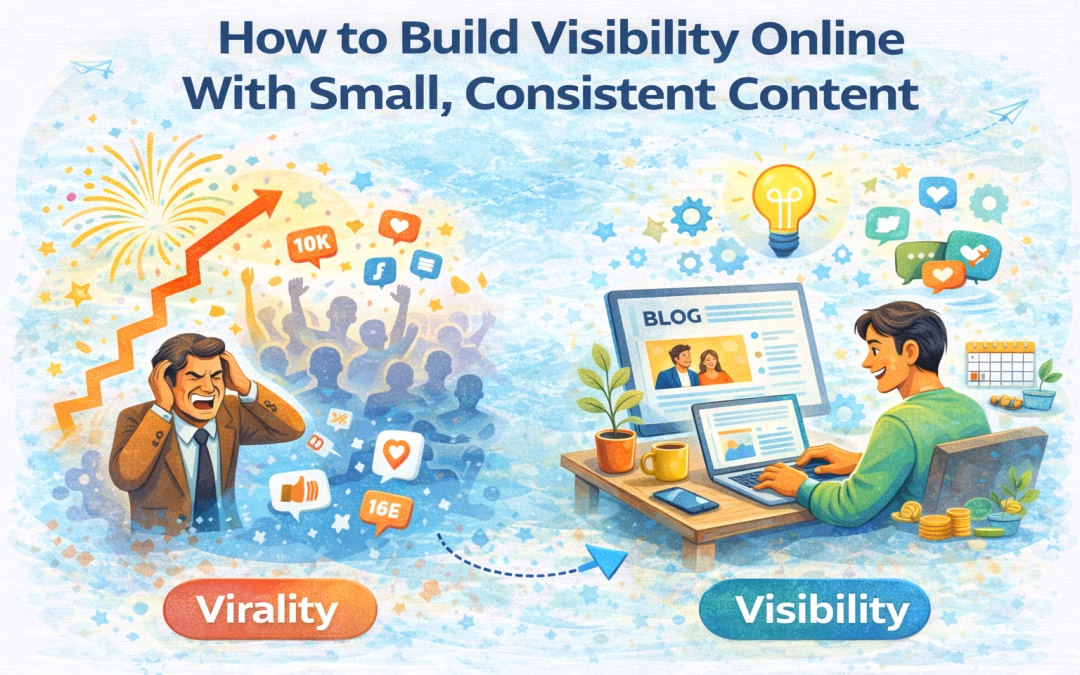
Virality is flashy. Visibility is powerful. If you want sustainable growth, authority, and income, visibility is the real engine.
Virality vs Visibility: Understanding the Difference
Before you build a strategy, you need to understand what you are chasing.
Virality Is Explosive but Temporary
Virality looks impressive from the outside. It often means:
- Sudden spikes in views
- Rapid increases in followers
- High engagement in a short window
- Widespread exposure
But virality is unpredictable. It is difficult to repeat. It often attracts broad audiences who are curious but not deeply invested. A viral post might bring attention, but attention without structure fades quickly. You can go viral and still struggle to grow an audience online long term.
Visibility Is Steady and Compounding
Visibility works differently. Instead of one spike, it creates repeated exposure to the right audience. Instead of random attention, it builds recognition. Visibility means:
- People see your name regularly
- Your ideas show up consistently
- Your content appears in search results
- Your audience becomes familiar with your voice
Visibility compounds. When someone sees you multiple times over weeks or months, familiarity builds. Familiarity turns into trust. Trust turns into opportunity. If you want to build visibility online, you are not chasing explosions. You are building presence.
Why Visibility Builds Trust and Authority
People trust creators they see regularly. It is not complicated. It is psychological. When someone repeatedly encounters your content, hesitation decreases. You feel more credible. More stable. More real. Familiarity reduces doubt.
Trust is the foundation of:
- Community
- Influence
- Sales
- Partnerships
A creator with 500 loyal readers can generate more sales than someone with one viral post and no relationship with their audience. Why?
Because loyal readers:
- Pay attention
- Return consistently
- Share your work
- Buy when you recommend something
Authority does not come from volume of views. It comes from consistency of presence. When you commit to a consistent content strategy, you are building authority online one piece at a time.
How Consistent Content Becomes a Long Term Asset
Many creators think of content as disposable. Post. Watch metrics. Move on. But when you approach content strategically, each piece becomes an asset.
Every blog post becomes:
- A searchable entry point
- A resource people can revisit
- A reference others can share
Every helpful article works for you long after publishing. Visibility compounds like interest in a bank account. One post may not change much. Fifty posts create a network of discoverability. This is where the idea of content as digital real estate becomes powerful. Each piece of content is like owning a small plot of land online. The more valuable land you own, the more surface area you have for discovery.
When you consistently publish useful content, you are not just posting. You are building infrastructure. That is long term content growth.
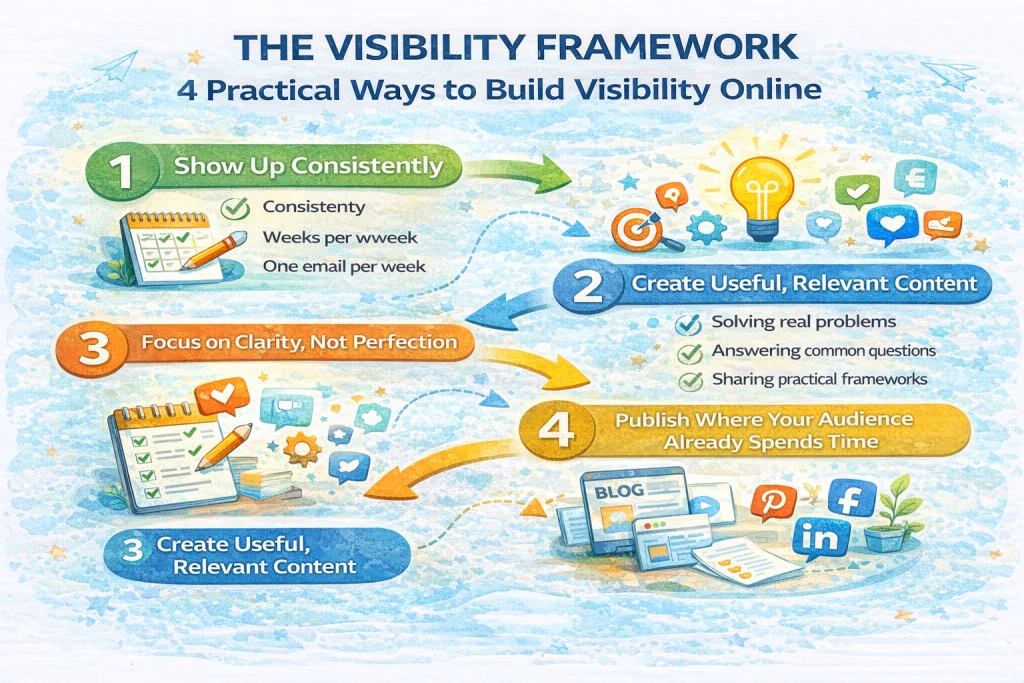
The Visibility Framework: 4 Practical Ways to Build Visibility Online
If visibility is the goal, here is how to build it intentionally.
1. Show Up Consistently
Consistency builds expectation. When you publish on a predictable schedule, your audience begins to anticipate your content. That anticipation creates habit. You do not need to post daily. You need to post reliably. For example:
- One blog post per week
- Three social posts per week
- One email per week
Consistency builds rhythm. Rhythm builds recognition.
2. Create Useful, Relevant Content
Visibility without value does not convert into trust.
Focus on:
- Solving real problems
- Answering common questions
- Sharing practical frameworks
- Explaining ideas clearly
If your content consistently helps people, they return. Content visibility grows faster when your audience feels understood.
3. Focus on Clarity, Not Perfection
Perfection delays publishing. Delay kills momentum. Helpful content beats perfect content every time. Clarity builds credibility. Progress builds momentum. If you want to build visibility online, you must prioritize shipping over polishing endlessly.
Visibility rewards action.
4. Publish Where Your Audience Already Spends Time
You do not need to be everywhere. Choose platforms strategically:
- A blog for long form authority
- Pinterest for search driven discovery
- Facebook for community engagement
- LinkedIn for professional visibility
Visibility increases when you meet your audience where they already are. Do not force attention. Position yourself in the flow of existing attention.
Why Slow Growth Is Actually Strong Growth
Slow growth often feels discouraging. But slow growth builds strong foundations. When your audience grows gradually:
- Relationships deepen
- Engagement improves
- Trust strengthens
- Retention increases
Loyal audiences support, share, and buy. Sudden spikes may inflate numbers. Steady growth creates stability. Reframe slow growth as strategic growth. If you are publishing consistently and improving gradually, you are not behind. You are building leverage.
Long term content growth always outperforms short term spikes.
Action Plan: Your Visibility Commitment
If you want to build visibility online, commit to a simple experiment. For the next 30 days:
- Publish consistently on a predictable schedule
- Focus on helping instead of going viral
- Measure success by consistency, not spikes
- Track how often you show up, not how many views you get
Ask yourself one question daily. Did I show up today?
Momentum comes from repetition. Visibility is built through commitment, not luck.
Visibility Is the Real Advantage
Virality is loud. Visibility is steady.
Visibility creates trust.
Trust creates relationships.
Relationships create sustainable success.
If you want authority, influence, and income, stop chasing attention. Build presence. Presence is what lasts.

by Digital Juan | Feb 17, 2026 | Content Strategy
Many new bloggers believe success comes from talent, expensive tools, or a lucky viral post. While those things can occasionally help, they are not what truly builds a strong blog. The real foundation of blogging success is much simpler.
It is blogging consistency.
Consistency is the habit of showing up regularly, publishing useful content, and continuing the process even when results feel slow or uncertain. It may not look exciting at first, but over time consistency becomes the quiet engine behind every successful blog. When you build the habit of consistent blogging, several powerful things begin to happen at once.
Why Consistency Matters More Than Talent
Many beginner bloggers spend a lot of time trying to create the perfect article. They worry that every post needs to be brilliant before it goes live. But blogging rarely works that way. Most successful bloggers improve through practice, not perfection.
Each time you write a new article, you learn something valuable:
- How to explain ideas more clearly
- How to organize your thoughts better
- How to speak more naturally to your audience
These improvements may feel small at first. But over time, they compound. Consistent blogging helps you develop stronger communication skills, clearer thinking, and a more confident writing voice.
Talent can help, but consistent effort is what creates real progress.
How Consistency Builds Trust With Readers
Readers rarely become loyal followers after reading a single blog post. Trust develops gradually. When readers see that you publish helpful content regularly, they begin to feel that your blog is reliable. They know that new ideas will appear soon and that your blog is an active place where learning continues.
Over time, this reliability creates familiarity.
Readers return because they know your content helps them understand things more clearly or solve problems they care about. This trust is one of the most valuable assets a blog can build.
Why Search Engines Reward Consistent Blogs

Blogging consistency also plays an important role in search engine visibility. Search engines try to recommend websites that appear reliable, active, and useful. When you publish blog posts regularly, search engines notice several signals:
- New content is appearing consistently
- Your website continues growing over time
- Your articles begin forming a clear topic library
These signals help search engines understand that your website is alive and contributing useful information. Over time, this activity can improve your chances of appearing in search results. Consistency helps both readers and search engines recognize that your blog is worth paying attention to.
Consistent Blogging Improves Your Writing Skills
One of the most powerful benefits of blogging consistency happens internally. When you write regularly, your thinking becomes sharper. Ideas begin flowing more easily. Your explanations become clearer. You begin noticing which topics resonate with readers and which ones need better explanation.
Every article teaches you something.
You may learn:
- What questions your audience is asking
- Which topics generate interest
- Where readers tend to feel confused
These insights help you improve future articles. Over time, writing stops feeling difficult and begins to feel natural.
How Often Should You Post on a Blog?
One common question beginners ask is how often they should publish blog posts. Some people believe they need to post every day to grow their blog. This expectation often leads to stress and burnout. The truth is much simpler. You do not need to post constantly. You only need a blogging schedule you can realistically maintain.
For many beginners, a healthy publishing rhythm might be:
- One blog post per week, or
- Two blog posts per month
Both schedules work well. The key is maintaining a rhythm that allows you to continue publishing over the long term.
Consistency matters far more than frequency.
How to Stay Consistent With Blogging
Building consistent blogging habits becomes easier when you simplify your workflow. A few small strategies can help you stay consistent.
- Create a simple content plan
-
- Instead of deciding what to write each time you sit down, prepare a list of future blog topics in advance.
- This makes writing sessions easier and removes decision fatigue.
- Write in batches
-
- Some bloggers find it helpful to write several posts during one focused writing session.
- This creates a small content reserve that can be scheduled over the next few weeks.
- Allow imperfect publishing
-
- Waiting for perfection can delay your progress.
- A helpful article that goes live today is far more valuable than a perfect article that never gets published.
- Progress leads to improvement.
Progress Is Better Than Perfection
Perfection is one of the biggest obstacles to blogging consistency. Many bloggers hesitate to publish because they feel their writing is not good enough yet. But blogging is a long-term learning process. Each article you publish helps you become a better communicator. Instead of asking whether a post is perfect, ask a simpler question:
Will this help someone understand something better? If the answer is yes, it is ready to share.
How Consistency Creates Long-Term Momentum
At the beginning, consistent blogging may feel small. One article does not seem like much. Neither do two or three. But over time, those articles accumulate.
Ten posts become twenty.
Twenty posts become fifty.
Fifty posts become a valuable library of ideas.
Each new article increases the chance that someone will discover your blog through search, social media, or word of mouth. Momentum grows quietly. And consistency is what creates that momentum.
Final Thoughts
Blogging consistency may not look dramatic, but it is one of the most reliable paths to long-term blog growth. When you show up regularly and publish helpful content, several things begin happening at once.
Readers begin trusting your voice.
Search engines recognize your activity.
Your writing skills continue improving.
Over time, your blog becomes more than a collection of posts. It becomes a growing body of work that helps people learn, think, and move forward. And that body of work is built one consistent article at a time.