by Digital Juan | Feb 3, 2026 | Create Digital Products
Most people think growth comes from new ideas. So they keep searching. New angles. New trends. New topics. But if you’ve been creating content for a while, that approach quietly becomes inefficient. You end up overlooking something more valuable. The data you’ve already generated.
Because high-potential topics rarely appear out of nowhere. They leave patterns behind. The real skill is learning how to spot them.
Why High-Potential Topics Leave Clues
Every piece of content you publish creates a small feedback loop. Some posts attract attention quickly. Others build slowly. A few trigger conversations. Most fade into the background. That difference matters.
High-potential topics tend to show at least one of these signals:
- Consistent traffic over time
- Strong engagement relative to reach
- Repeat questions or follow-ups
- Shares or saves, even without promotion
These aren’t vanity metrics. They’re indicators of relevance.
When something resonates, it usually points to a deeper need. A problem that isn’t fully solved yet. A topic that deserves more depth.
Step 1: Define What “High-Potential” Means for You
Before you start analyzing, get clear on your goal. High-potential for traffic is different from high-potential for revenue.
Ask yourself:
- Do I want more visibility?
- Do I want to build products?
- Do I want to grow an email list?
Your definition shapes what you look for.
For example:
- If your goal is growth, prioritize traffic and shares
- If your goal is monetization, prioritize engagement and intent
Without this filter, everything looks equally important. And that’s where most audits lose direction.
Step 2: Surface Your Standout Content
Now go through your existing content and find the outliers. You’re not looking for average performance. You’re looking for spikes.
Focus on:
- Posts that bring in steady traffic months after publishing
- Articles with unusually high time on page
- Content that sparked replies, comments, or messages
- Topics that people associate you with
Sometimes the signals are obvious. Sometimes they’re subtle.
A post with modest traffic but strong reader responses can be more valuable than a viral one with no engagement.
Step 3: Analyze Why It Worked
Once you have your standout pieces, slow down here. Don’t just note that something worked. Figure out why.
Look at:
- The angle. Was it practical, opinionated, or deeply specific?
- The format. Was it a guide, a story, a breakdown?
- The depth. Did it simplify or go deep into complexity?
- The timing. Did it connect to something people were already thinking about?
You’ll start to notice patterns.
Maybe your audience prefers structured frameworks over abstract ideas. Or maybe your personal stories outperform everything else. This is where insight turns into strategy.
Step 4: Expand Topic Clusters
A high-performing post is rarely a one-off. It’s usually part of a bigger conversation.
Take one strong topic and ask:
- What are the subtopics I haven’t covered yet?
- What questions did I leave unanswered?
- What would a beginner need before this?
- What would an advanced reader want next?
This is how you turn a single post into a content ecosystem.
Instead of chasing new ideas, you deepen the ones that already work.
Step 5: Double Down Strategically
Once you identify high-potential topics, the next move is simple. Do more. But do it with intention.
You can:
- Update and improve the original post
- Create follow-up content from different angles
- Turn the topic into a series
- Repurpose it into other formats like email or video
Repetition, when done well, builds authority. It signals to your audience and to algorithms that this is your space.
Final Thoughts
Finding better topics isn’t about being more creative. It’s about being more observant. Your existing content already tells you what works. What resonates. What people care about enough to engage with.
When you learn to read those signals, you stop guessing. And your content starts compounding instead of resetting every time.
Actionable Takeaways
If you want to apply this right away:
- Review your last 10 to 20 posts and highlight the top performers
- Identify at least 2 recurring themes or topics
- Choose one and list 5 related subtopics you haven’t covered yet
- Create your next piece based on that cluster, not a new idea
The goal isn’t more content.
It’s better direction.
by Digital Juan | Jul 3, 2025 | Create Digital Products
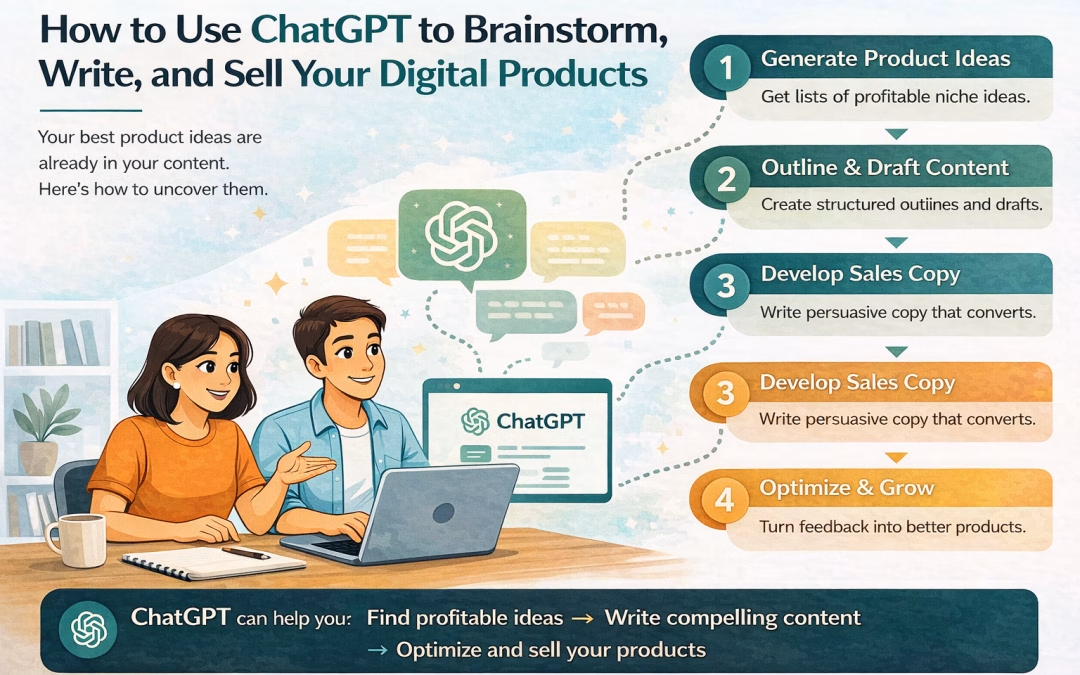
In the fast-paced world of digital entrepreneurship, speed and creativity are everything. Whether you're launching an ebook, an online course, a template pack, or a membership site, the ability to move from idea to income quickly can make all the difference. That’s where ChatGPT comes in—a powerful AI assistant that’s changing the game for creators, marketers, and solopreneurs.
If you’ve ever stared at a blank screen wondering what to create, how to write it, or how to sell it, this guide is for you. We’ll walk through how to use ChatGPT to brainstorm profitable ideas, write compelling content, and build a marketing strategy that sells—all in a conversational, expert-driven style that’s easy to follow.
Why ChatGPT Is a Game-Changer for Digital Product Creators
Let’s start with the obvious: ChatGPT is not just a chatbot—it’s a productivity powerhouse. It’s like having a copywriter, strategist, and brainstorming partner rolled into one. Whether you're a seasoned entrepreneur or just dipping your toes into the digital product world, ChatGPT can help you:
- Generate fresh ideas based on market trends
- Outline and write your product faster
- Create marketing copy that converts
- Save time and reduce creative burnout
The best part? You don’t need to be a tech wizard to use it. Just type in your prompt, and ChatGPT delivers. But to get the most out of it, you need to know how to ask the right questions—and that’s what this guide is all about.
Understanding the Types of Digital Products You Can Create
Before we dive into the how, let’s talk about the what. Digital products come in many forms, and ChatGPT can assist with nearly all of them. Here are a few popular options:
- Ebooks and guides
- Online courses and workshops
- Templates (e.g., social media, business plans, resumes)
- Membership sites or communities
- Printables and planners
- Audio files or podcasts
- Software tools or apps
Each of these has its own creation and marketing process, but the common thread is content. And that’s where ChatGPT shines.
Using ChatGPT to Brainstorm Profitable Product Ideas
This is where the magic begins. You can use ChatGPT to generate product ideas based on your niche, audience, and goals. Let’s say you’re a fitness coach. You could prompt ChatGPT with:
“Give me 10 digital product ideas for a fitness coach targeting busy professionals.”
In seconds, you’ll get ideas like:
- A 30-day desk-friendly workout guide
- Meal prep templates for office workers
- A mini-course on stress management through movement
The key is specificity. The more details you give ChatGPT, the better the ideas it returns. You can even ask it to validate ideas by checking market demand or suggesting pricing strategies.
Crafting Your Product Outline with AI Assistance
Once you’ve locked in your idea, it’s time to structure it. Whether you’re writing an ebook or building a course, a solid outline is your roadmap.
ChatGPT can help you:
- Break down your topic into chapters or modules
- Suggest logical flow and progression
- Identify gaps or areas that need more depth
For example, if you’re creating a course on productivity for remote workers, you might prompt:
“Create a 6-module course outline on productivity for remote workers, including key takeaways and action steps.”
What you’ll get is a clear, organized structure that you can build on. This saves hours of planning and helps you stay focused.
Writing High-Quality Content Faster with ChatGPT
Now comes the heavy lifting—writing. But with ChatGPT, it doesn’t have to be painful. You can use it to draft sections, expand bullet points into full paragraphs, or even rewrite content in a specific tone.
Let’s say you’ve outlined a chapter titled “Morning Routines for Focus.” You can prompt:
“Write a 500-word section on morning routines that boost focus for remote workers. Use a friendly, expert tone.”
ChatGPT will deliver a solid draft that you can tweak and personalize. It’s not about copy-pasting—it’s about accelerating your workflow. You stay in control, but the AI handles the grunt work.
Polishing and Editing Your Digital Product Using AI
Writing is just half the battle. Editing is where your product goes from good to great. ChatGPT can help you:
- Improve clarity and flow
- Check grammar and spelling
- Rewrite sections for better engagement
- Suggest alternative headlines or titles
You can even ask it to mimic a specific writing style. Want your ebook to sound like Tim Ferriss or Marie Forleo? Just say so. ChatGPT adapts to your voice, making your content feel authentic and polished.
Designing and Packaging Your Product for Maximum AppealWhile ChatGPT isn’t a design tool, it can guide your packaging strategy. You can ask for:
- Suggestions on ebook cover titles
- Ideas for course names and taglines
- Tips on layout and formatting
- Recommendations for tools to use (like Canva or Notion)
For example:
“Suggest 5 compelling titles for an ebook about productivity for freelancers.”
You’ll get options like:
- “The Freelance Focus Formula”
- “Work Smarter, Earn More”
- “The Remote Work Blueprint”
Packaging matters. It’s the first impression your product makes, and ChatGPT helps you nail it.
Marketing and Selling Your Digital Product with ChatGPT’s HelpThis is where ChatGPT really flexes its muscles. You can use it to create:
- Email sequences for product launches
- Social media captions and hashtags
- Sales page copy
- Ad headlines and descriptions
- Blog posts and SEO content
Let’s say you’re launching a digital planner. You could prompt:
“Write a 5-email launch sequence for a digital planner targeting busy moms.”
ChatGPT will generate persuasive, emotionally resonant emails that guide your audience from interest to purchase. It’s like having a copywriter on call 24/7.
You can also use it to brainstorm affiliate strategies, upsells, and even customer support templates.
Real-World Examples of ChatGPT-Powered Product Success
Still wondering if this works in the real world? Let’s look at a few examples:
- A solopreneur used ChatGPT to write and launch a $29 ebook in 3 days, generating over $1,000 in the first week.
- A designer created a template bundle with ChatGPT’s help, using AI to write product descriptions and email copy.
- A coach built a mini-course in under a week, using ChatGPT for scripting, outlining, and marketing.
These aren’t unicorns—they’re everyday creators who learned how to leverage AI. The secret isn’t just using ChatGPT—it’s knowing how to use it well.
Final Thoughts + Your Next Steps to Launch
ChatGPT isn’t here to replace you—it’s here to supercharge your creativity and execution. From idea to income, it’s the ultimate co-pilot for digital product creators.
Here’s what you can do next:
- Pick a niche or audience you want to serve
- Use ChatGPT to brainstorm product ideas
- Outline and write your content with AI support
- Package and market your product using smart prompts
- Launch, learn, and iterate
The tools are in your hands. The opportunity is real. Whether you’re building your first digital product or your tenth, ChatGPT can help you move faster, smarter, and with more confidence.
Ready to launch your next digital product? Start prompting—and start profiting.

by Digital Juan | May 30, 2025 | Create Digital Products
Let’s be honest—starting a digital store as a side hustle is exciting. You get to test ideas, make some extra income, and explore entrepreneurship without quitting your day job. But here’s the thing: if your store is generating consistent revenue, it’s no longer just a hobby—it’s a business waiting to scale.
The transition from side hustle to full-time business isn’t just about making more money. It’s about building something sustainable, something that can grow beyond you. Whether you’re selling digital downloads, dropshipping products, or running a print-on-demand shop, the opportunity to scale is real—and it’s bigger than you think.
The Mindset Shift: Thinking Like a Founder
Scaling starts in your head. When you’re running a side hustle, it’s easy to think small: “I’ll just do this on weekends,” or “It’s just a little extra cash.” But if you want to build a real business, you need to start thinking like a founder, not a freelancer.
Founders don’t just work in their business—they work on their business. That means setting goals, tracking metrics, and making strategic decisions. It means asking questions like:
- What’s my customer acquisition cost?
- How can I increase my average order value?
- What systems can I automate to save time?
This shift in mindset is the foundation of scaling. Without it, you’ll stay stuck in hustle mode.
Clarifying Your Niche and Value Proposition
One of the biggest mistakes side hustlers make is trying to sell to everyone. But here’s the truth: you can’t be everything to everyone—and you shouldn’t try.
To scale, you need to get laser-focused on your niche. Who are you serving? What problem are you solving? What makes your digital store different?
Let’s say you sell digital planners. That’s great—but who are they for? Busy moms? College students? Entrepreneurs? The more specific you get, the easier it becomes to tailor your messaging, products, and marketing.
Your value proposition is your secret weapon. It’s the reason someone chooses your store over a competitor’s. Nail this, and you’ll attract loyal customers who keep coming back.
Building a Scalable Product Line
Not all products are created equal. Some are easy to scale—others become bottlenecks. If you’re still manually creating every item or customizing each order, scaling will be tough.
The key is to build a product line that can grow without you. That means:
- Digital products that can be downloaded instantly
- Print-on-demand items that don’t require inventory
- Subscription-based offerings that generate recurring revenue
Think about what you can automate, outsource, or streamline. For example, if you’re selling digital templates, can you bundle them into a membership site? If you’re offering online courses, can you create evergreen content that sells year-round?
The goal is to create products that scale with demand—not your time.
Optimizing Your Digital Store for Conversions
Traffic is great. But traffic without conversions is just noise. If you want to scale, your store needs to convert visitors into buyers—and buyers into repeat customers.
Start by auditing your website. Is it easy to navigate? Is your value proposition clear? Are your product pages optimized with compelling copy, high-quality images, and trust signals like reviews?
Don’t forget mobile optimization. With more than half of ecommerce traffic coming from mobile devices, your store needs to look and perform flawlessly on smartphones.
Also, consider implementing:
- Upsells and cross-sells to increase average order value
- Exit-intent popups to capture abandoning visitors
- Live chat or chatbots to answer questions in real time
Conversion optimization isn’t a one-time task—it’s an ongoing process. Test, tweak, and improve constantly.
Automating Operations Without Losing Control
As your store grows, so does the complexity. More orders, more customer inquiries, more moving parts. If you’re still doing everything manually, burnout is inevitable.
That’s where automation comes in. Automate the repetitive tasks so you can focus on growth.
Start with:
- Order fulfillment: Use dropshipping or third-party logistics (3PL) providers
- Email marketing: Set up automated sequences for welcome emails, cart abandonment, and post-purchase follow-ups
- Inventory management: Use tools that sync with your store and suppliers
But here’s the catch: automation doesn’t mean abdication. You still need to monitor performance, tweak systems, and ensure quality. The goal is to free up your time without sacrificing control.
Marketing That Scales: From Organic to Paid
When you’re just starting out, organic marketing—like SEO, content creation, and social media—is your best friend. It’s cost-effective and builds long-term assets. But to scale, you’ll eventually need to invest in paid channels.
Start by doubling down on what’s already working. If your Instagram posts drive traffic, consider running Instagram ads. If your blog ranks well, amplify it with Google Ads.
The key is to test small, measure results, and scale what works. Don’t throw money at ads without a strategy. Use retargeting to bring back visitors, and focus on high-converting audiences.
Also, don’t underestimate the power of email marketing. Your list is your most valuable asset. Segment it, personalize your messages, and nurture your subscribers with value-driven content.
Financial Planning for Sustainable Growth
Scaling a business isn’t just about making more money—it’s about managing it wisely. Cash flow can make or break your growth.
Start by tracking your numbers religiously. Know your:
- Revenue
- Profit margins
- Customer acquisition cost
- Lifetime customer value
Then, reinvest strategically. Don’t blow your profits on flashy tools or unnecessary hires. Invest in marketing, automation, and product development.
Consider setting up a business bank account, using accounting software, and even hiring a bookkeeper. The more clarity you have around your finances, the better decisions you’ll make.
When to Hire and How to Build a Lean Team
At some point, you’ll hit a ceiling. You can’t do everything yourself—and you shouldn’t try. But hiring too early (or too much) can drain your resources.
The sweet spot? Hire when the cost of doing it yourself outweighs the cost of outsourcing.
Start lean. Hire freelancers or contractors for tasks like:
- Graphic design
- Customer support
- Content creation
- Social media management
Use platforms like Upwork, Fiverr, or Toptal to find talent. Set clear expectations, document your processes, and communicate regularly.
As your revenue grows, you can consider full-time hires. But always ask: Will this person help me grow or just maintain? Growth should be the goal.
Your Next Move: Turning Momentum Into a Brand
Scaling your digital store isn’t just about selling more—it’s about building a brand. A brand that people trust, talk about, and come back to.
That means:
- Creating a memorable customer experience
- Building a community around your products
- Sharing your story and values
- Delivering consistent quality
Your brand is your moat. It’s what sets you apart in a crowded market. So invest in it. Create content that educates and inspires. Engage with your audience. Be authentic.
And remember: scaling is a journey. It’s not about overnight success—it’s about consistent progress. Every tweak, every campaign, every hire should move you closer to your vision.
Ready to Scale Your Digital Store?
You’ve already done the hard part—starting. Now it’s time to build. Apply these strategies, shift your mindset, and take your digital store from side hustle to thriving business. The opportunity is real. The time is now. Let’s build something that lasts.

by Digital Juan | May 15, 2025 | Create Digital Products
Launching a business with a single product is like planting a seed. It’s focused, manageable, and allows you to learn the terrain before expanding. But once that seed starts to grow—once customers respond, demand increases, and your brand gains traction—the question becomes: how do you scale from one product to a full catalog without losing your edge?
This is where many entrepreneurs hit a wall. Scaling isn’t just about adding more items to your store. It’s about expanding strategically, maintaining quality, and ensuring your brand evolves without diluting its identity.
In this guide, we’ll walk through the exact steps to scale your product line, drawing from real-world examples, expert insights, and proven strategies. Whether you're running an eCommerce store, a DTC brand, or a niche product business, this roadmap will help you grow with confidence.
Why Starting with One Product Is a Smart Move
Starting with a single product isn’t just a lean strategy—it’s a powerful way to validate your market. Think of brands like Casper (mattresses), Allbirds (shoes), or even Dollar Shave Club. They all began with one standout product that solved a specific problem better than anyone else.
Focusing on one product allows you to master your messaging, understand your customer, and refine your operations. It’s easier to test pricing, positioning, and marketing when you’re not juggling multiple SKUs. Plus, it builds brand clarity. Customers know exactly what you stand for.
But once you’ve nailed that product-market fit, staying stagnant can limit your growth. That’s when expansion becomes not just an opportunity—but a necessity.
Understanding the Signals That It's Time to Expand
Not every business is ready to scale. So how do you know when it’s time?
Here are a few signs:
- Consistent demand and repeat customers. If people are coming back for more, they trust your brand.
- Customer requests for variations or complementary products. This is gold—your audience is telling you what they want next.
- Operational stability. You’ve ironed out supply chain issues, fulfillment is smooth, and your team can handle more complexity.
- Plateauing growth. If your single product has reached saturation, expanding your catalog can reignite momentum.
Scaling prematurely can stretch your resources thin. But ignoring the signs can mean missed opportunities. The key is to expand when your foundation is strong enough to support it.
Customer Feedback: Your Roadmap to New Products
Your customers are your best product developers. They’re using your product daily, and they know what’s missing.
Start by mining your reviews, support tickets, and social media comments. Are people asking for different sizes, colors, or features? Are they using your product in unexpected ways that hint at new use cases?
For example, if you sell a fitness tracker and customers keep asking for waterproof versions or integration with other apps, that’s a clear signal. Or maybe you sell a skincare serum, and users are asking for a moisturizer to complement it. That’s your next product.
You can also run surveys, host focus groups, or create a VIP customer community. The goal is to listen deeply and act strategically. Don’t guess—validate.
Building a Scalable Brand Foundation
Before you add new products, make sure your brand can support them.
Ask yourself:
- Is my brand identity flexible enough to encompass more products?
- Do my systems (inventory, fulfillment, customer service) scale easily?
- Can my website and marketing channels handle more complexity?
If your brand is built around a single product, you may need to evolve your messaging. For example, if your brand is “The Best Yoga Mat,” how will that translate when you add yoga blocks, straps, or apparel?
Consider shifting from product-centric to lifestyle-centric branding. Instead of selling a yoga mat, you’re selling a yoga experience. That opens the door to a broader catalog while keeping your brand cohesive.
How to Choose the Right Products to Add
This is where strategy meets creativity. You don’t want to add products just because they’re trending. You want to add products that:
- Complement your existing offering
- Solve adjacent problems for your customers
- Fit within your brand’s promise and aesthetic
Start with low-hanging fruit. If you sell a kitchen knife, maybe the next product is a cutting board or knife sharpener. These are logical extensions that don’t require reinventing the wheel.
Use data to guide your decisions. Look at what your customers are buying elsewhere. Use tools like Google Trends, Amazon reviews, and competitor analysis to spot gaps in the market.
And always test before you scale. Launch new products as limited runs or pre-orders to gauge interest before going all in.
Streamlining Operations for Multi-Product Management
Adding products means adding complexity. Inventory management, fulfillment, customer service—all of it scales.
Here’s where systems matter.
Invest in inventory management software that can handle multiple SKUs, track stock levels, and forecast demand. Tools like Shopify, Skubana, or TradeGecko can help.
Standardize your supply chain. Work with manufacturers who can produce multiple products or offer bundled services. The fewer moving parts, the better.
Train your team. Make sure your customer service reps understand the new products. Update your FAQs, support scripts, and internal documentation.
Scaling is as much about backend efficiency as it is about front-end growth. The smoother your operations, the faster you can scale.
Marketing Strategies for a Growing Catalog
Marketing a single product is straightforward. Marketing a catalog? That’s a different game.
You’ll need to shift from product-focused campaigns to solution-focused storytelling. Instead of selling a product, you’re selling a lifestyle, a transformation, or a bundle of benefits.
Here’s how to do it:
- Segment your audience. Different products may appeal to different customer personas. Tailor your messaging accordingly.
- Bundle products. Create starter kits, curated collections, or seasonal bundles to increase average order value.
- Leverage email marketing. Use behavior-based automation to recommend products based on past purchases.
- Optimize your website navigation. Make it easy for users to discover new products. Use filters, categories, and smart search.
And don’t forget SEO. Each new product page is an opportunity to rank for new keywords. Write unique, keyword-rich descriptions and optimize images for search.
Avoiding Common Pitfalls During Expansion
Scaling is exciting—but it’s also risky. Many brands stumble by growing too fast or losing sight of their core value.
Here are common mistakes to avoid:
- Diluting your brand. Don’t add products that confuse your audience or stray too far from your niche.
- Overcomplicating your catalog. More isn’t always better. Focus on quality over quantity.
- Ignoring margins. New products may have different cost structures. Make sure they’re profitable.
- Neglecting customer experience. More products mean more questions, returns, and support needs. Be ready.
Stay lean, stay focused, and scale with intention. Every new product should serve a purpose and strengthen your brand.
Real-World Examples of Successful Product Scaling
Let’s look at a few brands that nailed the transition from one product to many.
Glossier started with a single product: a skin salve. Today, they offer a full line of skincare and makeup, all rooted in their “skin first” philosophy. They scaled by listening to their community and staying true to their aesthetic.
Yeti launched with one product—their iconic cooler. Now they sell drinkware, bags, and even dog bowls. But every product reflects their rugged, outdoor lifestyle brand.
Ritual began with a single women’s multivitamin. Their expansion into men’s health, prenatal, and protein powders was guided by customer demand and scientific research.
These brands didn’t just add products—they built ecosystems. That’s the goal.
Final Thoughts + Your Next Step
Scaling from one product to a full catalog is a journey. It’s not about chasing trends or flooding your store with SKUs. It’s about strategic growth, customer-centric innovation, and operational excellence.
Start by listening. Build on what’s working. Test before you invest. And always keep your brand’s core promise front and center.
Ready to scale your product line? Start by identifying your most requested product extension. Validate it. Prototype it. Launch it. Then repeat.
Your catalog is more than a collection of products—it’s a reflection of your brand’s evolution. Make it count.

by Digital Juan | Mar 15, 2025 | Create Digital Products
Becoming a digital creator is one of the most exciting career paths in today’s online economy. Whether you're launching a YouTube channel, building a personal brand on Instagram, or starting a blog, the opportunities are endless. But with opportunity comes challenge—and many new creators unknowingly fall into traps that slow their growth or damage their reputation.
In this guide, we’ll break down 11 of the most common digital creator mistakes and show you exactly how to avoid them. These insights are based on proven strategies used by successful creators across platforms. If you're serious about building a sustainable and profitable digital presence, this post is for you.
1. Ignoring Audience Research
Creating content without understanding your audience is like launching a product without market testing. It’s one of the most common digital creator mistakes—and one of the easiest to fix. When you don’t know who you’re talking to, your content lacks relevance. You may be solving problems no one has, using language that doesn’t resonate, or posting on platforms your audience doesn’t use.
How to Avoid It
- Create audience personas: Define your ideal follower’s age, location, interests, pain points, and goals.
- Use tools like Google Trends to identify what people are searching for in your niche.
- Explore Reddit, Quora, and niche Facebook groups to find real questions and discussions.
- Survey your audience: Use Instagram polls, email forms, or Typeform to ask what they want.
Example:
If you're a fitness creator targeting busy professionals, your content should focus on quick workouts, stress relief, and time-saving tips—not bodybuilding routines.
2. Posting Without a Content Strategy
Many creators start by posting whatever comes to mind. While spontaneity can be fun, lack of strategy leads to inconsistent messaging and missed growth opportunities. Without a plan, your content may feel scattered. You’ll struggle to build a loyal audience, and your brand won’t have a clear identity.
How to Avoid It
- Set SMART goals: Specific, Measurable, Achievable, Relevant, Time-bound.
- Define your content pillars: These are 3–5 themes you’ll consistently post about (e.g., tutorials, behind-the-scenes, product reviews).
- Use a content calendar: Plan your posts weekly or monthly to stay organized.
- Align content with business goals: If you're selling a course, create content that educates and builds trust.
Example:
A travel creator might focus on budget travel, local food, and cultural experiences—posting weekly videos, Instagram reels, and blog posts that support those themes.
3. Overlooking SEO Basics
SEO isn’t just for bloggers. It applies to YouTube videos, podcast titles, Instagram captions, and even TikTok descriptions. Ignoring it is a major visibility killer.
Without SEO, your content relies solely on social media algorithms or paid ads. You miss out on organic traffic that compounds over time.
How to Avoid It
- Do keyword research: Use Ubersuggest, Ahrefs, or Google Keyword Planner to find terms your audience is searching for.
- Optimize metadata: Include keywords in your titles, descriptions, alt text, and tags.
- Use internal linking: Guide users to related content to increase time on site.
- Create evergreen content: Topics that stay relevant over time (e.g., “How to Start a YouTube Channel”).
Example:
Instead of titling a video “My Morning Routine,” use “Morning Routine for Busy Entrepreneurs” to target a specific keyword and audience.
4. Inconsistent Publishing Schedule
Starting strong and then disappearing is a fast way to lose followers. Consistency builds trust and signals reliability to both your audience and algorithms. Irregular posting confuses your audience and reduces engagement. Algorithms may deprioritize your content, making it harder to reach new viewers.
How to Avoid It
- Set a realistic schedule: Choose a frequency you can maintain (e.g., 1 video/week, 3 Instagram posts/week).
- Batch content: Record or write multiple pieces at once to stay ahead.
- Use scheduling tools: Buffer, Later, and Hootsuite help automate posting.
- Track performance: Use analytics to see which days and times work best.
Example:
A creator who posts every Monday at 10 AM builds anticipation and routine—leading to higher engagement and retention.
5. Neglecting Branding
Your brand is your digital identity. Without it, you’re forgettable. Many creators overlook branding, resulting in a scattered and inconsistent presence. Inconsistent visuals and messaging confuse your audience. You’ll struggle to build recognition and loyalty.
How to Avoid It
- Choose a consistent color palette, font, and logo that reflect your personality.
- Define your tone of voice: Are you funny, serious, educational, or inspirational?
- Create a brand guide: Document your visual and messaging standards.
- Use templates: Tools like Canva help maintain consistency across posts.
Example:
A minimalist productivity creator might use clean fonts, muted colors, and a calm tone—reinforcing their brand with every post.
6. Not Engaging with Followers
Content creation isn’t a one-way broadcast. Engagement is the fuel that powers community, loyalty, and growth. Ignoring comments and messages makes your audience feel undervalued. You miss chances to build relationships and boost visibility.
How to Avoid It
- Reply to comments and DMs within 24–48 hours.
- Use interactive features: Instagram polls, YouTube community posts, and TikTok Q&As.
- Host live sessions: Real-time interaction builds deeper connections.
- Feature user-generated content: Repost fan art, testimonials, or shoutouts.
Example:
A creator who responds to every comment builds a loyal fanbase that feels seen and appreciated—leading to higher retention and referrals.
7. Trying to Be on Every Platform
More platforms don’t mean more success. Spreading yourself too thin leads to burnout and diluted content quality. You’ll struggle to maintain consistency, lose focus, and fail to master any one platform. Your content may feel rushed or irrelevant.
How to Avoid It
- Identify where your audience spends time using analytics.
- Focus on 1–2 platforms and master them before expanding.
- Repurpose content: Turn a YouTube video into a blog post, Instagram reel, and email newsletter.
- Use scheduling tools to manage multiple accounts efficiently.
Example:
A creator who dominates YouTube and Instagram with high-quality content will outperform someone posting mediocre content on five platforms.
8. Ignoring Analytics
If you’re not measuring, you’re guessing. Analytics reveal what’s working—and what’s not—so you can improve strategically. You’ll waste time on ineffective content and miss opportunities to optimize performance. Growth becomes random instead of intentional.
How to Avoid It
- Track key metrics: Engagement rate, reach, CTR, watch time, bounce rate, conversions.
- Use platform-native tools: YouTube Studio, Instagram Insights, Google Analytics.
- Review data weekly: Identify trends, top-performing content, and areas for improvement.
- A/B test headlines, thumbnails, and formats to see what resonates.
Example:
If your Instagram carousel gets 3x more saves than single-image posts, double down on carousels.
9. Copying Instead of Creating
Imitating successful creators might seem smart, but it’s a shortcut to mediocrity. Originality is your edge. Copying erodes trust, stifles creativity, and makes you blend in—not stand out. Audiences crave authenticity.
How to Avoid It
- Share personal stories and experiences that only you can tell.
- Focus on your unique perspective and niche.
- Use storytelling to connect emotionally with your audience.
- Experiment with formats and styles until you find your voice.
Example:
Instead of copying a viral dance trend, a creator might remix it with their own twist—adding humor, commentary, or cultural relevance.
10. Skipping Monetization Planning
Many creators wait too long to monetize. Without a plan, you miss revenue opportunities and struggle to scale. You’ll build an audience but have no way to sustain your efforts financially. Monetization is key to long-term success.
How to Avoid It
- Explore monetization options: Affiliate marketing, sponsorships, digital products, memberships.
- Create a monetization roadmap: What will you sell, when, and how?
- Build email lists: Email converts better than social media.
- Offer value before selling: Educate, entertain, and build trust.
Example:
A creator who builds a free email course can later upsell a paid masterclass—monetizing without being pushy.
11. Not Investing in Learning
The digital world evolves fast. Creators who stop learning fall behind. Growth requires curiosity and commitment. You’ll miss new trends, tools, and techniques that could elevate your content. Stagnation leads to irrelevance.
How to Avoid It
- Take online courses on Skillshare, Coursera, or Udemy.
- Subscribe to newsletters and podcasts like Creator Science or The Futur.
- Join communities on Discord, Facebook, or LinkedIn.
- Attend webinars and conferences to network and learn.
Example:
A creator who learns video editing shortcuts can produce better content faster—freeing up time for engagement and growth.
Final Thoughts: Audit Your Creator Journey
Every creator makes mistakes—it’s part of the process. But the key to success is learning, adapting, and improving. Use this guide to audit your own journey. Which of these digital creator mistakes are you making? What can you change today?

by Digital Juan | Mar 6, 2025 | Create Digital Products
Launching a product doesn’t require a massive budget or a full development team. With the right strategy, tools, and mindset, you can launch digital products with minimal resources and still achieve impressive results.
Whether you're a solopreneur, a startup founder, or a content creator, this guide will show you how to go from idea to income — without burning through cash. You’ll learn how to validate your idea, build a lean MVP, market it organically, and monetize smartly.
This is the ultimate guide to launching digital products on a budget — packed with actionable steps, free tools, and proven tactics.
Understanding the Digital Product Landscape
Types of Digital Products You Can Launch
Digital products are intangible assets that can be sold online repeatedly without inventory. Popular types include:
- Ebooks and guides: Great for thought leaders and educators.
- Online courses and workshops: Ideal for skill-based training.
- Templates and design assets: Useful for creatives and marketers.
- Software tools and apps: Perfect for solving niche problems.
- Membership sites: Offer exclusive content or community access.
- Digital services: Coaching, consulting, or freelance packages.
Each of these can be created and launched with minimal resources if you focus on solving a specific problem for a defined audience.
Why Digital Products Are Ideal for Lean Startups
Digital products offer:
- Low overhead: No manufacturing or shipping costs.
- Scalability: Sell to one or one million users with the same infrastructure.
- Automation: Use tools to handle delivery, payments, and customer support.
- Speed to market: Launch in days or weeks, not months.
This makes them perfect for lean startups and solo entrepreneurs looking to build income streams without heavy investment.
Step 1: Validate Your Idea Before Building
Use Free Tools to Test Market Demand
Validating your idea ensures you're building something people actually want. Here’s how to do it for free:
- Google Trends: Check if your topic is gaining or losing interest.
- AnswerThePublic: Discover what questions people are asking.
- Reddit & Quora: Find real pain points in niche communities.
- Facebook Groups: Ask members what they struggle with.
- Keyword research: Use Ubersuggest or Google Keyword Planner to find search volume.
Example: If you're thinking of launching a Notion productivity template, search “Notion productivity” on Google Trends and Reddit. If people are actively discussing it, you’re on the right track.
How to Gather Feedback Without Spending Money
Create a simple survey using Google Forms or Typeform. Share it on:
- Your social media profiles
- Relevant Facebook or LinkedIn groups
- Email list (if you have one)
- Online communities like Indie Hackers or Product Hunt
Ask questions like:
- What’s your biggest challenge in [topic]?
- What solutions have you tried?
- Would you pay for a solution?
- What format do you prefer (ebook, course, template)?
This feedback helps you shape your product and messaging.
Step 2: Create a Minimum Viable Product (MVP)
What an MVP Looks Like for Digital Products
An MVP is the simplest version of your product that delivers core value. Examples:
- A 10-page ebook instead of a 100-page guide
- A 3-video mini-course instead of a full curriculum
- A Notion template instead of a full SaaS tool
Focus on solving one specific problem. You can always expand later based on user feedback.
Tools to Build MVPs on a Budget
Here are free or low-cost tools to build your MVP:
- Canva: Design ebooks, templates, and visuals.
- Notion: Create and share digital workspaces.
- Gumroad: Sell digital products with no upfront cost.
- Google Docs/Slides: Collaborate and create content.
- Trello or Airtable: Organize your product roadmap.
These tools allow you to build and deliver your product without hiring developers or designers.
Step 3: Build a Lean Launch Funnel
Free Landing Page Builders
Your landing page is your sales engine. Use these free tools:
- Carrd: Simple, responsive pages for $0–$19/year.
- ConvertKit: Free landing pages with email capture.
- Mailchimp: Drag-and-drop builder with automation.
Your landing page should include:
- A clear headline with your primary keyword: launch digital products
- Benefits and outcomes
- Testimonials or social proof
- A strong call-to-action (CTA)
Example CTA: “Download the free productivity template now!”
Email Marketing on a Shoestring Budget
Email is still the highest ROI marketing channel. Start with:
- MailerLite, ConvertKit, or Brevo (free plans available)
- Create a lead magnet (e.g., checklist, mini-guide)
- Build a simple welcome sequence (3–5 emails)
Email marketing helps you build trust, nurture leads, and drive conversions — all for free.
Step 4: Leverage Organic Marketing Channel
SEO Basics for Product Visibility
SEO helps your product get discovered without paid ads. Here’s how to optimize:
- Use your primary keyword (“launch digital products”) in:
- Title tag
- Meta description
- H1 and H2 headings
- Image alt text
- URL slug
- Include secondary keywords like:
- “minimal resources”
- “digital product strategy”
- “budget-friendly product launch”
- Write blog posts targeting long-tail keywords
- Build backlinks through guest posts and partnerships
- Submit your product to directories like Product Hunt, Indie Hackers, and BetaList
SEO is a long-term strategy, but it compounds over time.
Social Media and Community-Driven Growth
Tap into free traffic sources:
- Twitter/X: Share behind-the-scenes, tips, and product updates.
- LinkedIn: Publish thought leadership posts and engage with professionals.
- Facebook Groups: Join niche communities and offer value.
- Reddit: Answer questions and share your product in relevant subreddits.
- YouTube Shorts or TikTok: Create bite-sized content showcasing your product.
Consistency and authenticity matter more than paid ads at this stage.
Step 5: Monetize and Scale Smartly
Pricing Strategies for Early Traction
Start with a low-friction price point to attract early adopters:
- $5–$25 for ebooks and templates
- $49–$99 for mini-courses
- Offer tiered pricing or bundles
Use urgency and scarcity:
- “Limited-time offer”
- “Only 100 downloads available”
- “Early bird pricing ends soon”
These tactics drive conversions and create momentum.
Upselling and Cross-Selling Tactics
Once you have buyers, increase lifetime value:
- Upsell a premium version or coaching session
- Cross-sell related products (e.g., templates + course)
- Offer affiliate programs to incentivize referrals
Use platforms like ThriveCart, Podia, or Gumroad to manage upsells and affiliates.
Common Mistakes to Avoid
- Overbuilding Before Validating - Don’t spend months creating a product no one wants. Validate first, build later.
- Ignoring Customer Feedback - Your early users are gold. Ask for feedback, iterate quickly, and improve your product based on real needs.
- Trying to Be Perfect - Perfection is the enemy of progress. Launch fast, learn faster.
- Neglecting Marketing - Even the best product won’t sell itself. Invest time in organic marketing and community building.
Real-World Examples of Lean Digital Product Launches
- Ali Abdaal launched his first Notion template with zero budget and scaled it to six figures.
- Gumroad creators often start with a single ebook and grow into full-fledged businesses.
- Indie hackers frequently share stories of launching MVPs in a weekend and earning passive income.
- Tiago Forte built a productivity empire starting with a simple online course.
These examples prove that launching digital products with minimal resources is not only possible — it’s often the smartest way to start.
Final Thoughts
Launching digital products doesn’t require deep pockets — just smart strategy, the right tools, and a willingness to start small.
Here’s a quick recap:
- Validate your idea before building
- Create a lean MVP using free tools
- Build a simple launch funnel
- Market organically through SEO and social media
- Monetize with smart pricing and upsells