by Digital Juan | Mar 3, 2026 | Create Digital Products, Featured
The Point Where Blogging Stops Being Enough
At the beginning, blogging feels like progress. You publish posts. You organize your ideas. You slowly build something online.
And for a while, that’s enough. But eventually, a question starts to surface:
“What is all of this building towards?”
Because if you’re honest, content alone doesn’t create leverage.
It informs.
It attracts.
But it doesn’t fully capture value.
And that’s the moment most bloggers either:
- Stay stuck in content creation
- Or evolve into something more intentional
The Real Problem: You’re Treating Content as the End
Most bloggers unknowingly operate like this:
- Write post
- Publish
- Move on
- Repeat
It feels productive. But structurally, nothing is compounding. Because each post is treated as a finished output, not a reusable asset.
That’s why growth feels slow. Not because you’re doing the wrong things…
…but because you’re not extracting enough value from what you’ve already done.
The Shift: From Publishing Content to Building Assets
This is where everything changes. Instead of asking:
“What should I write next?”
You start asking:
“What have I already created that can be turned into something bigger?”
That one question transforms your role. You’re no longer just a blogger. You’re a builder of structured solutions.
Because when you look at your content differently, you start to see:
- Patterns
- Repeated questions
- Gaps between information and execution
And those gaps are not problems. They are opportunities.
Where This Shift Actually Begins
Before you can turn content into products, you need one foundation:
👉 Intentional content creation
If your blog is random, your product ideas will be random. That’s why understanding content strategy matters first.
If you haven’t yet, read this:
👉 Content Planning for Bloggers
https://digitaljuan.com/content-planning-for-bloggers/
This will help you:
- Create content around real problems
- Build posts that connect with each other
- Lay the groundwork for future products
Because products don’t start at creation.
They start at content direction.
Seeing Your Blog Differently
Once your content has structure, a new layer becomes visible. Your blog is no longer just a collection of posts.
It becomes:
- A map of problems
- A record of solutions
- A timeline of transformation
Each post represents a step. But no single post completes the journey. That’s the key insight.
Why Content Alone Is Not Enough
A blog post can:
But it rarely:
- Completes
- Organizes
- Accelerates
Readers still have to:
- Piece things together
- Interpret steps
- Fill in gaps
And that’s where friction exists. That friction is exactly what digital products remove.
The Hidden Opportunity Inside Your Content
Every strong blog has this pattern:
- A topic gets attention
- Readers engage
- Questions remain
That gap between:
“I understand this”
and
“I can actually do this”
Not in the content itself. But in what the content does not fully resolve.
From Insight to System
This is where most people stop. They recognize the opportunity…
…but don’t know how to act on it. That’s because they’re missing a system.
👉 The next step is not creating randomly. It’s learning how to systematically extract product ideas from your content.
Start here:
👉 How to Find Digital Product Ideas From Your Blog Content
https://digitaljuan.com/how-to-find-digital-product-ideas-from-your-blog-content/
This will show you how to:
- Identify high-signal posts
- Group content into product themes
- Turn scattered ideas into structured offers
This is where your blog becomes a product engine.
And Then Comes Execution
Once you have a clear idea, the next trap appears:
Overthinking.
Trying to build something too big.
Trying to get everything right.
That’s where momentum dies. So the next step is simple:
👉 Your First Digital Product: Start Small, Start Smart, Start Now
https://digitaljuan.com/your-first-digital-product-start-small-start-smart-start-now/
That guide will help you:
- Choose a small, focused product
- Build it quickly
- Launch without overcomplicating the process
Because execution is what turns ideas into reality.
The Identity Shift That Changes Everything
At this point, something subtle but powerful happens. You stop thinking like someone who writes content. You start thinking like someone who builds systems.
You begin to see:
- Every post as raw material
- Every idea as something expandable
- Every topic as something packageable
That’s when your blog stops being:
“Something you maintain”
And becomes:
“Something that produces”
Final Thought: This Is the Turning Point
Most bloggers never make this shift.
They stay in:
- Writing mode
- Publishing mode
- Consumption mode
But the ones who do…
Start to see their blog differently. Not as content. But as inventory waiting to be structured into value.
How This Fits Into Your System
This post is your turning point.
From here, the path is clear:
- Content Strategy → Learn what to create
- This Post → Shift how you think
- Find Product Ideas → Build direction
- Create First Product → Take action
- Validate and Sell → Build income
If you take one action after this
Don’t just read. Move forward.
👉 Go to:
How to Find Digital Product Ideas From Your Blog Content
Because mindset without action stays abstract.
And this is where things start becoming real.

by Digital Juan | Mar 1, 2026 | Create Digital Products
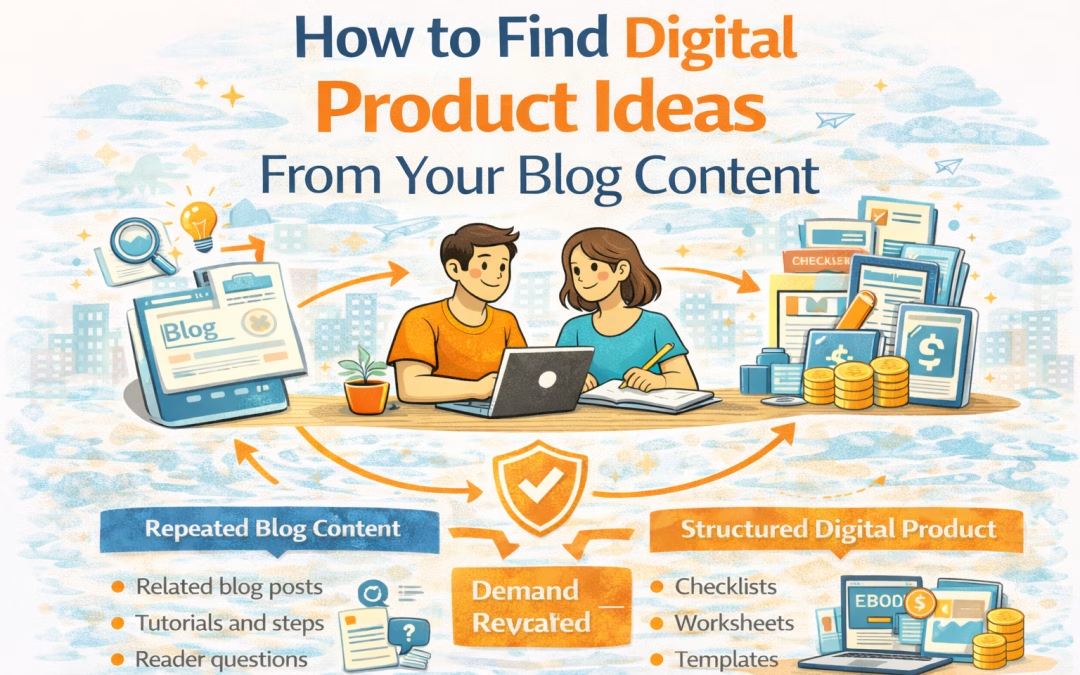
Most people think product ideas come from brainstorming. In reality, the best ones are already sitting in your blog.
If you’ve been publishing consistently, you’re not starting from zero. You’ve already done the hard part. You’ve tested ideas, attracted attention, and built small pockets of trust. The problem is, most of that value stays buried in old posts.
A content audit changes that. It turns your blog from a publishing habit into a product discovery system. Let’s walk through how to do it properly.
Why Your Existing Content Is Your Best Product Research
Every post you’ve published carries signals. Some topics pulled people in. Others fell flat. Some sparked questions. Others got bookmarked quietly.
That’s not random. That’s data. When you audit your content, you’re not guessing what people want. You’re reading patterns from what they’ve already responded to.
This matters because:
- You reduce the risk of building something no one buys
- You create products rooted in proven interest
- You move faster because the foundation already exists
Instead of asking “What should I create?”, you start asking “What is my audience already asking me for?”
Step 1: Gather and Organize Your Content
Start simple. Pull all your blog posts into one place. A spreadsheet works fine.
Track a few key things:
- Title
- Topic or category
- Publish date
- Traffic (if available)
- Engagement (comments, shares, saves)
You’re not analyzing yet. You’re just creating visibility. This step alone is eye-opening. Most people don’t realize how much content they’ve already created until they see it laid out.
Step 2: Identify High-Signal Content
Now look for what stands out. Not just your top traffic posts, but anything that shows signs of resonance.
High-signal content often includes:
- Posts that consistently get traffic over time
- Topics that generate comments or replies
- Articles people reference or share
- Posts that led to emails, DMs, or questions
Pay attention to quiet signals too. A post with low traffic but strong engagement can still be valuable. You’re looking for connection, not just clicks.
Step 3: Look for Patterns and Pain Points
This is where product ideas start to emerge.
Go through your high-signal content and ask:
- What problems keep showing up?
- Where do readers seem confused or stuck?
- Which topics require multiple posts to explain fully?
You’ll start noticing clusters. Maybe you’ve written five posts about productivity, but none offer a complete system. That gap is a product opportunity.
Or maybe beginners engage heavily, but you don’t have a structured starting point. That’s another one. Products live where your content is incomplete.
Step 4: Match Content to Product Formats
Once you see patterns, think in formats.
Different types of content naturally evolve into different products:
- Deep-dive guides → ebooks or paid newsletters
- Step-by-step tutorials → courses or workshops
- Checklists or frameworks → templates and toolkits
- Case studies → premium breakdowns or consulting offers
You’re not creating from scratch. You’re packaging what already works. That’s the shift most people miss.
Step 5: Validate Before You Build
Don’t jump straight into building. Instead, test the idea in small ways:
- Turn a blog post into a lead magnet
- Create a simple landing page with a waitlist
- Talk about the idea in your newsletter
- Ask direct questions to your audience
Validation doesn’t need to be complicated.
You’re looking for signals like:
- Sign-ups
- Replies
- Curiosity
If people lean in, you move forward. If not, you adjust.
Step 6: Prioritize What to Build First
You’ll likely find more ideas than you expected. Now you need to choose.
Focus on:
- Ideas that are easy to build from existing conte
- Topics with clear demand
- Problems that feel urgent to your audience
- nt
Avoid overcomplicating your first product. The goal isn’t perfection. It’s momentum.
Final Thougths
Your blog isn’t just a collection of posts. It’s a record of what your audience cares about. When you audit it properly, you stop guessing. You start building from evidence.
And that’s where better product ideas come from.
Actionable Takeaways
If you want to start today, keep it simple:
- List out all your blog posts in one document
- Highlight your top 10 most engaging pieces
- Look for repeated problems or themes
- Choose one idea and test it with a small offer or waitlist
You don’t need more ideas.
You need to see what’s already working and build from there.
by Digital Juan | Feb 24, 2026 | Create Digital Products
Many new bloggers believe they need years of experience before creating something to sell. They imagine digital products as complex courses, large memberships, or advanced programs built by experts. But the reality is very different. In fact, digital products are often easiest to create at the beginning of your blogging journey.
Why? Because beginner bloggers naturally produce the type of content that digital products are built from. As you write blog posts, explain ideas, and answer common questions, you begin to see patterns. Those patterns become the starting point for small, helpful resources. When approached correctly, digital products do not interrupt blogging. They grow directly from it.
Digital Products Grow Naturally From Blog Content
When you begin blogging, most of your content focuses on explaining things. You share lessons, insights, processes, and experiences that might help someone else. At first, these explanations appear as individual blog posts. Over time, however, you may notice something interesting happening.
Certain ideas keep appearing again and again. Readers ask similar questions. Certain topics attract more engagement. Some posts become reference points that people revisit. These patterns are important. They often signal that your audience is trying to solve a specific problem. When you start recognizing these repeating themes, you begin to see the foundation of a digital product.
Instead of creating something entirely new, you simply organize knowledge you have already been sharing. This might become:
- A short step by step guide
- A checklist that simplifies a process
- A template that saves readers time
- A curated resource list
In other words, your blog content becomes the research stage of your product creation.
Simple Digital Products Are Often the Most Effective
One of the biggest misconceptions about digital products is that they must be large and complex to be valuable. In reality, many successful products are surprisingly small.
Beginner bloggers often benefit from starting with simple, focused resources because they are easier to create and easier for readers to use. Examples of beginner friendly digital products include:
- Quick start guides
- Printable checklists
- Planning worksheets
- Resource collections
- Short ebooks
- Step by step frameworks
These types of products work well because they solve one specific problem clearly and quickly. Readers appreciate resources that are simple and practical. A checklist that saves someone an hour of research can be more valuable than a long course they never finish.
For beginner bloggers, simplicity is not a limitation. It is an advantage.
Creating Digital Products Encourages Intentional Blogging
When blogging is purely casual, content often becomes scattered. You may write about many topics without a clear direction. However, something interesting happens when you begin thinking about future products. Your content becomes more intentional.
Instead of writing randomly, you start asking questions such as:
- What problem am I helping readers solve?
- What process am I explaining repeatedly?
- What topics seem to resonate the most?
- What steps do beginners struggle with?
These questions naturally improve your blog.
You begin explaining ideas more clearly. You organize posts more logically. You create content that builds upon previous posts. Over time, this creates a powerful effect. Your blog slowly becomes a structured knowledge base, and your digital products become the distilled version of that knowledge.
Digital Products Change Your Blogging Mindset
Perhaps the most important shift happens internally. When blogging is purely about publishing content, it can feel temporary. Posts come and go. Traffic fluctuates. It may feel like you are constantly producing new material without building something lasting. Digital products change that perspective.
Once you start thinking about your blog as a place where ideas evolve into structured resources, your mindset shifts. You stop seeing blogging as just writing. Instead, you begin seeing it as a creative and educational process where knowledge grows into something tangible.
This mindset is powerful for several reasons:
- You become more focused on helping readers
- You begin organizing ideas more thoughtfully
- You start recognizing the value of your experiences
- You build resources that can exist beyond individual blog posts
For many bloggers, this realization is the moment blogging begins to feel like a real creative business.
Creating Digital Products Builds Confidence
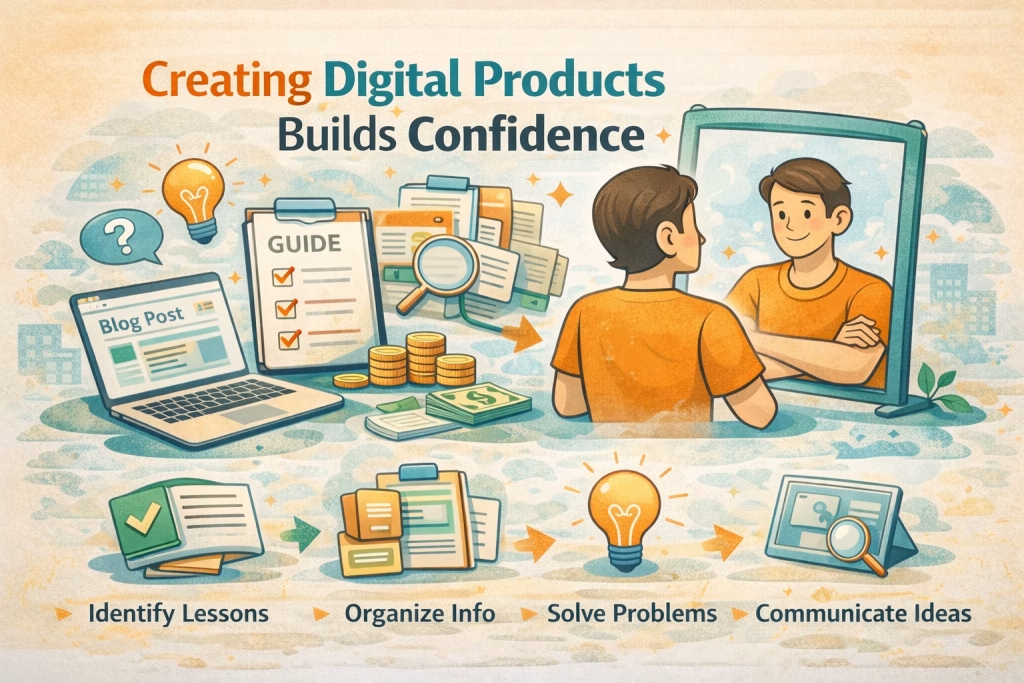
Many beginner bloggers struggle with a common question. “Do I actually know enough to help anyone?”
Creating a small digital product can answer that question quickly. When you take knowledge that once lived across several blog posts and organize it into a guide or checklist, something interesting happens. You begin to see your own experience differently. You realize that your journey contains useful insights.
The process of creating a product helps you:
- Identify what you have learned
- Organize information clearly
- Focus on solving real problems
- Communicate ideas more effectively
This builds confidence as a problem solver, which is a critical step for anyone building authority online. Often, the biggest transformation happens internally before it becomes visible to your audience.
Digital Products Turn Blog Content Into Assets
A blog post is valuable. It can educate readers, attract traffic, and build trust. But a structured digital product does something slightly different. It becomes an asset.
An asset is something that continues to provide value over time. Instead of existing as scattered information, your knowledge becomes a clear resource that people can rely on. For example, a blog might contain multiple posts about a topic such as starting a blog, creating digital products, or improving productivity.
But when those ideas are organized into a single guide or toolkit, readers receive a more complete solution.
This creates several benefits:
- Readers save time
- Knowledge becomes easier to follow
- Your expertise becomes more visible
- Your blog develops deeper credibility
Over time, these assets accumulate and form the foundation of a sustainable creator business.
Blogging and Digital Products Work Best Together
The most effective approach is not choosing between blogging and digital products. Instead, the two should work together. Blogging helps you explore ideas, teach concepts, and discover what your audience needs. Digital products allow you to package those insights into practical solutions.
When combined, they create a powerful cycle:
- Blog posts introduce ideas
- Readers engage and ask questions
- Patterns begin to appear
- Those patterns evolve into small digital products
- Products reinforce your authority and attract more readers
Over time, this cycle turns a simple blog into something much more meaningful. It becomes a place where ideas grow into resources that genuinely help people.
Final Thoughts
Digital products are not only for experienced creators. In many ways, they are perfect for beginner bloggers. You do not need a complex system or a large audience. You simply need to pay attention to the patterns in your content and the problems your readers want to solve.
Start small. Focus on clarity. Create something practical. A simple guide, checklist, or template can be the first step toward building something much larger. When blogging begins to produce helpful resources instead of isolated posts, everything changes.
Your blog stops being just a collection of articles. It becomes the beginning of a library of ideas that people can use, trust, and return to again and again.

by Digital Juan | Feb 23, 2026 | Create Digital Products
If you have been thinking about creating your first digital product, you have probably also talked yourself out of it at least once. Maybe you told yourself:
- I need a bigger audience first
- I need more expertise
- I need a full course
- I need better branding
- I need everything to look professional
So you keep writing. You keep learning. You keep planning. But you do not launch. This is where most beginners get stuck.
There is a common belief that your first digital product must be impressive, complex, and transformational. We see creators launching full scale courses, high ticket programs, and elaborate membership sites. It creates the illusion that digital products must be massive to be valuable.
That belief delays action. It creates pressure to be perfect before you begin. It makes you think you need more knowledge, more confidence, more credentials. In reality, the biggest thing you need is momentum.
Your first digital product is not supposed to be your masterpiece. It is supposed to be your training ground. It is not about building a seven figure system. It is about learning how to package value, how to communicate outcomes, and how to exchange your knowledge for income. When you reframe your first digital product as practice instead of perfection, everything shifts.
You stop asking, “What is the biggest thing I can build?” You start asking, “What is the smallest useful thing I can offer?” That question changes everything. If you want to build a sustainable creator business, you do not start with complexity. You start with clarity. You start small. You start smart. And most importantly, you start now.
What Makes a Beginner Digital Product “Right”

Not all beginner digital products are equal. Some are strategic. Others are overwhelming. The right first product has three core characteristics.
1. It Solves One Specific Problem
Your first digital product should not promise a complete life transformation. It should solve one clear, focused problem.
For example:
- Help someone outline their first blog post
- Help someone plan 30 days of content
- Help someone choose a blog niche
One problem. One outcome. Clarity makes your offer stronger and easier to sell. Broad promises create confusion. Specific solutions create confidence.
2. It Is Simple to Create
You do not need advanced technology. You do not need a 20 lesson course. The best beginner digital products are built from content you already have. If you have written blog posts, created frameworks, or explained processes, you already have raw material. Simplicity speeds up execution.
3. It Is Easy to Consume
Your product should be:
- Short
- Focused
- Actionable
- Clearly structured
People love quick wins. If someone can use your product in one sitting and get a result, they will associate that success with you. That is how you build trust.
4 Beginner Friendly Digital Product Types
If you are wondering how to create a digital product without feeling overwhelmed, start with one of these simple formats.
1. Checklists
Checklists are powerful because they simplify action. You can turn any step by step blog process into a structured list.
For example:
- Blog Post Publishing Checklist
- SEO Optimization Checklist
- Content Repurposing Checklist
They are easy to create and extremely practical. Checklists are ideal for tutorials and how-to content.
2. Templates
Templates save time. Instead of explaining a process, you provide the structure itself.
Examples include:
- 30 Day Content Planning Template
- Blog Post Outline Template
- Email Newsletter Template
If you already use systems in your own workflow, you can turn them into a beginner digital product. Templates feel valuable because they remove guesswork.
3. Worksheets
Worksheets help readers apply what they learned.
They are excellent for:
- Reflection
- Strategy planning
- Clarifying ideas
- Goal setting
For example:
- Define Your Blog Niche Worksheet
- Audience Clarity Workbook
- Digital Product Brainstorming Sheet
Worksheets transform passive reading into active thinking.
4. Short Guides or Mini Ebooks
You do not need to write 200 pages. A short guide of 15 to 30 pages can be powerful if it is focused.
You can:
- Combine related blog posts
- Organize them into a logical flow
- Add clearer structure
- Include actionable steps
Example:
Beginner’s Guide to Starting a Profitable Blog
The goal is clarity, not length.
How to Turn an Existing Blog Post Into a Product
You do not need to create from scratch. Here is a simple system to turn content into your first digital product.
Step 1: Identify a Post That Teaches a Process
Look for posts that explain:
- Steps
- Frameworks
- Checklists
- Systems
Process based content converts best.
Step 2: Extract the Core Steps
Remove extra explanation. Keep the actionable elements. Simplify the structure so it becomes clear and usable.
Step 3: Format Into a Checklist, Worksheet, or Template
Choose the simplest format. Do not overdesign. Focus on usability.
Step 4: Add a Short Introduction and Simple Design
Keep the design clean and readable.
Explain:
- What the product helps with
- Who it is for
- What result it creates
Step 5: Offer It as a Download
Add it to your blog:
- As a free lead magnet
- Or as a low priced offer
You are not inventing new value. You are repackaging value in a more usable format. This is how many beginner digital products are created.
What to Avoid as a Beginner
When creating your first digital product, avoid jumping into advanced models too quickly.
Avoid:
- Full scale online courses
- Complicated memberships
- High touch coaching programs
- Over designing before validating
These require:
- Stronger audience trust
- More complex systems
- Established authority
- Clear proof of demand
Start small. Build skill before scaling complexity. Trying to launch a massive course as your first offer often leads to burnout and disappointment.
The Real Purpose of Your First Digital Product
Your first digital product is not about maximizing revenue. It is about skill building.
You learn:
- How to package value
- How to structure information
- How to price an offer
- How to communicate benefits
- How to sell digital products online
You gain confidence. You gain proof of concept. Even a few sales validate your ability to create something people are willing to pay for. That confidence changes how you show up.
Action Step: Create Your First Digital Product in 7 Days
Instead of thinking about this for months, commit to a short deadline.
Here is your 7 day plan.
Day 1
Choose one blog post that teaches a process.
Day 2
Extract the core steps.
Day 3
Choose a simple format.
Day 4
Create the first draft.
Day 5
Clean up structure and wording.
Day 6
Design simply and clearly.
Day 7
Publish it before it feels perfect.
Momentum matters more than perfection. The fastest way to learn how to create a digital product is to create one.
Small Products Build Big Confidence
Simplicity builds momentum. Momentum builds skill. Skill builds income. Your first digital product is not the final version of your business. It is the beginning of your confidence as a creator.
Start small.
Start smart.
Start now.
by Digital Juan | Feb 18, 2026 | Create Digital Products
There’s a quiet frustration most bloggers don’t talk about.
You publish consistently.
You try to be helpful.
You even get some traffic.
But when it comes to making money, everything suddenly feels unclear.
You start thinking:
- Maybe I need a better idea
- Maybe I need a completely new product
- Maybe I’m not ready yet
So you open a blank page… and nothing happens. Here’s the truth most people miss:
You are not lacking ideas. You are overlooking assets.
Your blog is not just a collection of posts.
It is a record of:
- Problems you’ve already explored
- Questions people are already asking
- Paths people are already trying to follow
And hidden inside that record are product ideas that are already validated.
The problem is not creation. It’s recognition.
The Shift: From Blogger to Digital Product Creator
At the beginning, blogging feels like output. You write. You publish. You move on. But at some point, if you want this to turn into something sustainable, you have to change how you see your work. You stop treating your blog like a timeline…
…and start treating it like a library of solutions.
That shift changes everything. Because now, instead of asking:
“What should I write next?”
You start asking:
“What have I already solved that people would pay to shortcut?”
That’s the moment you stop being just a blogger. That’s when you start becoming a product builder.
Why Your Blog Is the Best Source of Product Ideas
Let’s be direct. Most digital products fail for one reason:
They were created in isolation.
No real signal.
No real demand.
Just assumptions.
Your blog protects you from that.
Because every post you publish creates feedback loops:
- Which topics attract attention
- Which ideas people stay on longer
- Which posts generate questions or confusion
These are not vanity metrics. These are buying signals in disguise.
When someone:
- Searches for a topic
- Clicks your post
- Reads through it
- Still needs more clarity
That gap between “content consumed” and “problem solved”…
That’s where your product lives.
The Content-to-Product System (Step-by-Step)
Step 1: Identify Your “Signal Posts”
Not all blog posts are equal. Some are just content.
Others are signals of demand. Your job is to tell the difference.
Look at your blog and ask:
- Which posts consistently get attention?
- Which topics keep coming back?
- Which articles feel like they could be expanded into something bigger?
These are your signal posts. They represent interest that already exists, not interest you’re trying to create.
What you’re really doing here
You’re not picking your favorite posts. You’re identifying:
“Where is the market already leaning in?”
That’s a very different mindset.
Step 2: Extract the Core Problem
Every valuable product is built around one thing: A clearly defined problem that people want solved now.
Your blog posts are surface-level answers. Your product will be the complete solution. So you dig deeper.
Instead of looking at titles, look at intent.
Ask:
- Why did someone search for this?
- What are they struggling with before they land here?
- What are they still missing after reading?
Example shift
A post says:
“How to Start a Blog”
But the real problem is:
“I’m overwhelmed and I don’t want to waste time doing this wrong.”
That emotional layer is what people pay for. Not just steps. But clarity and confidence.
Step 3: Group Content Into Product Themes
At this point, most people make a mistake. They try to turn one post into one product. That usually leads to weak offers. Instead, zoom out. Look for patterns.
Ask:
- Which posts naturally belong together?
- Which topics feel like steps in a journey?
Now you’re not building content anymore. You’re building transformation paths.
What this looks like in practice
You might notice:
- Post about starting
- Post about choosing niche
- Post about writing content
- Post about getting traffic
Individually, they’re helpful. Together, they tell a story:
“From zero to a functioning blog”
That story becomes your product.
Step 4: Choose the Right Product Format
Here’s where strategy matters. The format you choose should reduce effort for the user, not increase it. Think about how your audience wants to consume the solution.
A simple way to decide
- If your content is instructional → turn it into a structured guide
- If your content is repetitive → turn it into templates
- If your content is conceptual → turn it into a playbook
The real question to ask
“What format makes this easiest to apply immediately?”
Because convenience is value. And value is what people pay for.
Step 5: Validate Before You Create
This is where discipline comes in. You might feel excited about an idea. That doesn’t mean the market is. Validation protects your time.
Think of validation like this
You’re not asking:
“Do people like this idea?”
You’re asking:
“Will people take action around this idea?”
Those are very different signals.
Lightweight ways to validate
- Turn the idea into a blog post and track engagement
- Offer it as a free download and measure signups
- Add a simple call-to-action and track clicks
You’re looking for movement. Because movement means demand.
Step 6: Package the Outcome, Not the Content
This is where most creators undersell themselves. They describe what the product is… instead of what it does.
People don’t buy:
They buy:
So instead of saying:
“10-page blogging guide”
You say:
“Launch your blog without second-guessing every step”
Same material. Different value perception.
The Content Flywheel (Where Momentum Starts Compounding)
Once you go through this process once, something clicks. You stop seeing content as one-time effort. You start seeing it as raw material.
Your system becomes:
- You write content
- You observe what performs
- You turn it into a product
- You use that product to grow your audience
- That audience gives you better insights
Then you repeat. This is where blogging becomes a business. Not because you publish more…
…but because every piece of content starts working twice.
Common Mistakes to Avoid
Let’s tighten this up.
- Creating Without Signals. If no one is engaging with the topic, it’s not ready.
- Overbuilding Too Early. Your first version should feel simple, even slightly incomplete.
- Ignoring What Already Works. If something is performing, lean into it. Don’t abandon it.
- Waiting for Confidence. Confidence comes after you launch, not before.
Your First Action Plan
This is where most people stall. So let’s make this practical and grounded.
Step 1: List Your Top 10 Blog Posts
Go to your blog analytics or just scan your content.
Write down 10 posts that:
- Get the most traffic
- Feel the most useful
- Cover foundational topics
Why this matters
You’re creating a shortlist of proven attention. You’re not guessing what works. You’re starting from what already does.
Step 2: Group Them Into 2 to 3 Themes
Look at your list and start grouping posts that naturally connect. Don’t overthink this.
Just ask:
- Which posts feel like part of the same journey?
Why this matters
This step transforms scattered ideas into structured direction.
Instead of random topics, you now have:
- Beginner path
- Growth path
- Monetization path
That’s how products are formed.
Step 3: Turn One Theme Into a Simple Product Idea
Pick just one group.
Then complete this sentence:
“This product will help someone go from ___ to ___.”
Example:
“From not knowing how to start a blog → to publishing their first blog with confidence”
Why this matters
This forces clarity.
If you can’t define the transformation, the product will feel vague.
And vague doesn’t sell.
Step 4: Test It as a Free Download
Before building anything complex, create a simple version.
This could be:
- A checklist
- A short PDF
- A mini guide
Then offer it inside your blog.
Why this matters
You’re testing behavior, not opinions.
If people download it:
→ You’re on the right track
If they don’t:
→ Adjust before investing more time
This step protects your energy and accelerates learning.
Final Thought: Your Blog Is Not Content, It’s Inventory
Every post you publish is something you can use later. Most people treat content like output. You need to treat it like inventory waiting to be packaged.
Because once you understand this:
- You stop chasing ideas.
- You start refining assets.
And that’s how you build something that grows over time.

by Digital Juan | Feb 13, 2026 | Create Digital Products
It’s easy to assume that your best-performing content should become a product. More traffic, more shares, more visibility. It feels like a clear signal. But that’s where a lot of creators get stuck.
Because attention doesn’t always translate into value. And value is what people pay for.
If you build a product based on the wrong signals, you end up with something that looks good on paper but doesn’t move in reality. So the better question is not “What performed well?”
It’s “What actually helps people enough that they’d pay to go further?”
The Shift: From Content That Gets Attention to Content That Solves Problems
Content lives in two different worlds. Some content attracts. It sparks curiosity, gets clicks, and brings people in. Other content solves. It reduces friction, answers real problems, and creates progress. Only one of those reliably turns into a product.
If your content doesn’t help someone move from point A to point B, it’s not ready yet. It might still be valuable. But it’s not product material.
Products are built on utility, not just interest.
Signal 1: Repeated Demand
The strongest signal is repetition. Then people keep asking the same question in different ways, that’s not сlarificationhat’s demand trying to organize itself.
Look for:
- Comments asking for clarification
- Messages requesting more detail
- Readers coming back to the same topic
- Conversations that extend beyond the post
One question is interesting. Ten similar questions point to something deeper. That’s where product ideas begin.
Signal 2: Depth That Can’t Fit in One Post
Some topics resist being compressed. You try to explain them in a single article, but it feels incomplete. You skip steps. You simplify too much. You leave things out just to keep it readable.
That tension matters.
It usually means the topic has layers:
- Context
- Process
- Examples
- Edge cases
When a topic naturally expands beyond one post, it’s a strong candidate for a structured product.
Signal 3: Clear Transformation
People don’t pay for information. They pay for outcomes. If your content hints at a transformation, that’s a strong sign.
Ask:
- What changes after someone applies this?
- What result are they moving toward?
- Can I describe a clear before and after?
For example, “understanding productivity” is vague. “Building a weekly system that reduces overwhelm” is concrete.
Clarity makes content product-worthy.
Signal 4: Actionability
Good content explains. Product-worthy content guides. There’s a difference. If someone reads your post and thinks, “That makes sense,” that’s a good start.
If they read it and think, “I can do this now,” that’s stronger.
Look for content that naturally includes:
- Steps
- Frameworks
- Checklists
- Decision-making tools
These are the building blocks of products.
Signal 5: Audience Willingness to Invest
Before money, there’s effort. People show intent in small ways first:
- They save your post
- They spend more time reading
- They reply or ask follow-up questions
- They join your email list
These are early signals of investment. If someone is willing to give time and attention, there’s a path to asking for more.
But if engagement is shallow, monetization will feel forced.
What Doesn’t Make Content Product-Worthy
Not everything should become a product. Some content is valuable for reach, not revenue.
Be cautious with:
- High-traffic posts with low engagement
- Trend-based topics that fade quickly
- Broad content that tries to speak to everyone
- Posts that inform but don’t guide action
These can grow your audience. But they don’t always convert into something people will pay for. And that’s okay.Final
Final Thoughts
Turning content into a product isn’t about maximizing output. It’s about recognizing where real value already exists. The best products don’t start as ideas. They start as answers.
Answers that people keep looking for, engaging with, and trying to apply. When you build from that place, you’re not guessing anymore. ou’re responding.
Actionable Takeaways
To apply this right away:
- Review your top-performing posts and look for repeated questions
- Identify one topic that feels too big for a single article
- Define the transformation it offers in one clear sentence
- Outline simple steps or a framework from that content
- Test interest by sharing a deeper version or asking your audience directly
Not all content deserves to become a product.
But the right content makes it obvious when it’s time.