by Digital Juan | Mar 3, 2026 | Create Digital Products, Featured
The Point Where Blogging Stops Being Enough
At the beginning, blogging feels like progress. You publish posts. You organize your ideas. You slowly build something online.
And for a while, that’s enough. But eventually, a question starts to surface:
“What is all of this building towards?”
Because if you’re honest, content alone doesn’t create leverage.
It informs.
It attracts.
But it doesn’t fully capture value.
And that’s the moment most bloggers either:
- Stay stuck in content creation
- Or evolve into something more intentional
The Real Problem: You’re Treating Content as the End
Most bloggers unknowingly operate like this:
- Write post
- Publish
- Move on
- Repeat
It feels productive. But structurally, nothing is compounding. Because each post is treated as a finished output, not a reusable asset.
That’s why growth feels slow. Not because you’re doing the wrong things…
…but because you’re not extracting enough value from what you’ve already done.
The Shift: From Publishing Content to Building Assets
This is where everything changes. Instead of asking:
“What should I write next?”
You start asking:
“What have I already created that can be turned into something bigger?”
That one question transforms your role. You’re no longer just a blogger. You’re a builder of structured solutions.
Because when you look at your content differently, you start to see:
- Patterns
- Repeated questions
- Gaps between information and execution
And those gaps are not problems. They are opportunities.
Where This Shift Actually Begins
Before you can turn content into products, you need one foundation:
👉 Intentional content creation
If your blog is random, your product ideas will be random. That’s why understanding content strategy matters first.
If you haven’t yet, read this:
👉 Content Planning for Bloggers
https://digitaljuan.com/content-planning-for-bloggers/
This will help you:
- Create content around real problems
- Build posts that connect with each other
- Lay the groundwork for future products
Because products don’t start at creation.
They start at content direction.
Seeing Your Blog Differently
Once your content has structure, a new layer becomes visible. Your blog is no longer just a collection of posts.
It becomes:
- A map of problems
- A record of solutions
- A timeline of transformation
Each post represents a step. But no single post completes the journey. That’s the key insight.
Why Content Alone Is Not Enough
A blog post can:
But it rarely:
- Completes
- Organizes
- Accelerates
Readers still have to:
- Piece things together
- Interpret steps
- Fill in gaps
And that’s where friction exists. That friction is exactly what digital products remove.
The Hidden Opportunity Inside Your Content
Every strong blog has this pattern:
- A topic gets attention
- Readers engage
- Questions remain
That gap between:
“I understand this”
and
“I can actually do this”
Not in the content itself. But in what the content does not fully resolve.
From Insight to System
This is where most people stop. They recognize the opportunity…
…but don’t know how to act on it. That’s because they’re missing a system.
👉 The next step is not creating randomly. It’s learning how to systematically extract product ideas from your content.
Start here:
👉 How to Find Digital Product Ideas From Your Blog Content
https://digitaljuan.com/how-to-find-digital-product-ideas-from-your-blog-content/
This will show you how to:
- Identify high-signal posts
- Group content into product themes
- Turn scattered ideas into structured offers
This is where your blog becomes a product engine.
And Then Comes Execution
Once you have a clear idea, the next trap appears:
Overthinking.
Trying to build something too big.
Trying to get everything right.
That’s where momentum dies. So the next step is simple:
👉 Your First Digital Product: Start Small, Start Smart, Start Now
https://digitaljuan.com/your-first-digital-product-start-small-start-smart-start-now/
That guide will help you:
- Choose a small, focused product
- Build it quickly
- Launch without overcomplicating the process
Because execution is what turns ideas into reality.
The Identity Shift That Changes Everything
At this point, something subtle but powerful happens. You stop thinking like someone who writes content. You start thinking like someone who builds systems.
You begin to see:
- Every post as raw material
- Every idea as something expandable
- Every topic as something packageable
That’s when your blog stops being:
“Something you maintain”
And becomes:
“Something that produces”
Final Thought: This Is the Turning Point
Most bloggers never make this shift.
They stay in:
- Writing mode
- Publishing mode
- Consumption mode
But the ones who do…
Start to see their blog differently. Not as content. But as inventory waiting to be structured into value.
How This Fits Into Your System
This post is your turning point.
From here, the path is clear:
- Content Strategy → Learn what to create
- This Post → Shift how you think
- Find Product Ideas → Build direction
- Create First Product → Take action
- Validate and Sell → Build income
If you take one action after this
Don’t just read. Move forward.
👉 Go to:
How to Find Digital Product Ideas From Your Blog Content
Because mindset without action stays abstract.
And this is where things start becoming real.
by Digital Juan | Jan 4, 2026 | Featured, Start a Blog
Most people start blogging because they enjoy writing. They have ideas to share, experiences to document, or lessons they want to pass on. At first, blogging feels creative and open ended. You publish when you feel inspired. You experiment with topics. You hope readers find you. But over time, something begins to feel incomplete.
You start wondering whether your blog could become more than a collection of posts. You notice certain topics resonate more. You see patterns in what people ask you. You realize your writing is solving real problems.
That realization is the beginning of becoming a blogger entrepreneur. Blogging stops being random expression. It starts becoming strategic creation.
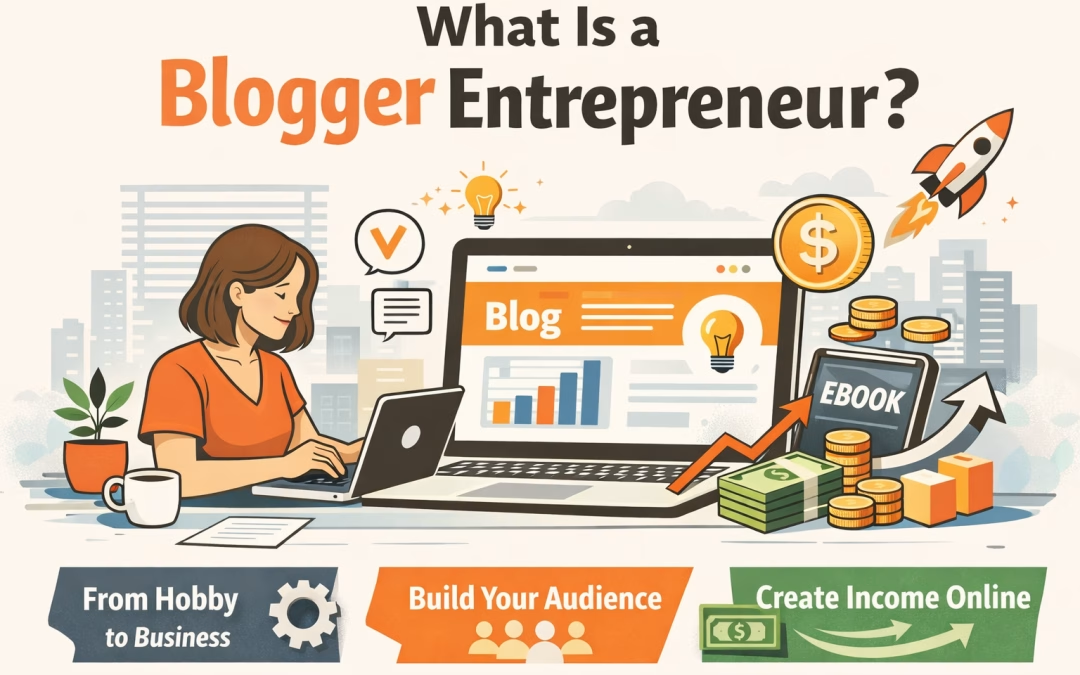
What Is a Blogger Entrepreneur?
At its core, a blogger entrepreneur is someone who treats their blog as an asset instead of a hobby. That shift sounds small. It is not.
When you see your blog as an asset, you begin to:
- Publish with intention
- Build around specific themes
- Think in terms of long term growth
- Create content that connects together
- Look for structured opportunities
A blogger entrepreneur understands that blogging as a business is about building equity over time.
Instead of asking, “What should I write today?”
You begin asking, “What am I building this year?”
That question changes everything.
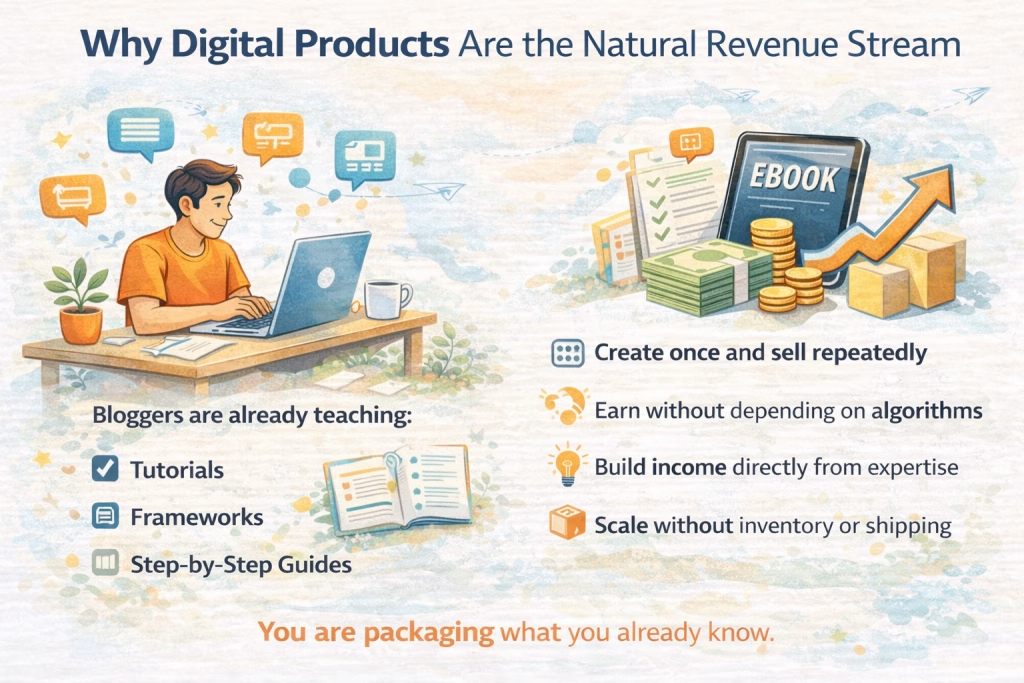
Why Digital Products Are the Natural Revenue Stream
Many beginners think monetizing a blog requires:
- Massive traffic
- Display ads
- Brand sponsorships
- Viral content
Those methods can work. But they often depend on external platforms and unpredictable growth. Digital products for bloggers are different.
They allow you to:
- Create once and sell repeatedly
- Earn without depending on algorithms
- Build income directly from expertise
- Scale without inventory or shipping
The most important reason digital products work is simple. Bloggers are already teaching.
If you write tutorials, frameworks, or step by step guides, you are already structuring value. A digital product simply organizes that value into a focused, usable format. You are not becoming someone new. You are packaging what you already know.
Your Blog Is the Research Lab for Products
When you look at your blog closely, you will see patterns. Certain explanations appear again and again. Readers ask similar questions. Some posts perform better than others. Specific frameworks repeat.
Those patterns reveal:
- Demand
- Clarity gaps
- Common struggles
- Topics worth expanding
Instead of guessing what to sell, a blogger entrepreneur studies their own content.
For example:
If you have multiple posts about content planning, that could become a template.
If you repeatedly explain SEO basics, that could become a beginner guide.
If readers often ask how to choose a niche, that could become a worksheet.
Repetition is not redundancy. It is structure emerging.
From Writer to Builder
The mindset shift happens internally first. When you begin thinking about digital products, your writing changes. You start organizing ideas more clearly. You connect posts into sequences. You think in systems instead of isolated topics.
Your blog becomes:
- More structured
- More focused
- More intentional
- More aligned with long term goals
This is when blogging transforms into entrepreneurship. You are no longer just publishing. You are building infrastructure.
Ownership Creates Stability
One of the biggest advantages of being a blogger entrepreneur is ownership. Social media platforms are rented space. Algorithms shift. Reach fluctuates. Visibility is unpredictable.
Your blog, however, allows you to:
- Control the platform
- Control the content
- Control the messaging
- Build search driven traffic
- Direct readers toward your own offers
When you monetize a blog with digital products, you are building on owned digital real estate. That ownership creates stability in a constantly changing online world.
The Compounding Effect of Blogging and Digital Products
At first, growth feels slow. One post does not transform your business. One product does not generate instant freedom. But blogging is a compounding model.
Every blog post can:
- Attract search traffic
- Build trust with readers
- Lead to an email signup
- Introduce a digital product
- Generate income
Over time, those actions layer on top of each other.
Traffic builds trust.
Trust builds authority.
Authority supports product sales.
Sales fund further growth.
This is how you turn a blog into income sustainably.
The Identity Shift That Unlocks Growth
Before revenue increases, identity changes. When you create your first digital product, even a simple checklist, something shifts internally. You stop seeing yourself as someone experimenting. You begin seeing yourself as someone building value.
You start to:
- Organize your knowledge more clearly
- Recognize the value of your experience
- Think in systems instead of posts
- Build with long term intention
Authority begins internally before it becomes external. That is the true transformation of a blogger entrepreneur.
Blogging Is Infrastructure, Not Just Content
Blogging is not just publishing articles. It is building digital infrastructure. Your blog supports:
- Visibility through search
- Trust through helpful content
- Income through digital products
- Community through email
- Authority through consistency
When you understand this, blogging becomes directional.
You are not just writing. You are building an asset that grows, compounds, and creates opportunity over time. That is what it means to be a blogger entrepreneur.

by Digital Juan | Jul 23, 2025 | Featured, Start a Blog
Every few years, someone claims blogging is dead. The argument sounds convincing: attention spans are shrinking, video dominates every platform, and AI can write articles in seconds. Yet the truth is, blogging hasn’t disappeared — it has evolved.
Look closely, and you’ll notice that many top digital entrepreneurs still rely on their blogs as the foundation of their online presence. They might use YouTube, TikTok, or podcasts to expand their reach, but their websites remain the home base where their brand lives and grows.
A blog builds authority, attracts organic traffic, and creates stable income. In 2026, blogging isn’t a fading art form. It’s a maturing digital career path that rewards those who adapt, stay consistent, and deliver real value.
The Digital Career Landscape in 2026
The digital economy in 2026 is broader than ever. Content creation isn’t a side project anymore — it’s a professional ecosystem. People now identify as digital strategists, creators, educators, and solopreneurs. At the center of that ecosystem lies one timeless need: a home base online.
Social media gives visibility, but blogs give ownership. When you publish on your own platform, you control your message, audience data, and long-term brand story. That control is priceless in a world where algorithms shift daily.
Search engines continue to favor original, high-quality writing. A single in-depth article can still outperform dozens of social posts because it compounds over time. Blogging remains the engine behind SEO authority, personal branding, and trust — the foundation of nearly every sustainable online business.
Why Blogging Still Holds Career Value
Even in a fast-changing creator economy, blogging continues to deliver value on three fronts: authority, visibility, and income.
Authority comes from sharing thoughtful, experience-based insights. When readers search for guidance and land on your blog, they’re not just consuming information — they’re forming trust. Over time, that trust becomes brand equity.
Visibility grows naturally from authority. A well-optimized post can bring organic traffic for months or even years. Unlike a tweet or reel, blog content doesn’t vanish overnight. It builds momentum, ranking higher with each backlink and share.
Income remains the most rewarding benefit. Modern bloggers monetize through:
-
Affiliate partnerships that align with their expertise
-
Digital products and online courses that scale their knowledge
-
Sponsored collaborations built on long-term trust
The formula for success hasn’t changed much: create value consistently, optimize strategically, and speak authentically.
How AI Is Enhancing, Not Replacing, Bloggers
AI has reshaped how we create, but not why audiences engage. While tools like ChatGPT can assist with brainstorming or editing, they can’t replace human judgment, tone, or lived experience.
Smart creators treat AI as a collaborator, not a competitor. They use it to handle time-consuming tasks — keyword research, outlines, or SEO audits — while they focus on storytelling and insight.
In 2026, the winning strategy will be AI-assisted creativity. The best blogs will blend data-driven precision with authentic human voice. Readers don’t want robotic writing; they want content that feels real, thoughtful, and alive.
Shifts in How Audiences Consume Blogs
Audience behavior has matured. Readers no longer reward clickbait or recycled advice. They value trust, substance, and personality.
They want to hear from people who:
That’s why blogs continue to matter. A well-written post still has the power to shape opinions, teach complex ideas, and influence decisions far beyond the reach of a short-form video.
Modern blogs have also become multi-channel hubs. Successful creators use their blog as the anchor for newsletters, podcasts, and online communities. The blog gives permanence to ideas that social media can only flash.
In 2026, the blogs that thrive will focus less on volume and more on depth and credibility. Readers reward creators who respect their intelligence and time.
Monetization Models That Still Work (and Will Grow)
Monetization has evolved, but blogging’s income potential remains strong. The most profitable blogs today rely on diverse, trust-based revenue models.
- Affiliate Marketing
Still one of the most reliable ways to earn. When creators recommend tools or products they genuinely use, audiences respond with loyalty. Micro-niches, where creators serve specific communities, perform especially well.
- Digital Products and Courses
Blog posts often act as gateways to deeper learning experiences. If your content solves real problems, you can naturally guide readers toward premium offerings — courses, workshops, or templates.
- Sponsorships and Partnerships
Brands are moving away from one-off influencer deals. They prefer long-term relationships with credible creators who share aligned values. That’s where established bloggers have a clear advantage.
No matter the model, authenticity drives revenue. Audiences are quick to sense when content feels transactional. Transparency and consistency will always outperform aggressive selling.
How to Future-Proof a Blogging Career
To stay relevant, bloggers must approach their craft like entrepreneurs. That means investing in skill stacking and continuous learning.
Key skills for 2026 include:
-
SEO and analytics to understand what drives traffic
-
Storytelling and voice to connect emotionally
-
Email marketing and community building to retain loyal readers
Treat your blog as a long-term business, not a content hobby. Track your performance, experiment with new formats, and analyze what resonates. When you publish with intention, you position yourself for steady growth. Engagement remains the strongest indicator of success. Reply to comments, nurture your email list, and create feedback loops. The more involved your audience feels, the stronger your brand becomes.
To future-proof your career, be adaptable, data-aware, and human-centered. The combination of creativity and curiosity will always win.
What the Next Five Years Could Look Like
Blogging’s future is intertwined with the evolution of the creator economy. Web3, AI, and decentralization are reshaping how creators build audiences and earn income. Yet one constant remains: ownership matters more than ever. Blogs will integrate more deeply with other content forms. Newsletters, podcasts, and digital communities will all circle back to the same foundation , your website. As algorithms and platforms continue to shift, your blog remains an asset you control completely.
AI will keep improving workflows, but human perspective will become the true differentiator. The more automated the internet becomes, the more valuable genuine thought leadership will be.
The next phase of blogging will favor creators who combine authenticity, independence, and adaptability. Those who build with long-term intent will shape the next generation of digital authority.
Key Takeaways for Aspiring Digital Creators
If you’re considering blogging in 2026, here’s the good news: the opportunity is still wide open.
Focus on these fundamentals:
-
Choose a niche that aligns with your expertise or curiosity.
-
Create content that solves real problems for a defined audience.
-
Use AI as an assistant, not a crutch.
-
Build an email list early and treat it as your core community.
-
Publish consistently, even when progress feels slow.
Blogging rewards patience and persistence. Each post you publish becomes a digital asset that compounds over time. The longer you stay consistent, the more your authority and income grow. Above all, treat your blog as a professional platform. Write with integrity, connect with readers, and keep learning. In a noisy digital world, clarity and honesty cut through everything.
Final Thoughts
The claim that blogging is obsolete misses the point. The internet is built on writing, stories, and shared knowledge , the very things blogging embodies.
In 2026, blogging will continue to thrive because it offers what no short-form content can: depth, trust, and ownership. The tools will change, but the value of authentic connection will not. If you create with purpose, adapt with curiosity, and stay true to your voice, blogging can still be one of the most rewarding digital careers out there. It remains one of the few creative pursuits where consistency builds both freedom and legacy.