by Digital Juan | Apr 2, 2026 | Start a Blog
At first, blogging feels simple. You come up with ideas. You write posts. You publish consistently. On the surface, it looks like progress. But after a while, something feels off. Traffic is inconsistent. Growth is slow. And your content does not seem to build on itself.
That is usually the moment when the real question shows up. “Why isn’t this working?” In most cases, the answer is not effort. It is approach.
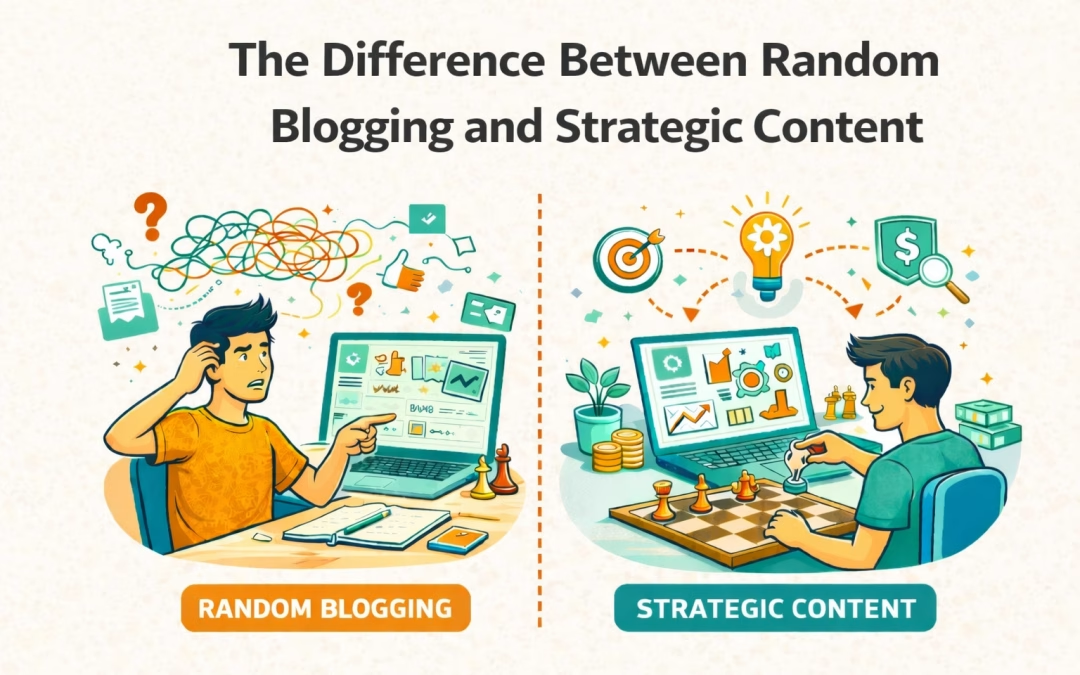
You are not building strategically. You are posting randomly. And the difference between those two is what separates blogs that grow from blogs that stay stuck.
What Random Blogging Actually Looks Like
Random blogging is not always obvious. It often feels productive. You are writing regularly. You are publishing. You are trying to improve.
But underneath that activity, there is no real structure.
Here is what it usually looks like:
- Writing based on inspiration or mood
- Jumping between unrelated topics
- No clear keyword or demand validation
- No connection between posts
- No defined outcome for the content
Each post exists on its own. There is no system tying everything together.
Key Insight:
Random blogging creates content. But it does not create momentum.
Why Random Blogging Feels Productive But Isn’t
This is where many creators get stuck. Because random blogging gives you a sense of progress. You can point to your output. “I’ve published 10 posts this month.” But output is not the same as growth.
Without direction:
- Traffic stays inconsistent
- Authority does not build
- Readers do not stick around
- Conversions remain low
It feels like you are moving. But you are actually staying in the same place.
Activity without alignment leads to stagnation.
What Strategic Content Really Means
Strategic content is different. It is not about writing more. It is about writing with purpose. Every piece of content is created with a clear role in mind.
It answers three questions:
- Who is this for
- What problem does it solve
- What happens after someone reads it
Instead of isolated posts, you build a system.
Where:
- Topics are connected
- Content builds on itself
- Readers are guided forward
Key Concept:
Strategic content is designed. Random content is improvised.
The Core Differences That Matter
Let’s break this down clearly.
Random Blogging
- Idea-driven
- Inconsistent topics
- No clear structure
- No long-term plan
- Limited compounding effect
Strategic Content
- Demand-driven
- Focused on a core topic
- Structured and interconnected
- Built around a system
- Designed to compound over time
The difference is not subtle. It is foundational. And it directly impacts results.
Why Strategic Content Wins Over Time
Strategic content works because it compounds. Each post strengthens the others. Each topic reinforces your authority. Each piece adds to a larger system.
Over time, this leads to:
- Better search rankings
- More consistent traffic
- Stronger audience trust
- Higher conversion potential
Instead of starting from zero with every post, you build on what already exists.
Momentum comes from connection.
How Random Blogging Keeps You Stuck
Random blogging creates friction in your growth.
Because:
- Search engines cannot clearly understand your focus
- Readers do not see a clear path through your content
- Your expertise feels scattered instead of deep
This leads to a cycle:
You write → you publish → you see little result → you question your approach → you keep writing without changing strategy.
And nothing improves.
Without structure, effort does not scale.
How to Shift From Random to Strategic
This is where things start to change. You do not need to start over. You need to shift how you think.
- Choose a Core Topic Focus on one area where you want to build authority.
- Identify Real Demand Use search behavior to guide what you create.
- Plan Content in Clusters Group related topics together.
- Connect Your Content Use internal links to create a network.
- Define a Goal for Each Post Every piece should move the reader somewhere.
Clarity creates direction. Direction creates growth.
Building a Simple Content System
You do not need something complex. A simple system works. Here is a practical model:
- Pillar Content A comprehensive guide on your main topic.
- Supporting Content Focused posts that explore specific angles.
- Conversion Content Posts that connect directly to your product or offer.
Together, these create a flow:
- Attract
- Build trust
- Convert
This is how content turns into results.
Actionable Takeaways
If your blog feels stuck, the issue is rarely effort. It is usually structure.
Here is your reset plan:
- Stop writing based on random ideas
- Choose a clear topic to focus on
- Validate demand before creating content
- Build content in connected clusters
- Link your posts to create a system
- Define a purpose for every piece of content
- Focus on long-term compounding, not short-term output
And most importantly:
Stop thinking like a writer. Start thinking like a strategist.
Because the moment your content becomes intentional, everything changes. Your posts stop being isolated. And start working together to build something that actually grows.
by Digital Juan | Mar 30, 2026 | Start a Blog
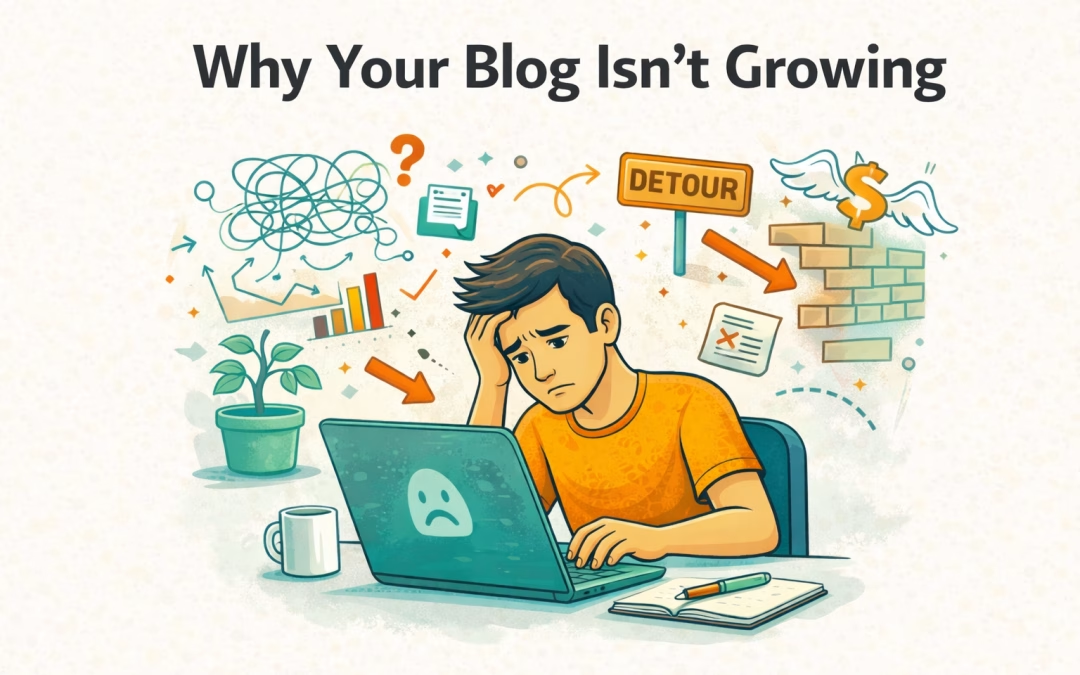
You’re doing the work. You’re writing posts. Publishing consistently. Trying to improve with every piece. But your blog still feels stuck. Traffic is low. Growth is slow. And it’s hard to tell if anything is actually working. At some point, the question shifts from “What should I write next?” to something more frustrating.
“What am I missing?”
The answer is usually not effort. It is alignment. Because blog growth is not just about creating content. It is about creating the right content, in the right way, within the right system.
Let’s break down what is actually holding your blog back.
The Real Problem With Blog Growth
Most blogs do not fail because of one big mistake. They fail because of small gaps that compound over time. Individually, these gaps seem minor. Together, they stop momentum completely.
Things like:
- Writing without direction
- Targeting unclear topics
- Publishing without a system
- Hoping results will come
The result is predictable. You stay busy, but nothing scales.
Key Insight:
Growth comes from alignment, not activity.
You’re Creating Content Without Demand
This is one of the most common issues. You are writing content. But no one is searching for it. Or the demand is too low to generate meaningful traffic.
This usually happens when you:
- Write based on personal ideas
- Skip keyword research
- Assume people are interested
The fix is simple in theory, but powerful in practice.
Start with demand, not ideas.
Before writing, ask:
- Are people searching for this?
- Is there consistent interest?
- Can I compete with existing content?
When your content aligns with demand, growth becomes possible.
You’re Missing Search Intent
Even if you choose the right topic, you can still miss the mark. Because not all searches are equal. Someone searching “how to start a blog” wants a clear, step-by-step guide. Someone searching “blogging tools” wants recommendations. If your content does not match that intent, it will struggle to rank.
Key Concept:
Matching intent is more important than covering a topic. So before you write, look at what is already ranking.
Not to copy.
But to understand what people expect.
You’re Not Building a Content System
Publishing random posts is one of the fastest ways to stall growth. Each post might be useful. But they do not connect. And without connection, there is no compounding effect.
What you need instead is a content system.
- One core topic
- Multiple supporting posts
- Strong internal linking
This creates structure. And structure builds authority.
Authority is what drives consistent traffic.
Your Content Lacks Depth and Clarity
Surface-level content is everywhere. And that is exactly why it struggles.
If your content:
- Skims ideas
- Avoids specifics
- Lacks examples
It becomes forgettable. To stand out, your content needs to go deeper. But depth is not about complexity. It is about clarity.
Explain things in a way that makes the reader feel like they finally understand.
That is what keeps people engaged. And what signals quality to search engines.
You’re Not Giving Readers a Next Step
Let’s say someone reads your post. They get value.
Then what?
If there is no clear next step, the journey ends there. This is a missed opportunity. Every post should guide the reader forward.
That might be:
- Another related article
- A deeper guide
- A resource
- A product
Content should lead somewhere.
Otherwise, it becomes a dead end.
You’re Ignoring Distribution
Publishing is not the finish line. It is the starting point. If you rely only on search traffic, growth will be slow. Especially in the beginning. You need to actively get your content in front of people.
That might include:
- Sharing on social platforms
- Engaging in relevant communities
- Building an email list
Visibility accelerates growth. Without it, even great content can go unnoticed.
You Expect Results Too Quickly
This is the hardest one to accept. Blogging takes time. Search engines take time to trust your content. Authority takes time to build. Most blogs feel like they are not working in the early stages.
But that does not mean they are failing. It means they are in the foundation phase.
Growth in blogging is delayed, not absent.
What Growth Actually Looks Like
Blog growth is rarely linear. It usually looks like this:
- Slow start
- Little to no traffic
- Gradual improvement
- Sudden increase
That “sudden” growth is not random. It is the result of consistent effort finally compounding. Understanding this helps you stay patient.
And patience is a competitive advantage.
How to Fix What’s Missing
Now let’s make this practical. If your blog is not growing, here is where to focus.
- Align With Demand Choose topics people are actively searching for.
- Match Search Intent Create content that delivers exactly what the reader expects.
- Build a Content System Connect your posts into a structured network.
- Improve Depth and Clarity Make your content genuinely helpful and easy to understand.
- Guide the Reader Forward Always include a next step.
- Distribute Your Content Do not rely on publishing alone.
- Stay Consistent Long Enough Give your content time to work.
Small improvements in each area lead to significant growth over time.
Actionable Takeaways
If your blog is not growing, it does not mean you should stop. It means you should adjust.
Here is your reset plan:
- Stop writing randomly and define a clear direction
- Focus on topics with real demand
- Match your content to search intent
- Build a connected content system
- Make your content clearer and more useful
- Add clear next steps in every post
- Actively promote your content
- Be patient and let results compound
And most importantly:
Growth is not about doing more. It is about fixing what is missing.
Once you close those gaps, your blog stops feeling stuck. And starts moving forward with purpose.
by Digital Juan | Mar 29, 2026 | Start a Blog
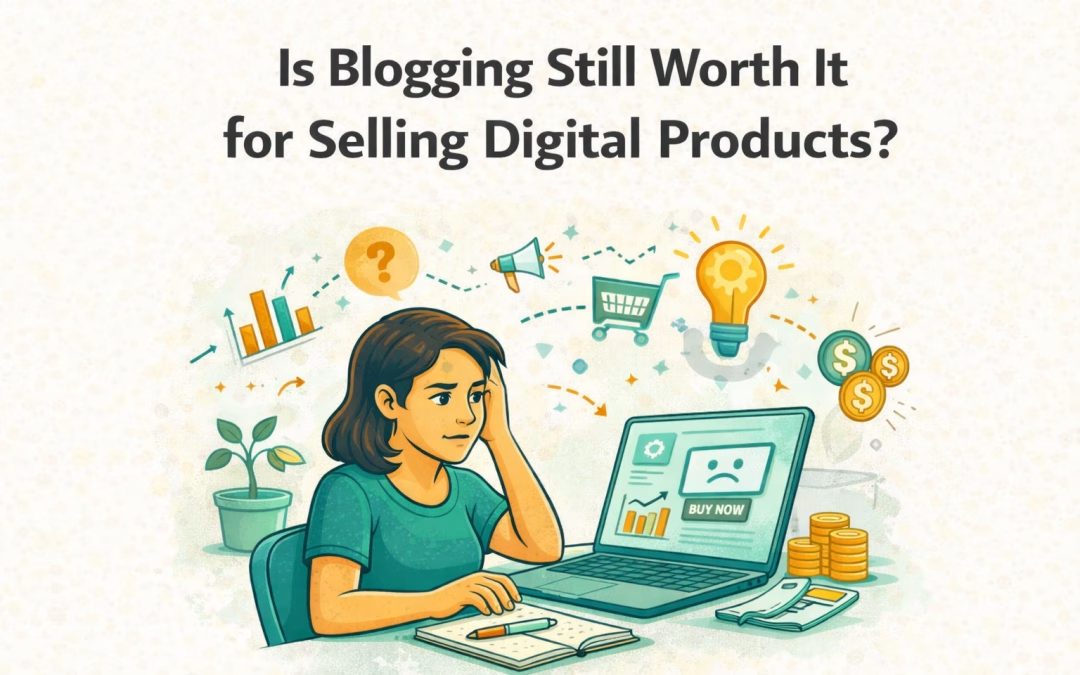
If you are trying to sell digital products today, you are probably asking a very practical question. Should I even bother with blogging? Social media feels faster. Easier. More immediate. You can post today and get views within hours. Blogging, on the other hand, feels slow.
You write. You publish. And then you wait. So it is natural to wonder if it is still worth it. Here is the honest answer.
Blogging is one of the most effective ways to sell digital products today. But only if you use it correctly.
To understand why, you need to look at how people actually buy.
Why This Question Matters More Than Ever
The creator economy has changed how people discover content. But it has not changed how people make decisions.
Before someone buys a digital product, they usually go through a process:
- They recognize a problem
- They search for solutions
- They compare options
- They build trust
- Then they buy
Social media is great for awareness. But it is not designed for depth. And depth is what drives decisions.
That is where blogging comes in.
The Problem With Relying Only on Social Media
Social platforms are powerful. But they have limitations that directly affect sales.
1. Attention Is Shallow
People scroll quickly. Even if they see your content, they rarely stay long enough to fully understand your offer.
2. Algorithms Are Unpredictable
Your reach can change overnight. What works today might not work tomorrow.
3. Content Has a Short Lifespan
Most posts disappear within days. Which means you are constantly starting from zero.
Key Insight:
Social media is great for visibility. But it is weak for conversion.
What Blogging Actually Does for Digital Product Creators
Blogging fills the gap that social media leaves behind.
It allows you to:
- Explain ideas in depth
- Build trust over time
- Answer real questions
- Guide readers step by step
Most importantly, it creates an environment where people are ready to learn. And people who are ready to learn are much closer to buying.
Blogging turns attention into understanding.
The Power of Search Intent for Sales
This is the biggest advantage of blogging. When someone finds your blog through search, they are not browsing. They are looking.
Looking for:
- Solutions
- Guidance
- Clarity
For example:
Someone searching “how to start freelancing” is already interested. If your blog helps them understand the process, they are far more likely to trust your recommendation.
And that is where your digital product fits in.
Key Concept:
Search traffic is high-intent traffic. And high-intent traffic converts.
Blogging as a Conversion System
Most people think of blogging as content. But when done right, it becomes a system.
Here is how it works:
Step 1: Attract the Right Audience
You write posts that target specific problems.
Step 2: Build Trust Through Value
Your content helps readers make progress.
Step 3: Introduce Your Product Naturally
Your product becomes the next logical step. This is not about aggressive selling. It is about alignment.
When your content solves part of the problem, your product solves the rest.
Blogging vs Social Media for Selling
Let’s make this clear. This is not about choosing one over the other. It is about understanding their roles.
Social Media
- Brings attention
- Builds awareness
- Creates initial interest
Blogging
- Builds trust
- Provides depth
- Drives conversions
If you rely only on social media, you are constantly chasing attention. If you combine it with blogging, you create a path.
From discovery to decision.
When Blogging Is Worth It for Digital Products
Blogging is not automatically worth it. It depends on how you use it.
Blogging Works Best If:
- You sell educational or problem-solving products
- Your audience searches for answers online
- You are willing to think long-term
- You can create useful, structured content
Blogging Is Less Effective If:
- Your product relies purely on impulse buying
- You are not targeting search-based topics
- You expect immediate results
Blogging rewards patience and strategy.
How to Make Blogging Work for Sales
If your goal is to sell digital products, your approach needs to be intentional. Here is what actually works.
1. Start With Problems, Not Ideas
Write about what your audience is struggling with. Not just what you want to share.
2. Create Product-Aligned Content
Every post should connect to your offer in some way. Even if it is subtle.
3. Use Clear, Practical Writing
Avoid fluff. Focus on helping readers take action.
4. Build a Content Funnel
Some posts attract traffic. Some build trust. Some drive conversions.
You need all three.
5. Mention Your Product Naturally
Do not force it. Introduce it where it makes sense.
Relevance converts better than persuasion.
The Long-Term Advantage of Blogging
This is where blogging stands out. It compounds. A social post might bring attention for a day. A blog post can bring customers for years.
Over time:
- Your content ranks
- Your traffic grows
- Your authority increases
- Your sales become more consistent
And unlike platforms you do not control, your blog is an asset. You own it. You build it. You benefit from it long-term.
Actionable Takeaways
So, is blogging still worth it for selling digital products? Yes.
But only if you treat it as part of a system, not just a place to write.
Here is your starting point:
- Identify the problems your product solves
- Create blog content around those problems
- Focus on search intent and real demand
- Build trust through useful, practical content
- Connect your content to your product naturally
- Use social media to bring attention to your blog
- Stay consistent long enough to see compounding results
And remember:
Blogging is not about writing more. It is about building an asset that sells for you over time.
If you approach it that way, it stops feeling slow. And starts becoming one of the most reliable parts of your business.
by Digital Juan | Mar 28, 2026 | Start a Blog
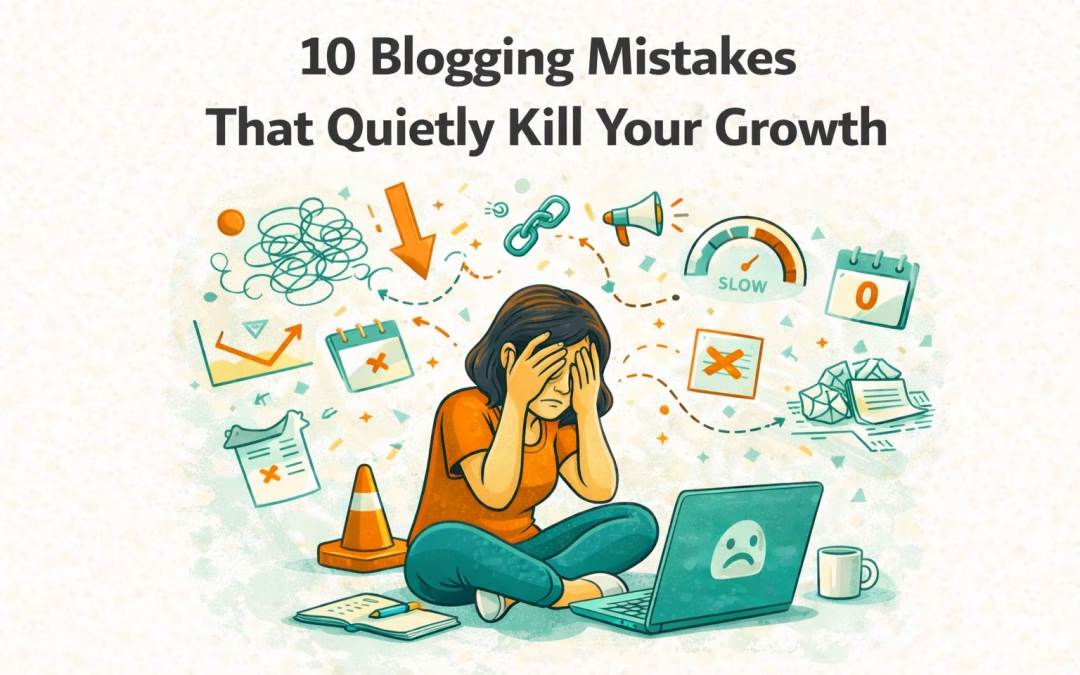
There’s a specific kind of frustration that comes with blogging. You are putting in the effort. Writing consistently. Trying to improve. But nothing really changes. Traffic stays low. Engagement is minimal. Growth feels slow or nonexistent. At some point, you start questioning everything.
Is blogging even worth it? Am I doing something wrong?
The answer is usually yes. But not in the way you think. Most bloggers are not failing because they lack talent or effort. They are stuck because of a few critical mistakes that quietly block progress.
This guide breaks those down. Not just what they are, but how to fix them so your blog can actually move forward.
Mistake 1: Writing Without a Clear Strategy
This is the foundation. And it is where most problems begin. If you are writing based on random ideas, inspiration, or what feels interesting in the moment, your content will lack direction.
You might create good posts. But they will not build momentum.
Key Concept:
Content only works when it connects to a larger strategy.
That means:
- Knowing your niche
- Understanding your audience
- Defining what your blog is trying to achieve
Without this, every post is isolated. And isolated content does not grow.
Mistake 2: Targeting the Wrong Topics
You can write great content. But if no one is searching for it, it will not get traction. This is where many bloggers go wrong. They write what they want to say, instead of what people are actively looking for.
The fix is simple, but often overlooked:
Validate your topics before you write.
Ask:
- Are people searching for this?
- Is there clear demand?
- Can I add something better or different?
Content works best when it meets existing demand, not when it tries to create it from scratch.
Mistake 3: Ignoring Search Intent
Even if you choose the right topic, you can still miss the mark. Because not all searches are the same. Someone searching for “how to start a blog” wants a step-by-step guide. Someone searching for “best blogging platforms” wants comparisons. If your content does not match that intent, it will struggle to rank.
Key Insight:
Search engines reward relevance, not effort.
So before writing, ask:
“What is this reader actually trying to achieve?”
Then build your content around that.
Mistake 4: Publishing Without Consistency
Consistency is not about volume. It is about reliability. If you publish three posts in one week and then disappear for a month, your blog loses momentum. Both for readers and search engines.
The solution is not to do more. It is to do what you can sustain. Even one post per week, done consistently, is powerful.
Consistency builds trust. Inconsistency breaks it.
Mistake 5: Overcomplicating Your Content
Many bloggers think better content means:
- Longer posts
- More complex ideas
- More detail
But complexity often reduces clarity. And clarity is what actually drives engagement. If your content is hard to follow, people leave.
Instead, aim for this:
Simple, clear, and useful.
Break ideas down. Use examples. Guide the reader step by step. The easier your content is to understand, the more effective it becomes.
Mistake 6: Not Connecting Content to a Goal
Here’s a big one.
What is your blog actually for?
- Building an audience
- Selling a product
- Growing a brand
- Generating leads
If your content does not connect to a goal, it becomes passive. It might attract readers. But it will not move them anywhere. Every post should answer this:
“What happens after someone reads this?”
That is how you turn content into progress.
Mistake 7: Weak Content Structure
Structure matters more than most people realize. Even strong ideas can fail if they are poorly presented.
Common issues include:
- Long, unbroken paragraphs
- No clear flow
- Weak headings
Good structure does three things:
- Makes content easy to scan
- Keeps readers engaged
- Improves comprehension
Better structure leads to better results.
Mistake 8: No Distribution Plan
Publishing is not enough. If you are not actively getting your content in front of people, growth will be slow. This does not mean spamming links everywhere. It means being intentional.
For example:
- Sharing on relevant platforms
- Building an email list
- Repurposing content
Content needs visibility to perform.
Mistake 9: Giving Up Too Early
This one is less tactical, but just as important. Blogging takes time. Search engines take time to trust your content. Audiences take time to grow. Most people quit before their efforts compound.
They expect results too quickly. And when those results do not come, they stop.
Growth in blogging is delayed, but powerful.
Mistake 10: Treating Blogging Like a Hobby
There is nothing wrong with blogging as a hobby. But if your goal is growth, traffic, or income, you need a different mindset.
That means:
- Being intentional with your content
- Tracking performance
- Improving over time
- Thinking strategically
Serious results require a serious approach.
Actionable Takeaways
If your blog feels stuck, it is usually not because you need to do more. It is because you need to do the right things.
Here is where to start:
- Define a clear strategy for your content
- Choose topics based on real demand
- Match your content to search intent
- Stay consistent with a realistic schedule
- Focus on clarity over complexity
- Connect every post to a goal
- Improve your structure and readability
- Actively distribute your content
- Be patient and let results compound
- Treat your blog like something you want to grow
And remember:
Being stuck is not permanent. It is a signal.
Once you understand what is holding you back, you can start moving forward with clarity and confidence.

by Digital Juan | Mar 26, 2026 | Start a Blog
Starting a blog is easy. Turning it into something that actually sells your digital products is where most people get stuck. You publish a few posts. Maybe share them on social. Then you wait.
And nothing really happens.
No traction. No consistent traffic. Definitely no sales. The issue is not effort. It is strategy. If your content is not intentionally designed to move readers from curious to convinced, your digital products will always feel like an afterthought.
This guide gives you a clear plan. Not random ideas. Not “write what you feel.”
But a structured set of your first 10 blog posts, each with a specific role in building trust, authority, and eventually, sales.
Why Most Beginner Blogs Don’t Make Sales
Here’s the pattern most beginners fall into.
They write content like:
- “5 tips for…”
- “My thoughts on…”
- “What I learned from…”
There is nothing wrong with these. But they lack direction. They do not connect to a product. They do not build toward a decision. They do not guide the reader anywhere. So even if you get traffic, it does not convert.
Content without a conversion path is just noise.
If you want to sell digital products, your blog needs to function like a system.
Each post should do one of three things:
- Attract the right audience
- Build trust and authority
- Move readers closer to buying
That’s exactly what these 10 posts are designed to do.
The Strategy Behind These 10 Blog Posts
Before we jump into the list, let’s make one thing clear. You are not just writing content.
You are building a content funnel.
At the top, you attract attention.
In the middle, you build trust.
At the bottom, you introduce your product naturally.
Each post plays a role. And when combined, they create momentum.
Key Concept:
Your blog is not a portfolio. It is a conversion system.
Post 1: Your Foundational Guide
This is your anchor piece. A long, in-depth article that targets your main keyword and solves a core problem in your niche. If you sell a digital product about freelancing, this might be:
“Complete Beginner’s Guide to Starting Freelancing”
This post should:
- Be comprehensive
- Answer common questions
- Include practical steps
- Introduce your philosophy or approach
This is where people first discover you. And it sets the tone for everything else.
Post 2: The Beginner Mistakes Post
People love avoiding mistakes. This post taps into that.
Example:
“10 Freelancing Mistakes That Cost Beginners Their First Clients”
Why this works:
- It is highly clickable
- It builds authority quickly
- It positions you as someone who understands the journey
You can naturally hint at your product as a solution to these mistakes.
Post 3: The Quick Wins Post
This is about immediate value. Something your reader can apply today.
Example:
“3 Simple Ways to Land Your First Client This Week”
This builds momentum. When readers get quick results, they trust you more.
Trust accelerates buying decisions.
Post 4: The Tools and Resources Post
This is where you introduce your ecosystem.
Example:
“Best Tools Every Beginner Freelancer Needs”
You can include:
- Free tools
- Paid tools
- Your own digital product
Position your product as a logical next step, not a hard sell.
Post 5: The Step-by-Step Tutorial
This is one of your highest-converting formats.
Example:
“How to Build a Freelance Portfolio From Scratch”
Make it detailed. Break everything down. And show your process.
At the end, you can say:
“If you want the full system, templates, and shortcuts, that’s exactly what I include in my product.”
That feels natural.
Post 6: The Problem-Solution Post
This targets a specific pain point.
Example:
“Why You’re Not Getting Clients (And How to Fix It)”
This type of content works because it:
- Identifies frustration
- Validates the reader’s experience
- Offers clarity
And then introduces your product as the structured solution.
Post 7: The Case Study or Personal Story
People do not just buy information. They buy belief.
Example:
“How I Got My First 5 Clients in 30 Days”
This builds credibility. It shows that your approach works. And it makes your product feel proven.
Post 8: The Comparison Post
This helps readers make decisions.
Example:
“Freelancing vs Full-Time Job: Which Is Better for You?”
You can also compare:
- Different methods
- Different tools
- Different approaches
And position your product as the best path for a specific type of person.
Post 9: The FAQ Post
This removes friction.
Example:
“Freelancing FAQ: Everything Beginners Ask”
Address:
- Common doubts
- Objections
- Misconceptions
This is powerful because people buy when their doubts are resolved.
Post 10: The Product Bridge Post
This is where everything connects.
Example:
“A Simple System to Start Freelancing (Even If You’re a Beginner)”
This post:
- Summarizes your approach
- Reinforces key ideas
- Clearly introduces your product
It is not aggressive. But it is intentional. This is where readers who have consumed your content are ready to take the next step.
How These Posts Work Together to Drive Sales
Individually, each post is useful. Together, they are powerful.
Here’s what happens:
- Someone finds your guide through search
- They read a few related posts
- They see consistent value and clarity
- They start to trust your approach
- They encounter your product multiple times in context
- They feel ready, not pressured
That is how digital products are sold through content. Not through hype. But through alignment and trust.
Actionable Takeaways
If you are just starting out, you do not need 50 blog posts.
You need the right 10.
Here is your simple plan:
- Pick your niche and define your product
- Create one strong foundational guide
- Build supporting posts that answer real questions
- Focus on clarity and usefulness in every post
- Introduce your product naturally, not aggressively
And most importantly:
Think like a guide, not a seller.
Your job is not to convince people to buy. Your job is to help them understand why your product is the next logical step. When you do that consistently, sales stop feeling forced.
They start feeling inevitable.
by Digital Juan | Mar 25, 2026 | Start a Blog
Starting a blog sounds simple. Pick a name. Write a few posts. Hit publish. But in reality, most beginners get stuck before they even begin.
Too many options. Too many tools. Too many opinions. And that confusion leads to delays. Or worse, half-built blogs that never go anywhere.
This checklist cuts through all of that. It gives you a clear path from idea to launch without overcomplicating the process. Because the goal is not perfection.
The goal is to get your blog live and working.
Why Most Blogs Fail Before They Start
Most blogs do not fail because of bad content. They fail because of poor setup.
Things like:
- No clear direction
- Weak branding
- Confusing structure
These issues create friction early. And when something feels hard from the start, consistency drops. A strong setup does not guarantee success. But it removes unnecessary obstacles. And that is what you need as a beginner.
Step 1: Define Your Blog’s Purpose
Before anything technical, get clarity.
Ask yourself:
- What is this blog about
- Who is it for
- Why should someone care
This is your foundation. Without it, everything else feels scattered. You do not need a perfect niche. You need a clear starting point.
Step 2: Choose Your Domain Name
Your domain name is your identity online.
Keep it:
- Short
- Easy to spell
- Relevant
If possible, go for a .com extension.
You can buy domains from platforms like:
Do not overthink this step. Pick something clean and move forward.
Step 3: Buy Hosting and Connect Your Domain
Hosting is where your blog lives. Without it, your site cannot exist online.
Beginner-friendly hosting providers include:
Once you purchase hosting:
- Connect your domain
- Access your hosting dashboard
This is the technical backbone of your blog.
Step 4: Install Your Blogging Platform
Next, you need software to manage your blog. The most popular option is WordPress.
It is:
- Flexible
- Beginner-friendly
- Widely supported
Most hosting providers offer one-click installation. Once installed, you can log into your dashboard and start building.
Step 5: Set Up Your Blog Design
This is where your blog starts to feel real.
Choose a theme that is:
- Clean
- Simple
- Mobile-friendly
Avoid overdesigning.
Focus on:
- Readability
- Clear layout
- Easy navigation
Remember, design is about trust and usability, not decoration.
Step 6: Create Essential Pages
Before publishing posts, set up your core pages.
These include:
- Home page
- About page
- Contact page
- Privacy policy
These pages make your blog feel complete. And more importantly, they build credibility.
Step 7: Set Up Basic SEO
You do not need advanced SEO at the start. But you do need the basics.
Focus on:
- Writing clear titles
- Using simple keywords
- Structuring content with headings
You can use plugins like:
This helps search engines understand your content.
Step 8: Install Key Tools and Plugins
Plugins extend your blog’s functionality. Start with a few essentials:
- SEO plugin
- Security plugin
- Backup plugin
Do not install too many at once. Keep your setup lean. You can always add more later.
Step 9: Plan Your First Content
Before launching, prepare at least 3 to 5 posts. This gives your blog substance from day one.
Focus on:
- Answering specific questions
- Providing real value
- Keeping things clear and practical
Do not aim for perfection. Aim for usefulness.
Step 10: Publish and Launch
This is where most people hesitate. They wait for everything to feel perfect. But that moment never comes.
Once your basics are in place:
- Publish your posts
- Make your site live
- Share it
Launching is how you learn. Not before.
Final Thoughts
Setting up a blog is not complicated. But it does require direction. If you follow a clear checklist, you avoid the common traps. And more importantly, you build momentum early. Because in blogging, momentum matters more than anything else.
Actionable Takeaways
If you are ready to start today, follow this:
- Define your blog’s purpose in one sentence
- Buy a simple, clean domain name
- Choose a reliable hosting provider
- Install WordPress and a basic theme
- Create essential pages before publishing
- Set up basic SEO and key plugins
- Write 3 to 5 helpful blog posts
- Launch without overthinking
The goal is not to build the perfect blog. The goal is to build a working blog you can improve over time. Because once you are live, you are no longer stuck. You are in motion.
And that is where real progress begins.