by Digital Juan | Mar 24, 2026 | Start a Blog
Starting a blog feels like a big milestone. You picked a domain. Set up your site. Published your first posts. And then something unexpected happens.
Nothing.
No traffic. No comments. No clear next step. This is where most beginners get stuck. Not because they lack motivation, but because they lack direction.
So instead of guessing, you need a simple plan. Not a complicated strategy. Not a 50-step system.
Just clear actions you can follow consistently.
The Real Problem After Launch
The biggest challenge is not technical. It is psychological. After launching, you lose structure. There is no checklist anymore. No obvious next step.
And that leads to:
- Inconsistent posting
- Random content
- Loss of momentum
The solution is not more information.
It is focused execution.
Step 1: Focus on Consistency First
Before traffic, before monetization, before anything else, focus on this. Consistency. Because without it, nothing compounds.
Set a simple publishing goal:
That is enough. You do not need daily content. You need repeatable output.
Consistency builds:
And those are your real early wins.
Step 2: Build a Simple Content Strategy
Random posts lead to random results. Instead, organize your content around a few core topics.
These are your content pillars.
For example:
- Beginner guides
- How-to tutorials
- Problem-solving posts
This gives your blog structure. And structure makes it easier to stay consistent. You are no longer asking “what should I write?”
You are choosing from a defined path.
Step 3: Learn Basic SEO That Actually Matters
You do not need advanced SEO. You need fundamentals.
Focus on:
- Writing posts around specific questions
- Using clear, simple titles
- Structuring content with headings
Think in terms of helpfulness. If your content answers real questions clearly, you are already ahead of most beginners.
Step 4: Start Driving Traffic Early
Do not wait for SEO to “kick in.” That takes time. Instead, start driving traffic manually.
Share your posts on:
- Social media
- Relevant communities
- Forums
The goal is not virality. The goal is initial exposure. Even a small audience helps you stay motivated.
Step 5: Create a Simple Promotion System
Most beginners publish and move on. That is a mistake. Promotion should be part of your workflow.
A simple system could look like:
- Share your post on 2 to 3 platforms
- Repost it later in a different format
- Highlight key points as standalone content
This turns one post into multiple touchpoints. And more touchpoints mean more chances to get noticed.
Step 6: Build an Email List From Day One
This is one of the most important steps. Do not wait until you have traffic.
Start early. Even if only a few people subscribe.
An email list gives you:
- Direct access to your audience
- Control over communication
- Long-term leverage
Because platforms change. But your list stays with you.
Step 7: Track What’s Working
You do not need complex analytics. Just pay attention.
Look at:
- Which posts get more views
- Which topics perform better
- Which formats feel easier to create
This helps you double down on what works. And ignore what does not.
Step 8: Improve Instead of Restarting
Beginners often fall into this trap. They start over too quickly. New design. New niche. New strategy. Instead, improve what you already have. Update posts. Refine structure. Write better content.
Progress comes from iteration. Not constant reinvention.
Step 9: Think About Monetization Later
It is tempting to monetize early. But without traffic, it does not matter.
Focus first on:
Once those are in place, monetization becomes easier and more effective.
Step 10: Stay in the Game Long Enough
This is the step that matters most. Blogging rewards patience. Results take time. Most people quit before things start working.
If you stay consistent for:
- 3 months, you build momentum
- 6 months, you see patterns
- 12 months, you see results
The difference is not talent. It is persistence.
Final Thoughts
Starting a blog is exciting. But growth happens after the launch. In the quiet phase where no one is watching. This is where habits are built. And habits are what create long-term results. You do not need to do everything.
You need to do the right things consistently.
Actionable Takeaways
If you want a clear path forward, start here:
- Commit to publishing consistently every week
- Create content around clear topics and questions
- Learn and apply basic SEO principles
- Actively promote every post you publish
- Start building your email list immediately
- Track what works and refine your approach
- Focus on improvement, not perfection
- Delay monetization until you have traction
The goal is simple.
Keep moving forward. Because the bloggers who succeed are not the ones who start perfectly. They are the ones who keep going.
by Digital Juan | Mar 24, 2026 | Start a Blog
Choosing a domain name feels simple until you actually sit down to do it. Everything sounds either taken, too generic, or slightly off. And suddenly, what should take 10 minutes turns into hours of second guessing.
Here is the truth.
Your domain name is not just a technical requirement. It is your first impression, your brand foundation, and in many cases, your long-term asset. Get it right, and everything becomes easier. Get it wrong, and you will feel friction every time you share your link.
This guide will walk you through how to choose a domain name that works and how to buy it without overcomplicating the process.
Why Your Domain Name Matters More Than You Think
A domain name does three important things at once.
- First, it signals what you are about.
- Second, it shapes how memorable you are.
- Third, it influences how people trust you.
That is why strong domains tend to feel:
- Easy to remember
- Easy to type
- Easy to trust
And weak domains tend to feel:
- Confusing
- Forgettable
- Slightly off
Here is the key insight.
A domain name will not make your success. But it can definitely slow you down if it creates friction.
What Makes a Great Domain Name
Let’s simplify this. A great domain name is not clever. It is clear.
Here are the core traits you should aim for.
1. Short and simple
The fewer characters, the better. Short names are easier to remember and less prone to typos.
2. Easy to spell
If you have to explain it, it is already a problem.
Avoid:
- Unusual spellings
- Hyphens
- Numbers
3. Brandable
Even if you are building a niche blog, your name should feel like something people can recognize. Think in terms of identity, not just keywords.
4. Future-proof
Do not box yourself into a narrow idea. For example, a name like “BestLaptopUnder500” limits your growth. A broader name gives you room to expand.
Common Mistakes to Avoid
Most beginners fall into the same traps. Avoid these early and you will save yourself a rebrand later.
- Overusing keywords Exact-match domains used to matter more. Today, they matter less than brand perception.
- Choosing trends over longevity Trendy words age quickly. Your domain should still make sense years from now.
- Ignoring pronunciation If people cannot say it, they will not share it.
- Going too niche too soon You might evolve faster than you expect. Give yourself space.
Domain Extensions Explained
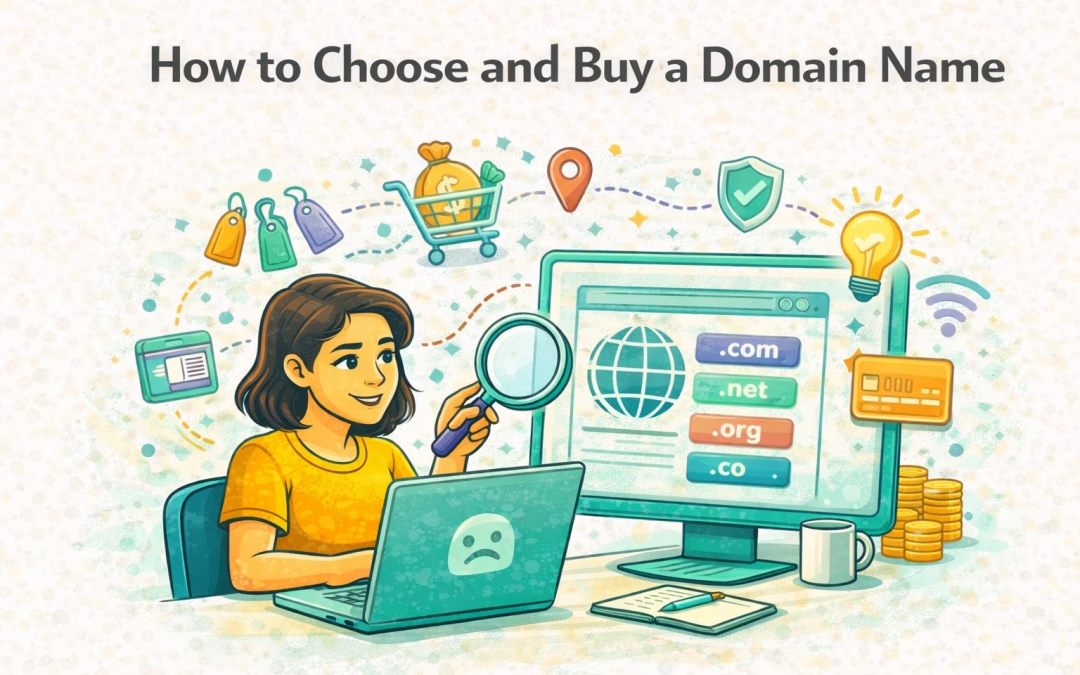
This is where a lot of confusion comes in. Let’s clear it up. A domain extension is the part after the dot.
Examples include:
Here is what you need to know.
.com is still king
It is the most trusted and recognizable extension. If it is available, take it.
Other extensions are fine, but contextual
- .net works for tech-related brands
- .org is often used for organizations
- .co is popular with startups
But here is the reality.
People default to typing .com.
So if you choose something else, make sure it is intentional.
Personal Brand vs Keyword-Based Domains
This ties directly into your long-term strategy. You have two main directions.
Personal brand domains
These use your name or identity.
Examples:
- yourname.com
- yourbrand.com
Best for:
- Creators
- Consultants
- Coaches
Keyword-based domains
These focus on search intent.
Examples:
- besttravelgear.com
- fitnessplanshub.com
Best for:
- Niche blogs
- SEO-driven sites
Here is the tradeoff.
Personal domains build authority. Keyword domains build search visibility.
And just like we discussed earlier, your choice should align with your goals.
How to Brainstorm Domain Name Ideas
This is where most people get stuck. Instead of waiting for the perfect idea, use a structured approach.
Start with:
1. Core words
List words related to your niche or identity.
2. Modifiers
Add words like:
3. Combine creatively
Mix and match until something clicks. You are not looking for perfection. You are looking for something that feels right enough to start.
How to Check Availability
Once you have a few ideas, it is time to check if they are available.
You can do this through domain registrars like:
- GoDaddy
- Namecheap
- Google Domains
Simply type your domain idea into their search bar. If it is taken, you will see alternatives or suggestions.
Here is a practical tip.
- Check social media handles at the same time.
- Consistency across platforms makes branding easier.
Where to Buy a Domain Name
Not all registrars are the same. Some are beginner-friendly. Others are more barebones.
Here are three solid options.
Namecheap
- Affordable pricing
- Free privacy protection
- Clean interface
GoDaddy
- Very popular
- Easy to use
- Frequent upsells, so be mindful
Google Domains
- Simple and reliable
- Seamless integration with Google services
You do not need the “best” provider.
You just need a reliable one.
Step-by-Step: How to Buy Your Domain
Let’s break this down into simple steps.
- Search your domain Enter your chosen name into your registrar’s search tool.
- Choose your extension Prefer .com if available.
- Add to cart Ignore unnecessary add-ons for now.
- Enable privacy protection This keeps your personal details hidden. Most registrars offer this for free or a small fee.
- Complete checkout That is it.
You now own your domain.
What to Do After You Buy Your Domain
Buying the domain is just the start. Now you need to connect it to something.
Common next steps include:
- Linking it to a hosting provider
- Setting up a website
- Creating a professional email
This is where your domain turns into an actual asset. Because a domain alone does nothing. It becomes valuable when you build on top of it.
Final Thoughts
Choosing a domain name feels like a big decision. And in some ways, it is. But here is the perspective that matters.
A good domain supports your growth. A great domain accelerates it slightly.
But neither replaces consistent execution. Do not let the search for the perfect name delay your start. Because clarity comes from building, not overthinking.
Actionable Takeaways
If you want to move forward today, do this:
- Pick 5 to 10 domain ideas using simple, clear words
- Prioritize clarity over cleverness
- Check availability on a trusted registrar
- Secure the .com version if possible
- Buy your domain and move on to building
The goal is not to find the perfect name. The goal is to own a name you can grow into.
And once you have it, the real work begins.
by Digital Juan | Mar 19, 2026 | Start a Blog
Most people think blog design is about looking good. Clean fonts. Nice colors. Maybe a modern layout. But that is not the real goal.
The real goal of blog design is trust.
Because when someone lands on your blog, they are asking one silent question. “Can I trust this?”
And they decide in seconds. Not based on your content depth. Not based on your expertise. But based on how your site feels. This is where design becomes strategic. Because small design choices can either build confidence or quietly push people away.
Let’s break down what actually matters.
Why Trust Is the Real Goal of Blog Design
Trust is what keeps people reading. It is what makes them subscribe, click, and eventually buy. Without it, even great content struggles.
Strong blog design signals:
- Professionalism
- Clarity
- Intentionality
Weak design signals:
And here is the key insight. People do not consciously analyze your design. They feel it. That feeling determines whether they stay or leave.
First Impressions: Above-the-Fold Matters
The top section of your blog is where trust starts. Before scrolling, visitors should understand three things:
- What your blog is about
- Who it is for
- Why it matters
This does not require complexity. It requires clarity.
A strong above-the-fold section includes:
- A clear headline
- A short supporting description
- Clean visual spacing
If your homepage feels crowded or vague, trust drops instantly. Because confusion creates hesitation. And hesitation leads to exits.
The Power of Simplicity in Layout
There is a reason high-performing blogs feel simple. Simplicity reduces cognitive load. Which means readers can focus on your content, not your design.
Here is what simplicity looks like in practice:
- Plenty of white space
- Clear content hierarchy
- Minimal distractions
Avoid:
- Too many sidebar elements
- Popups that interrupt too early
- Visual clutter
A clean layout tells your reader something important. “This is easy to consume.”
And ease builds trust.
Typography That Feels Professional
Fonts are one of the most underrated trust factors. The wrong typography makes your blog feel amateur. The right typography makes it feel credible.
Focus on:
- Readability Use fonts that are easy on the eyes. Avoid overly decorative styles.
- Consistency Stick to 2 to 3 fonts maximum. One for headings, one for body text.
- Proper sizing Your text should not feel cramped. Good spacing improves reading flow. Here is the reality. If your content is hard to read, it will not be read.
Color Choices and Visual Consistency
Color shapes perception more than most people realize. It influences how your brand feels. The goal is not to be flashy. The goal is to be consistent and intentional.
A good color strategy includes:
- A primary color
- One or two accent colors
- Neutral backgrounds
Consistency across pages builds familiarity. And familiarity builds trust. If every page feels different, your site feels unstable.
Navigation That Reduces Friction
Navigation is about guidance. If users cannot find what they need quickly, they leave. Simple as that.
Your navigation should:
- Be easy to understand
- Use clear labels
- Limit the number of options
Think in terms of clarity, not creativity.
“Blog,” “About,” and “Contact” work because they are obvious.
You are not trying to impress. You are trying to guide.
Trust Signals Every Blog Needs
This is where design and credibility meet. Trust signals are elements that reassure your visitors.
Here are the most important ones:
1. About page People want to know who is behind the content. Even a short, honest story helps.
2. Author visibility A name and photo increase credibility. It makes your blog feel human.
3. Contact information A simple contact page shows transparency.
4. Social proof
This can include:
- Testimonials
- Featured logos
- Subscriber counts
These elements reduce doubt.
And reducing doubt is how trust grows.
Mobile Design Is Not Optional
Most people will visit your blog on their phone. If your site feels broken on mobile, trust disappears instantly.
Mobile-friendly design means:
- Text is easy to read
- Buttons are easy to tap
- Layout adapts smoothly
Test your site on your own phone. If it feels frustrating, it needs improvement.
Speed and Performance as Design
Design is not just visual. It is also how fast your site loads.
A slow website signals:
- Poor quality
- Lack of professionalism
And users rarely wait. Even a few seconds can cost you attention.
Improve speed by:
- Compressing images
- Using reliable hosting
- Minimizing unnecessary scripts
Fast sites feel reliable.
And reliability builds trust.
Content Formatting for Readability
Even great content can fail if it is poorly formatted. Walls of text create friction.
Structure creates flow.
Use:
- Short paragraphs
- Clear headings
- Occasional lists
This makes your content easier to scan. And most readers scan before they commit. Formatting is not decoration.
It is guidance.
Common Design Mistakes That Kill Trust
Let’s make this practical. Avoid these common mistakes:
- Cluttered layouts Too much going on overwhelms users.
- Inconsistent design Different styles across pages feel unprofessional.
- Hard-to-read text Small fonts or poor contrast reduce readability.
- Aggressive popups Interrupting users too early breaks trust.
- Outdated design An old-looking site feels neglected.
Each of these creates small moments of doubt. And those moments add up.
Final Thoughts
Blog design is not about impressing people. It is about reassuring them. Every detail should answer the same question.
“Is this worth my time?”
When your design feels clear, consistent, and intentional, the answer becomes yes. And that is when people stay.
Actionable Takeaways
If you want to improve your blog today, start here:
- Simplify your layout and remove unnecessary elements
- Improve readability with better fonts and spacing
- Make your navigation clear and intuitive
- Add essential trust signals like an About page
- Optimize your site for mobile and speed
You do not need a complete redesign.
You need a few smart adjustments. Because trust is not built through complexity.
It is built through clarity.
by Digital Juan | Mar 13, 2026 | Start a Blog
If you are trying to build something online, you have probably hit this fork in the road. Do you build a personal brand around yourself, your voice, and your perspective? Or do you build a niche blog focused on a specific topic that attracts search traffic?
At first, it feels like a technical decision. Platform. Strategy. Content type. But it is not.
This choice quietly shapes how you grow, how you earn, and how much leverage you build over time. And most people choose wrong, not because they lack skill, but because they misunderstand the tradeoffs.
Let’s fix that.
What Is a Personal Brand
A personal brand is built around you. Not just your name, but your ideas, your voice, and your way of explaining things. When people follow a personal brand, they are not just consuming content. They are buying into perspective. Think about it this way. If you disappear, the brand disappears. That is both its biggest strength and its biggest risk.
A personal brand usually lives across platforms like:
- Social media
- Email newsletters
- Podcasts
- YouTube
The content is often:
- Opinion-driven
- Story-based
- Experience-backed
And most importantly, it builds trust at scale.
What Is a Niche Blog
A niche blog is built around a topic, not a person. It focuses on answering specific questions people are already searching for. Instead of “follow me,” the value proposition is “find what you need.”
Typical examples include blogs about:
- Fitness routines
- Finance tips
- Travel guides
- Tech tutorials
The content is:
- Keyword-driven
- Structured for SEO
- Designed to rank in search engines
If done right, a niche blog becomes a traffic machine. And unlike a personal brand, it does not depend on personality to grow.
The Core Difference Most People Miss
Here is where things get interesting. The real difference is not content type. It is how attention flows.
With a personal brand, attention flows to you.
With a niche blog, attention flows through your content.
That single shift changes everything.
A personal brand compounds through:
- Loyalty
- Repeat engagement
- Audience trust
A niche blog compounds through:
- Search rankings
- Content volume
- Evergreen traffic
One builds connection.
The other builds discoverability.
And you rarely get both at the same level without intention.
Pros and Cons of a Personal Brand
Let’s get practical.
Pros
1. Strong trust and loyalty
People follow people. Not websites. When someone resonates with your voice, they stick around longer and engage deeper.
2. Easier monetization
You can sell:
- Courses
- Consulting
- Digital products
- Memberships
And people are more likely to buy because they trust you.
3. Flexible content direction
You are not boxed into one niche forever. You can evolve, pivot, and expand without starting from scratch.
Cons
1. You are the product
If you stop showing up, growth slows down fast. There is no passive engine running behind the scenes.
2. Harder to scale content
You cannot easily outsource your voice. Your personality is the differentiator.
3. Slower early growth
Building trust takes time.
There is no shortcut like ranking on page one of search results.
Pros and Cons of a Niche Blog
Now let’s look at the other side.
Pros
1. Predictable traffic through SEO
Once your content ranks, it can bring in traffic for months or even years. This is where compounding content becomes powerful.
2. Easier to outsource
Writers can create content based on structure and research. You do not need to be the face of the brand.
3. Clear monetization paths
You can monetize through:
- Affiliate marketing
- Display ads
- Sponsored content
Cons
1. Lower emotional connection
People come for answers, not for you. That makes building loyalty harder.
2. Vulnerable to algorithm changes
Search traffic is powerful, but also fragile. A single update can cut traffic overnight.
3. Harder to stand out
There are thousands of blogs in most niches. Without a unique angle, you blend in.
Which One Makes More Money
This is where most people lean forward. The honest answer is simple. Both can make money. But they do it differently.
A niche blog is better for:
- Passive income
- Scalable traffic
- Ad and affiliate revenue
A personal brand is better for:
- High-ticket offers
- Service-based income
- Authority-driven pricing
Here is the pattern you will notice over time.
Niche blogs often start earning faster. Personal brands often earn more per follower.
So the question becomes: Do you want volume or leverage?
Which One Is Easier to Grow
Short answer. A niche blog is easier at the start. A personal brand is easier in the long run.
Why?
Because SEO gives you a roadmap:
- Find keywords
- Create content
- Rank
But personal branding is less linear.
You are building:
That takes longer.
But once it clicks, growth accelerates through:
- Shares
- Word of mouth
- Community
And that kind of growth is harder to disrupt.
Which One Fits Your Personality
This is the part most guides skip. Your personality matters more than strategy.
If you:
- Enjoy writing structured content
- Prefer staying behind the scenes
- Like systems and processes
A niche blog will feel natural.
If you:
- Enjoy sharing opinions
- Like storytelling
- Want to build influence
A personal brand will feel easier to sustain. Because consistency is not about discipline. It is about alignment.
Hybrid Strategy: The Best of Both Worlds
Here is what most experienced creators eventually realize. You do not have to choose forever. The smartest approach is often a hybrid model.
It looks like this:
- Use a niche blog to attract traffic
- Use a personal brand to build trust
For example:
- Blog posts bring in search visitors
- Social content builds connection
- Email bridges both
This way, you get:
- Discoverability from SEO
- Loyalty from personal branding
And that combination is powerful. Because you are not just getting attention. You are owning it.
How to Decide in 10 Minutes
If you are still unsure, use this quick framework.
Ask yourself:
1. Do I want to be visible or anonymous?
Visible → personal brand
Anonymous → niche blog
2. Do I enjoy sharing my thoughts regularly?
Yes → personal brand
No → niche blog
3. Do I want faster traffic or deeper connection?
Traffic → niche blog
Connection → personal brand
4. What is my monetization goal?
Ads and affiliates → niche blog
Products and services → personal brand
Your answers will point clearly in one direction.
Final Thoughts
This is not a battle between two strategies. It is a choice between two paths.
One builds systems that attract attention.
The other builds relationships that hold attention.
And in today’s landscape, attention is easy to get. Trust is not. If you are thinking long term, that distinction matters more than anything else.
Actionable Takeaways
If you want clarity and momentum, start here:
- Pick one path for the next 90 days. Do not split focus
- If you choose a niche blog, commit to SEO-driven consistency
- If you choose a personal brand, commit to showing up with your voice
- Track what actually works, not what feels productive
- Consider transitioning into a hybrid model once you gain traction
The goal is not to pick perfectly. The goal is to start building something that compounds.
Because in the end, both paths work. But only if you stick with them long enough to see the results.

by Digital Juan | Mar 3, 2026 | Start a Blog
Most lists of the best blogging niches that make money are incomplete. They tell you what niches are popular. But they don’t tell you how those niches actually make money.
And that’s where most beginners get stuck. Because traffic alone doesn’t generate income.
Digital products do.
If you want to choose a profitable blogging niche, you need to think beyond content. You need to choose a niche that allows you to create products, systems, and scalable income.
This guide will show you how.
What Makes a Blogging Niche Profitable (For Digital Products)
Before looking at blogging niche ideas, you need to understand what separates a hobby blog from a profitable one.
A profitable blogging niche has three key elements:
- A Clear Problem People are actively trying to solve something.
- A Clear Outcome There’s a result they want to achieve.
- A Product Opportunity You can package the solution into a digital product.
The Shift Most Beginners Miss
Most people focus on traffic. They ask:
- “Will this niche get views?”
- “Is this niche popular?”
But the better question is:
“Can I create digital products in this niche?”
Because once you can create a product:
- Your content becomes more focused
- Your monetization becomes predictable
- Your blog becomes a system
Best Blogging Niches That Make Money (With Digital Products)
Let’s break down niches that are proven to work, especially if your goal is to build income through digital products.
1. Blogging and Online Income
This niche is powerful because the outcome is clear:
👉 Make money online
Why It Works:
- High demand
- Clear transformation
- Strong beginner audience
Digital Product Ideas:
- Blogging courses
- SEO checklists
- Content templates
- Digital product playbooks
Keywords:
- how to start a blog
- blogging for beginners
- how to make money blogging
2. Personal Finance (Beginner-Focused)
People want control over their money. That makes this one of the most stable profitable blogging niches.
Why It Works:
- Emotional and practical
- Continuous demand
- Strong product potential
Digital Product Ideas:
- Budget templates
- Expense trackers
- Financial planning guides
Keywords:
- budgeting for beginners
- how to save money
- personal finance tips
3. Health and Fitness (Goal-Oriented)
Generic fitness blogs struggle. But focused niches perform extremely well.
Example Angles:
- weight loss for beginners
- home workouts
- fitness for busy professionals
Digital Product Ideas:
- workout plans
- meal guides
- habit trackers
Keywords:
- home workout plan
- weight loss guide
- beginner fitness routine
4. Skill-Based Niches (High Conversion)
If someone wants to learn a skill, they are already motivated to pay.
Examples:
- graphic design
- copywriting
- freelancing
- video editing
Digital Product Ideas:
- courses
- templates
- step-by-step guides
Keywords:
- learn copywriting
- beginner graphic design
- freelance skills
5. AI and Productivity
This is one of the fastest-growing niches today.
Why It Works:
- High curiosity
- Rapid growth
- Strong demand for tools
Digital Product Ideas:
- ChatGPT prompt packs
- productivity systems
- automation workflows
Keywords:
- chatgpt prompts
- ai tools for productivity
- automation systems
How to Choose the Right Blogging Niche for You
Now that you’ve seen the options, let’s make this practical.
Step 1: Focus on Problems, Not Topics
Don’t choose: “fitness”
Choose: “help beginners lose weight at home”
Step 2: Think in Terms of Products
Ask yourself:
“What can I sell in this niche?”
If you can’t answer that, the niche needs refinement.
Step 3: Check Demand
Search your niche. Look for:
- tutorials
- blog posts
- courses
If content and products exist, demand exists.
Step 4: Start Small and Expand
You don’t need to cover everything. Start with one angle. Expand over time.
How to Turn Your Blogging Niche Into Digital Product Ideas (Fast)
Most people choose a niche and stop there. They create content, but they don’t know what to sell. So even if they pick one of the best blogging niches that make money, they still struggle to make money.
Here’s the shift:
Your niche is not just for content.
It’s a foundation for digital products.
Step 1: Identify the Core Problem
Every niche revolves around a problem.
Examples:
- Blogging → “I don’t know how to start”
- Fitness → “I don’t know what workout to follow”
- Finance → “I can’t manage my money”
Step 2: Turn the Problem Into a Simple Solution
Ask: “What is the simplest way to solve this?”
Examples:
- checklist
- guide
- template
- system
Step 3: Match Content to Product
Your blog should lead directly to your product.
Examples:
- Blog: how to choose a blogging niche
- Product: niche clarity worksheet
- Blog: how to start a blog
- Product: setup checklist
Step 4: Start Small
Don’t build a full course yet.
Start with:
- a PDF
- a template
- a checklist
Step 5: Validate Through Content
Write content first. If people engage, your product will work.
How These Niches Turn Into Income
Your blog is not the business. It’s the entry point.
The Simple System
- Blog post
- Lead magnet
- Email list
- Digital product
Example Flow
- Blog: best blogging niches
- Lead magnet: niche worksheet
- Email: guidance
- Product: course
THow to Validate Your Blogging Niche Quickly
This is how you build a blog that makes money. Before committing, validate your idea.
Ask Yourself:
- Are people searching for this?
- Are people paying for this?
- Can I create a product here?
If yes, you’re ready to move forward.
If You’re Still Unsure About Your Niche
Don’t stay stuck. Take action.
👉 Download the Niche Clarity Worksheet
It will help you:
- choose a blog niche
- validate your idea
- generate content ideas
Want the Full Strategy?
If you want a complete breakdown of how to choose a blogging niche that grows with you and connects to digital products:
👉 Read this guide: How to Choose a Blogging Niche Without Feeling Boxed In
Final Thoughts
The best blogging niches that make money are not just popular. They are structured for digital products.
If you remember one thing, remember this:
Don’t choose a niche based on content.
Choose a niche based on what you can build from it.
Because the goal is not just to blog.
It’s to build something that grows, scales, and generates income.

by Digital Juan | Feb 25, 2026 | Start a Blog
Starting a blog is exciting. You finally have a place to share your ideas, help people with your knowledge, and potentially build something meaningful online. But the early stage of blogging can also feel confusing. You publish a few posts, experiment with ideas, and try different strategies. Sometimes things work, and sometimes they don’t.
The truth is that most beginner bloggers struggle not because they lack talent or creativity, but because they make a few common blogging mistakes that slow their growth. The encouraging part is that these mistakes are very predictable. Almost every blogger makes them at some point.
If you understand these pitfalls early, you can avoid months of frustration and build your blog with much more clarity and confidence. In this guide, we will walk through the five most common blogging mistakes beginners make and how you can avoid them while building a strong foundation for long-term blogging success.
1. Changing Your Blogging Niche Too Often
One of the biggest blogging mistakes beginners make is constantly changing their niche. When you first start blogging, it is normal to feel uncertain about your topic. You might worry that your niche is too small, too competitive, or simply not interesting enough. Because of that uncertainty, many beginners jump from topic to topic.
For example, a new blogger might write about:
- Personal productivity one week
- Personal finance the next week
- Travel experiences the week after
- Fitness or self-development the following month
While curiosity is natural, frequent niche changes make it difficult for readers to understand what your blog is about. It also confuses search engines. Websites that constantly change topics struggle to build topical authority, which makes it harder for blog posts to rank in search results.
Why niche consistency matters
When you focus on a clear niche, several things start working in your favor:
- Readers begin to recognize your blog’s purpose
- Search engines categorize your website more easily
- Your content starts forming a clear knowledge base
Over time, this focus builds authority.
How to avoid this mistake
Instead of switching niches quickly, try these steps:
- Choose a topic you genuinely enjoy learning about
- Identify a specific audience you want to help
- Commit to writing within that niche for several months
Your niche may evolve gradually as you learn more about your audience, but that evolution should come from deeper understanding, not constant experimentation.
Clarity develops through consistent exploration.
2. Writing Blog Posts Without a Content Plan
Another common beginner blogging mistake is publishing content without a plan. Many new bloggers simply sit down and ask themselves, “What should I write today?” While this approach might work occasionally, it often leads to inconsistency. Without a plan, blogging becomes mentally exhausting because you constantly need to invent new ideas.
A simple blog content strategy solves this problem.
Why a content plan matters
When you create a content plan, your blog begins to develop structure. Instead of random articles, your content starts forming a logical sequence that helps readers move from confusion to clarity. A content plan also makes it easier to stay consistent because you already know what you will write next.
How to create a simple blogging content plan
You do not need complicated spreadsheets or advanced tools. A simple approach works perfectly for beginners. Start by identifying three to five core topics in your niche. Then brainstorm beginner questions within those topics.
For example, if your blog teaches blogging, your first posts might include:
- How to choose a blogging niche
- How to write your first blog post
- How readers discover new blogs
- How to stay consistent with blogging
- Common blogging mistakes beginners make
Each post solves a specific problem. Over time, these articles build a valuable library of content that helps readers and strengthens your blog’s authority.
3. Expecting Fast Results From Blogging
Many new bloggers expect their website to grow quickly. When that growth does not happen immediately, they begin to lose motivation. This expectation is one of the most damaging blogging mistakes for beginners.
Blogging is a long-term process. Search engines take time to trust new websites. Readers take time to discover your content. Authority develops gradually as you publish helpful articles.
Why blogging growth takes time
Several factors influence blog growth:
- Search engines must index and evaluate your content
- Readers must discover and share your articles
- Your writing skills improve with practice
- Your understanding of your audience deepens
Because of these factors, most blogs grow slowly in the beginning. However, consistent effort eventually creates momentum.
How to avoid chasing quick results
Instead of focusing on immediate traffic or viral posts, focus on habits that build long-term success:
- Publish helpful blog posts consistently
- Improve your writing with each article
- Learn basic search engine optimization (SEO)
- Pay attention to reader feedback and engagement
Growth often feels invisible at first. But small improvements accumulate over time. Many successful blogs gained traction only after dozens of posts.
4. Trying to Be Active on Every Social Media Platform

When learning how to grow a blog, many beginners feel pressure to be active everywhere online.
You might hear advice suggesting that you should post on:
- Instagram
- Facebook
- TikTok
- Pinterest
- YouTube
- LinkedIn
Trying to manage all these platforms at once can quickly become overwhelming. Instead of helping your blog grow, it often leads to burnout.
A better approach for beginner bloggers
A simpler strategy works much better. Choose one or two platforms that feel natural to you and focus on building presence there.
For example:
- Facebook works well for sharing helpful tips and discussions
- Instagram works well for visual storytelling and short videos
- Pinterest works well for search-based blog discovery
Your blog should remain your main platform. Social media simply acts as a discovery tool that helps new readers find your content.
5. Comparing Yourself to Experienced Bloggers
Comparison is one of the fastest ways to lose confidence when starting a blog. When you see successful bloggers with large audiences, professional websites, and multiple income streams, it is easy to feel like you are falling behind. But this comparison is misleading. Most established bloggers have been building their platforms for years. Behind their success are countless hours of writing, experimenting, and learning.
Every blogger starts small
The creators you admire likely started with:
- Zero readers
- Zero comments
- Zero subscribers
Their growth happened gradually through consistent effort.
How to stay motivated
Instead of comparing your blog to others, measure your own progress.
Celebrate milestones such as:
- Publishing your first blog post
- Completing your first month of consistent writing
- Receiving your first reader comment or email
- Reaching your first 100 visitors
These small moments represent real growth. Blogging is a personal journey, not a competition.
How to Avoid These Blogging Mistakes and Build a Strong Foundation
If you want to succeed as a beginner blogger, the most important thing you can do is focus on building strong habits. Avoiding these common blogging mistakes will already place you ahead of many beginners.
Focus on these principles:
- Stay committed to your niche long enough to learn it
- Create a simple content plan
- Be patient with growth and trust the process
- Limit the number of platforms you use
- Track your progress instead of comparing yourself to others
Blogging rewards consistency more than perfection. When you approach blogging as a long-term project instead of a quick win, you give yourself the best chance to build something meaningful.
Over time, your blog can grow into a valuable platform that helps people, builds trust, and creates opportunities.