by Digital Juan | Feb 24, 2026 | Start a Blog
Many beginner bloggers focus too much on tools before they begin writing. You might hear about website themes, SEO plugins, analytics dashboards, and marketing software. While these tools can become useful later, they are not what make a blog successful.
A growing blog usually depends on three simple habits:
- Writing clearly
- Publishing consistently
- Improving through experience
Technology simply supports these habits. When your tools are simple and easy to use, publishing becomes easier. And when publishing becomes easier, you are more likely to write regularly.
Consistency is what allows a blog to grow over time.
What Is a Blogging Platform?
A blogging platform is the software that allows you to create, edit, and publish blog posts on the internet. It provides the environment where your blog exists.
A blogging platform helps you:
- Write and format articles
- Organize posts into categories
- Manage your website layout
- Update content as your blog evolves
Instead of building a website from scratch, the platform provides the structure so you can focus on your ideas. For most beginner bloggers today, the best blogging platform is WordPress.
Why WordPress Is the Best Blogging Platform for Beginners

WordPress is the most widely used blogging platform in the world. Millions of blogs and websites run on WordPress because it combines simplicity with flexibility. For beginners, WordPress provides a straightforward environment for writing and publishing blog posts. For experienced creators, WordPress offers powerful customization options that allow a blog to grow into a full online platform. Some of the main reasons bloggers choose WordPress include:
- Easy content publishing WordPress makes it simple to create and format blog posts without needing coding knowledge.
- Flexibility for future growth As your blog grows, WordPress allows you to expand your site with additional features such as newsletters, memberships, or digital products.
- Large learning community Because WordPress is widely used, there are thousands of tutorials, guides, and forums that help beginners learn quickly.
- Ownership of your website When you use WordPress with your own domain and hosting, your blog becomes a digital asset that you control.
This is important if you want to build a blog that grows over time.
WordPress.com vs WordPress.org
When learning how to start a WordPress blog, you will notice there are two versions of WordPress. Understanding the difference helps you choose the right starting point.
WordPress.com
WordPress.com is a hosted service where the platform manages the technical setup for you.
Advantages include:
- Easy setup
- Hosting included
- Minimal technical maintenance
This option works well for beginners who want to start quickly without worrying about website management. However, WordPress.com can have limitations depending on the plan you use.
WordPress.org
WordPress.org is the self-hosted version of WordPress. With this version, you install the WordPress software on a hosting provider and manage your own website.
Advantages include:
- Full control over your blog
- Greater customization options
- Freedom to add plugins and features
- More flexibility for monetization
Many bloggers who plan to grow their website long-term prefer WordPress.org because it offers greater flexibility.
What Is a Domain Name?
Your domain name is your blog’s address on the internet. It is the name people type into their browser to visit your website.
Examples of domain names include:
- yourblogname.com
- mindfulcreator.com
- simplewritingguide.com
Think of your domain name as the name of your digital home. It gives readers a way to find your blog and return to it later. A domain name also helps your blog feel more professional and trustworthy.
How to Choose a Domain Name for Your Blog
Choosing a domain name for your blog can feel challenging at first. But a few simple principles make the process easier. A good domain name is usually:
- Clear
- Readers should understand it quickly.
- Example:
simplebloggingguide.com
- Easy to spell
- If readers cannot spell your domain name, they may struggle to find your blog again.
- Short and memorable
- Shorter names are easier to remember and share.
- Related to your topic
- Your domain name can hint at the type of content you publish.
Examples include:
-
-
beginnerblogger.com
-
mindfulcreator.com
-
simpleproductivity.com
Your domain name does not need to be perfect. It simply needs to be understandable and easy to remember.
Avoid Waiting for the Perfect Blog Name
Many beginners delay starting their blog because they want to find the perfect domain name. But the truth is that a blog becomes meaningful through the content you publish, not just the name you choose. Some of the most successful websites started with simple names that gained meaning over time. Instead of searching endlessly for the perfect name, choose something clear and begin writing. Clarity comes through action.
Why Clean Blog Design Matters
After choosing your blogging platform and domain name, the next step is creating a layout that supports your writing. A good blog design should help readers focus on the content, not distract them with unnecessary elements.
A reader-friendly blog design usually includes:
- Clear headings
- Comfortable spacing between paragraphs
- Easy-to-read fonts
- Minimal distractions on the page
When readers can easily navigate your content, they are more likely to stay longer and return later. Clean design shows respect for your reader’s time and attention.
Avoid Too Many Blogging Tools in the Beginning
Many new bloggers believe they need numerous tools before launching their website.
You may hear about tools for:
- advanced analytics
- automation systems
- marketing funnels
- complex plugins
While these tools can be useful later, they are not necessary when you are starting a blog.
Too many tools early on can create:
- technical confusion
- slower website performance
- less time spent writing
Instead of focusing on tools, focus on developing the habit of publishing helpful content. Once your blog has readers and articles, advanced tools will become easier to understand and more valuable.
The Simple Blog Setup for Beginners
When learning how to start a blog, your setup only needs a few essential elements. Your blogging foundation should include:
WordPress platform
A reliable place where you can write and publish blog posts.
Domain name
An address that readers use to find your blog.
Clean design
A simple layout that makes your content easy to read.
With these elements in place, you are ready to start publishing.
What Really Helps a Blog Grow
Once your blog is set up, the most important work begins. Blog growth does not come from tools or complicated strategies. It comes from consistent communication.
The habits that grow a blog include:
- writing clearly
- publishing regularly
- answering reader questions
- refining your ideas over time
Every blog post improves your ability to communicate. Every article helps you understand your audience better. Over time, these small improvements create momentum.
Final Thoughts
Starting a blog does not require complicated technology. It requires thoughtful ideas, clear explanations, and a willingness to help people learn something useful.
Choose a blogging platform like WordPress that allows you to publish easily.
Select a domain name that readers can remember.
Create a clean design that supports your writing.
Then focus on what truly matters.
Write clearly.
Publish consistently.
Learn as you go.
Over time, your blog will grow not because of the tools you use, but because of the value you provide to your readers.
by Digital Juan | Feb 24, 2026 | Start a Blog
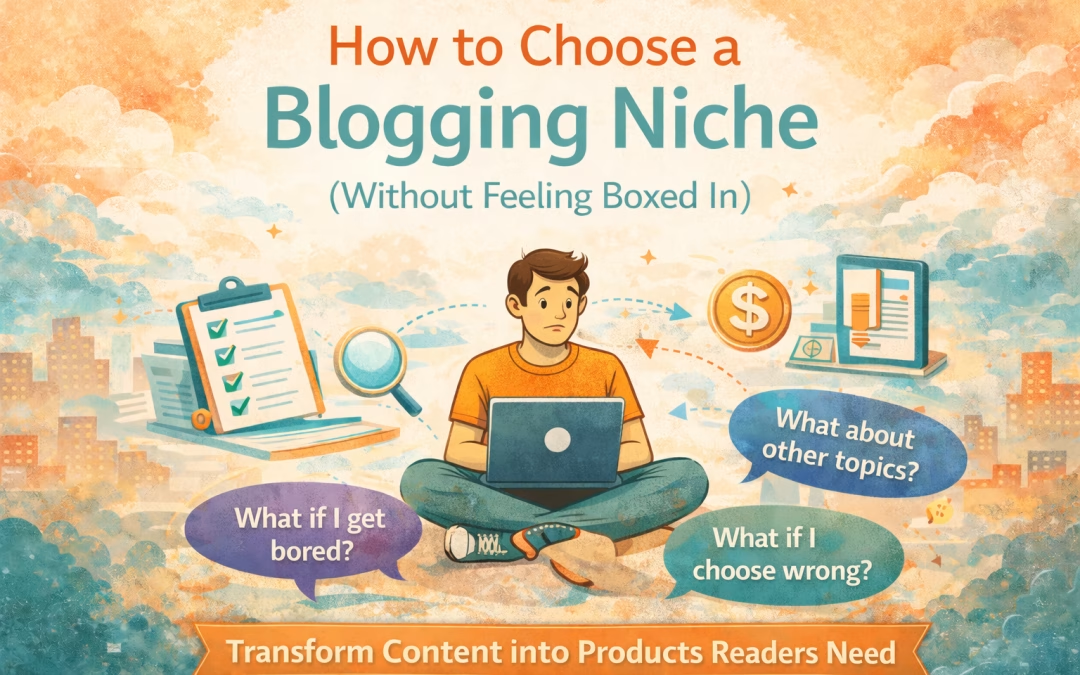
Most people approach niche selection like it’s a life decision. They think:
- “What if I choose wrong?”
- “What if I get stuck?”
- “What if I want to change later?”
So they delay.
They keep researching blogging niche ideas. They compare options. They try to find the “best niche for blogging beginners.”
And they never start. Here’s the reality:
You’re not choosing a niche forever.
You’re choosing a direction to begin.
If you understand how to choose a blogging niche the right way, you won’t feel boxed in. You’ll feel clear, confident, and ready to build something that can evolve and make money.
What You Will Learn in This Guide
In this guide, you’ll learn how to choose a blog niche that is flexible and scalable, how to validate whether your niche can actually generate income, how to avoid the most common mistakes that keep beginners stuck, and how to turn your niche into a system that leads to consistent content, audience growth, and digital products.
Why Choosing a Blogging Niche Feels So Hard
If you feel stuck choosing a niche, you’re not alone.
Most beginners approach niche selection like this:
- “I’ll write about travel”
- “I’ll blog about fitness”
- “I’ll create business content”
These are not niches. These are categories. And categories create confusion.
Because now you’re asking:
- What content should I create?
- Who is this really for?
- How do I stand out?
This is where niche paralysis starts.
The Shift: From Topic to Transformation
If you want to know how to find your niche in blogging, start here:
Your niche is not what you talk about. Your niche is:
Who you help and what problem you solve
Weak vs Strong Niche Examples
Weak:
Strong:
- “I help beginners choose a blogging niche and build a blog that makes money”
Weak:
- “I create fitness content”
Strong:
- “I help busy professionals build a simple home workout routine”
When you define your niche this way, you stop guessing what to write.
You start building with direction.
The 3-Part Framework to Choose a Blog Niche
If you’re wondering how to pick a niche for a blog without feeling boxed in, use this:
- Audience. Who are you helping?
- Problem What are they struggling with?
- Direction What result do they want?
Example
- Audience: Beginner bloggers
- Problem: Overwhelmed with niche selection
- Direction: Start a blog that can make money
That’s a clear and profitable blogging niche.
Why This Works
This framework gives you:
- Clear positioning
- Endless content ideas
- A path toward monetization
Instead of guessing, you’re building with intention.
How to Choose a Blogging Niche That Gives You Freedom
One of the biggest fears is choosing a niche and getting stuck. But here’s the truth:
You don’t need one rigid niche.
You need a flexible starting point.
Example: Expanding Your Niche
Start with: How to choose a blogging niche
Then expand into:
- Blogging niche ideas
- Content strategy
- SEO basics
- Email marketing
- Digital products
You didn’t change niches. You expanded your authority.
The Rule
As long as you’re helping the same audience achieve a similar outcome, you’re still within your niche.
How to Choose a Profitable Blogging Niche
This is where most people fail. They choose a niche based on interest, not income potential. If you want to choose a niche that makes money, you need to validate it.
Ask Yourself:
- Are people already paying to solve this problem?
- Can I create a simple digital product here?
- Does this niche lead to a clear result?
Signs of a Profitable Blogging Niche
- People are searching for solutions
- Courses or ebooks already exist
- The outcome is clear and specific
Weak Niches
- Pure inspiration
- No clear problem
- No clear outcome
Strong Niches
- Skill-based
- Problem-solving
- Outcome-driven
If your niche solves a problem, it can make money.
Common Mistakes When Choosing a Blog Niche
If you’re stuck choosing a niche, you’re probably making one of these mistakes.
1. Choosing Based on Interest Alone
Enjoying a topic is not enough. If there’s no problem to solve, your niche won’t grow.
2. Being Too Broad
“Business” or “health” are too wide. You need focus before expansion.
3. Over-Niching Too Early
Going too specific can limit your growth. Balance clarity with flexibility.
4. Waiting for the Perfect Niche
This is the biggest trap. You don’t learn how to choose a niche by thinking. You learn by building.
5. Ignoring Monetization
If your niche can’t lead to income, you’ll lose motivation. Always think: “Can this become a product?”
6. Copying Others
You can study others, but don’t copy blindly. Your positioning matters.
7. No Clear Outcome
Content without direction leads nowhere. Every post should move the reader forward.
How to Validate a Blog Niche Before You Start
If you want to know how to validate a blog niche, follow this process.
Step 1: Check Demand
Search for:
- Blog posts
- YouTube content
- Questions online
If people are asking, there is demand.
Step 2: Check If People Pay
Look for:
- Courses
- Digital products
- Paid content
If people are paying, your niche is viable.
Step 3: Define the Outcome
Avoid vague niches. Choose something with a clear result like:
- Start a blog
- Build income
- Learn a skill
Step 4: Test Content Ideas
Write sample titles like:
- “How to choose a blogging niche”
- “Best niche for blogging beginners”
- “How to pick a profitable niche”
If ideas come easily, your niche works.
Step 5: Map a Product
Ask: “What can I sell in this niche?” If you can answer that clearly, you’re on the right path.
How Your Blogging Niche Connects to Income
Your niche should connect to a system.
The Content-to-Product Strategy
- Blog Post
- Lead Magnet
- Email Sequence
- Digital Product
Example
- Blog: How to choose a blogging niche
- Lead Magnet: Niche worksheet
- Email: Guided steps
- Product: Blogging course
This is how you build a blog that makes money.
The Flexible Authority Strategy
Here’s the mindset shift:
You’re not building a niche. You’re building authority.
What This Means
- You can expand your content
- You can explore related topics
- You can create multiple income streams
As long as everything connects to your audience and their goals.
Simple Action Plan
If you’re still wondering what niche should you choose for blogging, do this:
- Step 1 Choose your audience
- Step 2 Identify one problem
- Step 3 Define one outcome
- Step 4 List 10 blog ideas
- Step 5 Create one lead magnet
That’s your niche. Clear. Flexible. Profitable.
If You’re Still Stuck Choosing a Niche
Don’t stay stuck in research mode. Take action.
👉 Download the Niche Clarity Worksheet
It will help you:
- Choose a blog niche
- Validate your idea
- Plan your content
Build a Blog That Grows With You
Choosing a niche is just the beginning. If you want to build something that lasts, your niche should lead to a system.
A system that turns:
- Content into traffic
- Traffic into leads
- Leads into digital products
As you go through this guide, take note of ideas you can immediately apply, especially the ones that help you move forward instead of overthinking. The goal is not just to learn how to choose a blogging niche, but to use it as a starting point for building something that can grow, evolve, and generate income over time.

by Digital Juan | Feb 23, 2026 | Start a Blog
When people begin learning about blog branding, they often focus on visual elements first. They think about choosing a logo, picking a color palette, or designing a visually appealing website. While those elements can help create a polished presentation, they are not the core of what makes a blog memorable. The deeper layer of branding comes from something less visible but far more powerful.
It comes from your brand angle.
Your brand angle is how your blog feels to the reader. It is the emotional and practical experience someone has when they read your content. It shapes how people understand your ideas and whether they feel comfortable returning to your blog again. This is why two blogs can talk about the same topic and still feel completely different.
One blog may feel overwhelming, technical, or confusing. Another may feel calm, encouraging, and easy to follow. The difference between those experiences is not design.
The difference is the brand angle.
Understanding your brand angle helps you create a blog that readers recognize, trust, and return to over time.
What Is a Brand Angle in Blogging?
A brand angle in blogging is the perspective and tone through which you present your ideas. It influences how readers interpret your content and how they emotionally connect with your blog. Your brand angle is not a single feature. It is the result of several consistent elements working together.
These elements include:
- The tone of your writing
- The values you emphasize
- The way you explain ideas
- The type of reader you speak to
Over time, these elements combine to create a recognizable voice. That voice becomes part of your blog brand identity.
Readers may not consciously analyze these elements, but they feel them when they read your posts. They begin to recognize the experience your blog provides.
Why Brand Angle Matters for Bloggers
The internet is full of content. In many niches, thousands of blogs discuss the same subjects.
For example, there are countless blogs about:
- Personal productivity
- Blogging and content creation
- Personal finance
- Digital entrepreneurship
Because of this, the information readers find across different blogs is often similar. If two blogs provide similar information, why would readers prefer one over the other?
The answer usually comes down to experience. The way information is delivered matters as much as the information itself.
One blog may present ideas in a way that feels:
- Complex
- Technical
- Fast paced
- Difficult for beginners
Another blog may present the same ideas in a way that feels:
- Clear
- Calm
- Encouraging
- Easy to understand
Both blogs may contain valuable insights. But the experience they create for readers is different. That difference is the brand angle. Your brand angle shapes how readers perceive your blog and whether they feel comfortable learning from you.
The Reader Experience Is Your Brand
A useful way to understand brand angle is to think about how someone feels while reading your blog. Imagine a reader discovering your website for the first time. They begin reading one of your posts.
- Do they feel calm and guided?
- Do they feel challenged and intellectually stimulated?
- Do they feel encouraged and motivated?
- Or do they feel overwhelmed?
These emotional reactions are not random. They come from the voice and structure of your content.
To reflect on your own brand angle, ask yourself questions such as:
- Does my writing feel simple and reassuring?
- Does it feel analytical and detailed?
- Does it focus on motivation and encouragement?
- Does it emphasize clarity through step-by-step explanations?
Every blog communicates a certain feeling. Some blogs feel like a classroom lecture. Others feel like a conversation with a trusted friend.
Neither approach is wrong. What matters is consistency.
Brand Angle Comes From Your Natural Tendencies
One of the biggest mistakes beginner bloggers make is trying to invent a personality that does not feel natural. They attempt to imitate popular bloggers or force a brand style that feels artificial. But strong brand angles rarely come from imitation. They come from natural communication habits. Your brand angle often emerges from the way you already explain things.
For example, you might naturally enjoy:
- Breaking complex ideas into small steps
- Encouraging people who feel overwhelmed
- Explaining topics slowly and clearly
- Reflecting honestly on your own learning journey
These tendencies already shape your blogging voice and tone. You do not need to invent them. You simply need to notice them and use them consistently.
Different Bloggers Create Different Experiences
To understand this better, consider how different bloggers naturally approach teaching.
Some bloggers prefer structured explanations.
Their writing style may include:
- Step-by-step instructions
- Practical frameworks
- Organized outlines
- Clear summaries
Readers often experience these blogs as structured and practical.
Other bloggers lean toward encouragement and reflection.
Their writing style may emphasize:
- Reassurance for beginners
- Personal stories
- Mindset guidance
- Gentle encouragement
Readers often experience these blogs as supportive and motivating. Both approaches provide value. They simply create different reader experiences.
Examples of Different Brand Angles

To see how brand angle works in practice, imagine two blogs teaching the same topic: how to start a blog. Both blogs might cover similar information, but their tone and perspective feel very different.
Technical Strategy Blog
The tone of this blog might be:
- Data-driven
- Analytical
- Focused on metrics and optimization
The content might include:
- Advanced SEO strategies
- Analytics dashboards
- Traffic growth techniques
Readers might feel:
- Challenged
- Intellectually stimulated
- Slightly overwhelmed if they are beginners
Beginner-Friendly Blogging Guide
Another blog covering the same topic might use a different brand angle. The tone might be:
- Calm and reassuring
- Beginner-friendly
- Focused on clarity and simplicity
The content might emphasize:
- Clear step-by-step explanations
- Encouragement for new creators
- Simple strategies anyone can follow
Readers might feel:
- Supported
- Encouraged
- Comfortable learning gradually
Both blogs teach blogging. But they attract different readers because their brand angles are different.
A Strong Brand Angle Does Not Try to Please Everyone
One of the most important lessons in blog branding strategy is that your content does not need to appeal to everyone. In fact, trying to appeal to everyone usually weakens your brand.
A strong brand angle speaks clearly to a specific type of reader.
For example, your blog might focus on helping:
- Beginners who feel overwhelmed
- Busy professionals who want efficient solutions
- Creators who value simplicity
- Entrepreneurs looking for practical strategies
When readers feel understood, they stay longer. They recognize that your blog speaks directly to their needs. And that recognition creates loyalty.
Consistency Builds Brand Recognition
A brand angle becomes powerful through repetition and consistency. Readers begin to recognize your blog not because it is loud or flashy, but because it feels familiar. Consistency appears in many subtle ways.
For example:
- Your writing tone remains steady
- Your explanations follow a similar structure
- Your values appear repeatedly across articles
- Your teaching style becomes recognizable
Over time, readers begin to associate that experience with your blog. They may not consciously describe it as branding, but they recognize the feeling. And recognition builds trust.
How to Discover Your Brand Angle
You do not need a complicated branding exercise to discover your brand angle. Often, it appears naturally when you reflect on how you communicate. Start by asking yourself a few simple questions.
How do I naturally explain things?
Do you prefer:
- Step-by-step instructions
- Big-picture ideas
- Stories and real-life examples
What values guide my teaching?
Do you emphasize:
- Clarity
- Simplicity
- Encouragement
- Depth and analysis
Who do I want to help most?
Are you speaking to:
- Beginners
- Creators
- Professionals
- Entrepreneurs
Your answers reveal the early shape of your brand voice.
Let Your Brand Develop Over Time
Your brand angle does not need to be perfectly defined when you start blogging. In fact, it rarely is. As you publish more content, patterns begin to emerge.
You may notice that your writing naturally emphasizes:
- Calm explanations
- Practical steps
- Encouragement for beginners
These patterns are signals of your natural brand voice. Instead of forcing something new, lean into what already feels authentic.
Over time, your blog becomes recognizable not because it is loud, but because it is consistent and familiar.
Final Thoughts
Your brand angle in blogging is not something you manufacture. It is something you discover and refine through practice.
It emerges from:
- the way you explain ideas
- the values you emphasize
- the readers you choose to serve
Two blogs can talk about the same topic and still feel completely different. That difference is what makes your blog memorable. When your tone, perspective, and teaching style remain consistent, readers begin to recognize your voice. And when readers recognize your voice, they begin to trust it.
That trust is what turns casual readers into long-term supporters.

by Digital Juan | Feb 23, 2026 | Start a Blog
Starting a blog is exciting. You finally have a place to share your ideas, help people with your knowledge, and build something meaningful online. But before you publish your first few posts, it helps to reshape your expectations about what blogging actually is. Many beginners imagine blogging as a quick path to traffic, recognition, or income. When those things do not happen immediately, discouragement appears quickly.
The reality is different.
A blog is not simply a container for articles. Blogging is a long-term practice of communicating value with care and consistency. When you understand this early, the journey becomes far more sustainable. If you want to succeed as a beginner blogger, developing the right mindset is just as important as choosing a niche or writing good content.
Blogging Is an Exchange of Trust
When someone chooses to read your blog, they are giving you something valuable: their attention. Time is limited, and readers have endless choices online. When someone clicks on your article and begins reading, they are quietly trusting that your words will be worth their time. Because of that, blogging is not just about publishing information. It is about respecting the reader’s trust.
Every blog post should try to do at least one of the following:
- Help someone understand an idea more clearly
- Help someone make a decision with more confidence
- Help someone take a small step forward
The more consistently your content does this, the more that trust grows. Over time, readers begin to associate your blog with clarity and usefulness. That is the foundation of a loyal audience.
Why Blogging Often Feels Quiet at the Beginning
One of the hardest parts of blogging for beginners is the silence that often follows early posts. You might spend hours writing something thoughtful, press publish, and hear nothing back.
No comments.
No messages.
No visible response.
For many beginners, this silence feels discouraging. But silence rarely means failure.
More often, it simply means your work is still finding its way to readers.
Why Blogging Growth Takes Time
Blogging works differently from social media. Social media platforms distribute posts quickly, but the attention often fades within hours or days. Blogging operates on a slower timeline.
Several processes need time to unfold:
Search engines must discover your content
Your posts need to be indexed and evaluated
Readers need to encounter your articles through search or sharing
Trust develops gradually as people read multiple posts
Because of these factors, blog growth often feels invisible at first. But invisible progress is still progress. Many blogs begin gaining consistent traffic months after their first posts were published.
Think of Blogging Like a Garden
A helpful way to understand blogging is to imagine it as a garden. When you plant seeds, you do not expect flowers the next day. You prepare the soil, water the plants, and care for them patiently. Blogging works the same way. Every article you publish is a seed.
Some seeds grow slowly.
Some bloom months later.
Some unexpectedly reach many readers.
Your responsibility is simply to keep planting and nurturing your work. Growth comes from consistent care.
Blogging Is a Skill You Build Over Time

Another important expectation to adjust is how your writing will evolve. Your first blog posts may feel uncertain or awkward. Your ideas might feel scattered. Your voice may not yet feel natural. This is completely normal.
Blogging is a skill building process.
With each article you publish, several improvements naturally occur:
Your sentences become clearer
Your explanations become more focused
Your ideas become easier to organize
Over time, your voice begins to settle. You learn how to communicate ideas more simply and guide readers through them more effectively.
Publishing Helps You Understand Your Audience
Another benefit of consistent blogging is the feedback loop it creates. The more content you publish, the more you begin noticing patterns.
You start seeing:
Which topics readers respond to most
Which explanations resonate with people
Where readers tend to feel confused
Sometimes readers will tell you directly through comments or messages. Other times the patterns appear in your analytics or through search traffic. These insights help refine your future writing. But those insights only appear if you continue publishing.
Learning to Write With the Reader in Mind
One of the biggest improvements bloggers develop over time is learning to write with the reader’s next step in mind. Beginners often try to explain everything in one article. They want their content to feel complete and comprehensive. But effective blogging usually works differently.
Strong blog posts often focus on helping the reader take one clear step forward. That step might be:
Understanding a concept
Identifying a starting point
Building confidence to try something new
When your writing helps readers move forward incrementally, your blog becomes a place people return to for guidance.
Blogging Is a Practice, Not a Performance
Many beginners approach blogging as a performance. They feel pressure to write perfect articles, choose perfect topics, and produce immediate results. But blogging becomes much healthier when you treat it as a practice instead of a performance. A practice is something you return to regularly in order to improve.
When blogging becomes a practice:
Pressure decreases
Curiosity increases
Progress becomes natural
You begin writing to explore ideas and help readers understand them better, not to prove your expertise.
Patience Is One of the Most Important Blogging Skills
Patience is one of the least glamorous but most important parts of blogging. Blogging rewards people who continue publishing even when early results are quiet. Every article you write strengthens your ability to communicate. Every post adds to your body of work. And over time, that body of work becomes something valuable. Readers begin to discover your ideas. Search engines begin to recognize your content. Your voice becomes clearer. But all of this requires patience.
Final Thoughts
If you want to understand what to expect when starting a blog, the most important lesson is simple. Blogging is a long-term practice of creating useful ideas and sharing them consistently.
Readers offer their trust when they spend time with your content. That trust grows slowly as your writing continues helping people think more clearly, decide with confidence, or move forward in small ways. Early blogging may feel quiet.
But quiet does not mean failure. Like a garden, your blog grows through patience, care, and steady effort. And as you continue publishing, something encouraging happens.
Your voice becomes clearer.
Your thinking becomes sharper.
Your blog becomes a place where readers return because it genuinely helps them move forward.

by Digital Juan | Feb 20, 2026 | Start a Blog
There’s a moment that happens before most blogs even begin. It doesn’t look dramatic. There’s no big failure. No visible mistake. It’s quiet.
You sit there, thinking about starting. Maybe you already have a domain name in mind. Maybe you’ve even opened a blank page.
And then the question shows up: “What if I choose the wrong niche?”
It doesn’t feel like a simple question. It feels like a trap. Because choosing a niche feels like choosing a direction you can’t undo. Like once you pick one, you’re stuck writing about it. Stuck building around it. Stuck living with it.
So what do you do? You hesitate.
You tell yourself:
“I’ll think about it more.”
“I’ll research a bit more.”
“I’ll decide when I’m sure.”
But here’s what actually happens:
You don’t move. And the longer you stay there, the heavier the decision feels.
Let’s Clear This Up Immediately
Yes, you can change your blogging niche later
Take a breath. That pressure you’ve been carrying? You don’t need to carry it anymore. But here’s where it gets important. Because while you can change your niche..
That’s not the strategy you want to rely on.
The Real Insight Most People Miss
You don’t need a niche you can escape.
You need a niche you can grow.
Think about it like this. When people start a blog, they imagine it as something fixed. Like choosing a lane on a road. But in reality, it’s more like building a path as you walk. At first, it’s narrow. You’re just trying to figure out where you’re going.
But as you move forward:
- you see more options
- you understand the terrain
- you start creating branches
That’s how niches actually work.
Why This Fear Feels So Real
Let’s be honest. This isn’t really about niches. It’s about fear of wasting time.
You’re thinking:
- “What if I spend months on the wrong thing?”
- “What if I build something that doesn’t work?”
- “What if I have to start over?”
Those are valid fears. But they lead to the wrong conclusion. Because the real risk isn’t choosing wrong.
The real risk is staying stuck long enough that nothing gets built.
What Actually Happens When You Start
No one starts with clarity. Not really.
At the beginning:
- your ideas are rough
- your direction is unclear
- your content feels experimental
But then something happens. You publish. You get feedback. You notice patterns.
You start seeing:
- what people respond to
- what topics feel natural
- what problems keep showing up
And slowly…
Your niche stops being something you chose. It becomes something you understand.
The 3 Ways a Niche Evolves (And Why That’s Normal)
Not all changes are the same. Understanding this removes a lot of unnecessary fear.
1. Expansion (The Best Case)
This is what growth looks like. You don’t abandon your niche. You build on it.
Example:
You start writing about blogging basics. At first, it’s simple:
- how to start a blog
- what platform to use
- basic setup
Then you notice something. People aren’t just asking how to start.
They’re asking:
- how to grow
- how to get traffic
- how to make money
So you expand. Now you’re writing about:
- SEO
- content strategy
- digital products
You didn’t change your niche. You followed your audience.
2. Refinement (Getting More Focused)
Sometimes, your niche doesn’t expand. It sharpens.
You start broad:
Then you realize: Not everyone needs your content.
So you refine:
- helping beginners
- helping them make money
- helping them create digital products
Now your content becomes clearer. Your audience becomes stronger. Your results improve.
3. Full Pivot (The Last Option)
This is what most people fear. A complete change.
Example:
You start in travel.
But over time, you realize:
- no clear direction
- no product opportunity
- no real traction
So you shift into something else entirely. This can work. But it’s the hardest path.
Because it usually means:
- rebuilding
- repositioning
- starting momentum again
The Right Way to Change Your Blog Niche (If You Need To)
If you ever reach that point, don’t panic. Don’t wipe everything clean. Don’t start from zero. Instead, do this:
Step 1: Look Back Before You Move Forward
Ask yourself:
- What content performed best?
- What topics felt easiest to create?
- What did people respond to?
There’s always a pattern.
Step 2: Find the Thread
Somewhere in your content, there’s a connection. Usually:
- the audience
- the problem
- the outcome
That’s your anchor.
Step 3: Shift Gradually
Don’t announce a big change. Don’t rebrand overnight. Just start creating content in your new direction. Let it evolve naturally.
Step 4: Anchor It to Digital Products
This is where stability comes from.
Ask:
“What can I build from this?”
If your niche leads to:
- guides
- templates
- systems
- courses
You’re building something sustainable.
When You SHOULD Change Your Niche
Be honest with yourself.
Consider Changing If:
- there’s no demand
- you can’t see any product path
- your content feels random
- you don’t know what you’re building toward
When you SHOULD Not
This matters just as much.
Don’t Change Because:
- you’re bored
- someone else looks more successful
- you haven’t seen results yet
👉 Most blogs fail because they quit too early, not because they chose wrong.
The Better Strategy: Choose a Flexible Niche From the Start
This solves the entire problem.
Weak Niche – “blogging tips”
Stronger Niche – “beginners build blogs that make money with digital products”
Why this works:
- clear audience
- clear outcome
- built-in expansion
- strong monetization path
From here, you can grow into:
- SEO
- content
- monetization
- digital products
Without ever needing to “change” your niche.
The Bigger Picture You Need to See
This is the part most people miss.
You are not building a niche.
You are building an authority platform.
And authority:
Your niche is just where you start.
If You’re Still Sitting There Unsure
Let’s be honest again. You already know enough to start. You’re not lacking information. You’re waiting for certainty. But certainty doesn’t come first. Action does.
Your Next Step (Keep It Simple)
Don’t overcomplicate this. Today, do this:
- choose one niche
- write one post
- create one simple lead magnet
That’s it.
If You Want Help Getting Clear
👉 Download the Niche Clarity Worksheet
Want the Full System?
👉 Read: How to Choose a Blogging Niche Without Feeling Boxed In
Final Thought
So yes, you can change your blogging niche later. But the better move is this:
Choose something you can grow, not something you’re afraid to leave.
Start simple.
Stay consistent.
Let it evolve.

by Digital Juan | Feb 11, 2026 | Start a Blog
There’s a moment where thinking stops being helpful. You’ve read enough. You’ve explored blogging niche ideas. You’ve compared options. And you keep coming back to the same question:
“What niche should I choose for blogging?”
At first, it feels like a simple decision. But the longer you sit with it, the heavier it becomes. Because now it’s not just about choosing a topic.
It feels like you’re deciding:
- your direction
- your future content
- your potential income
So you hesitate.
You tell yourself:
“I’ll decide tomorrow.”
“I just need to research a bit more.”
“I want to be sure.”
But here’s the truth:
You don’t need more information.
You need a decision framework.
Why This Decision Feels So Difficult
You’re trying to make the “right” choice. A niche that:
- will work
- will make money
- won’t limit you
But that’s the trap. Because when every option has to be perfect, none of them feel safe.
The Shift That Makes This Easy
Instead of asking: “What niche should I choose?”
Ask:
“Which niche can I build into digital products?”
That changes everything. Because now you’re not choosing content. You’re choosing a direction that leads somewhere.
The Simple Decision Framework (Use This, Not Guesswork)
If you want to choose a niche for blogging beginners that actually works, use this filter:
A Strong Niche Has:
- A Clear Problem People are actively struggling with something.
- A Clear Outcome There’s a result they want.
- A Product Opportunity You can turn the solution into a digital product.
If your niche has all three, it works.
Step 1: Start With the Problem (Not Passion)
Most people start with what they like. That’s why they get stuck.
Weak Starting Point “I like fitness”
Strong Starting Point “I help beginners lose weight at home”
Problems create demand.
Demand creates opportunity.
Step 2: Define the Outcome (Make It Specific )
Your niche should lead somewhere clear.
Weak Outcome “Improve your life”
Strong Outcomes
- start a blog
- build income
- get clients
- lose weight
Clarity makes everything easier.
Step 3: Check If It Can Make Money
This is where most people hesitate. But it’s critical.
Ask Yourself
- Can I create a digital product here?
- Are people already paying for this?
- Can I solve this in a structured way?
Examples
- Blogging niche: course, templates
- Fitness niche: workout plans
- Finance niche: budget trackers
If you can see a product, you have a strong niche.
The Fast Decision Method (Stop Overthinking)
If you’re still stuck, use this:
Pick One and Test It You don’t need to commit forever. You need to start. Clarity comes from building, not thinking.
A Simple Scoring System (Make It Objective
Use this quick scoring method:
| Criteria |
Score (1–5) |
| Demand |
|
| Clarity |
|
| Product Potential |
|
| Content Ideas |
|
👉 Choose the niche with the highest total. This removes emotion from the decision.
Examples of Strong Blogging Niches (With Product Paths)
1. Blogging and Online Income
- problem: don’t know how to start
- outcome: make money
- product: courses, templates
2. Digital Products
- problem: don’t know what to sell
- outcome: create products
- product: guides, systems
3. Personal Finance
- problem: poor money habits
- outcome: save money
- product: trackers
4. Fitness
- problem: lack of routine
- outcome: get fit
- product: plans
5. Skill-Based Niches
- problem: lack of skill
- outcome: learn
- product: courses
Each works because it leads to something you can build.
What If You Have Multiple Niche Ideas?
This is where most people freeze.
Here’s What You Do
Pick one. Not the best one.
Not the safest one. Just one that meets the criteria.
You don’t build multiple niches at once.
You build one, then expand.
How to Avoid Regret After Choosing
This is important. You don’t avoid regret by choosing perfectly. You avoid regret by building something that can grow.
Choose a Flexible Niche
Instead of: “blogging tips”
Choose: “help beginners build blogs that make money with digital products”
Now you can expand into:
- SEO
- content
- monetization
- digital products
What Happens After You Choose Your Niche
This is where everything changes.
Step 1: Create Your First Content
Don’t wait. Start writing.
Step 2: Create a Lead Magnet
Example: niche worksheet
Step 3: Build an Email List
This is your real asset.
Step 4: Plan Your First Product
Keep it simple:
If You’re Still Unsure
You don’t need more thinking. You need a starting point.
👉 Download the Niche Clarity Worksheet
It will help you:
- choose a niche
- validate your idea
- generate content
Want the Full Framework?
👉 Read: How to Choose a Blogging Niche Without Feeling Boxed In
Final Thought
The question is not: “What niche should I choose for blogging?”
The better question is:
“What niche can I turn into something bigger?”
Because the goal is not just to blog.
It’s to build:
- a system
- an audience
- digital products
- income
Start simple.
Start now.
Refine later.