Choosing a domain name feels simple until you actually sit down to do it. Everything sounds either taken, too generic, or slightly off. And suddenly, what should take 10 minutes turns into hours of second guessing.
Here is the truth.
Your domain name is not just a technical requirement. It is your first impression, your brand foundation, and in many cases, your long-term asset. Get it right, and everything becomes easier. Get it wrong, and you will feel friction every time you share your link.
This guide will walk you through how to choose a domain name that works and how to buy it without overcomplicating the process.
Why Your Domain Name Matters More Than You Think
A domain name does three important things at once.
- First, it signals what you are about.
- Second, it shapes how memorable you are.
- Third, it influences how people trust you.
That is why strong domains tend to feel:
- Easy to remember
- Easy to type
- Easy to trust
And weak domains tend to feel:
- Confusing
- Forgettable
- Slightly off
Here is the key insight.
A domain name will not make your success. But it can definitely slow you down if it creates friction.
What Makes a Great Domain Name
Let’s simplify this. A great domain name is not clever. It is clear.
Here are the core traits you should aim for.
1. Short and simple
The fewer characters, the better. Short names are easier to remember and less prone to typos.
2. Easy to spell
If you have to explain it, it is already a problem.
Avoid:
- Unusual spellings
- Hyphens
- Numbers
3. Brandable
Even if you are building a niche blog, your name should feel like something people can recognize. Think in terms of identity, not just keywords.
4. Future-proof
Do not box yourself into a narrow idea. For example, a name like “BestLaptopUnder500” limits your growth. A broader name gives you room to expand.
Common Mistakes to Avoid
Most beginners fall into the same traps. Avoid these early and you will save yourself a rebrand later.
- Overusing keywords Exact-match domains used to matter more. Today, they matter less than brand perception.
- Choosing trends over longevity Trendy words age quickly. Your domain should still make sense years from now.
- Ignoring pronunciation If people cannot say it, they will not share it.
- Going too niche too soon You might evolve faster than you expect. Give yourself space.
Domain Extensions Explained
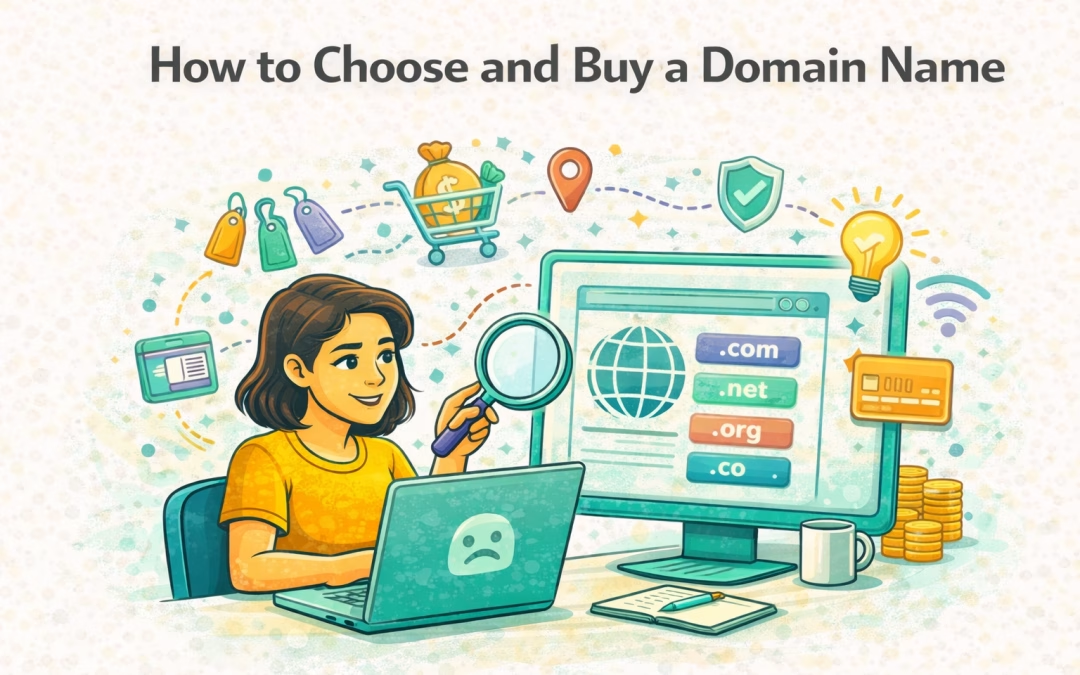
This is where a lot of confusion comes in. Let’s clear it up. A domain extension is the part after the dot.
Examples include:
- .com
- .net
- .org
Here is what you need to know.
.com is still king
It is the most trusted and recognizable extension. If it is available, take it.
Other extensions are fine, but contextual
- .net works for tech-related brands
- .org is often used for organizations
- .co is popular with startups
But here is the reality.
People default to typing .com.
So if you choose something else, make sure it is intentional.
Personal Brand vs Keyword-Based Domains
This ties directly into your long-term strategy. You have two main directions.
Personal brand domains
These use your name or identity.
Examples:
- yourname.com
- yourbrand.com
Best for:
- Creators
- Consultants
- Coaches
Keyword-based domains
These focus on search intent.
Examples:
- besttravelgear.com
- fitnessplanshub.com
Best for:
- Niche blogs
- SEO-driven sites
Here is the tradeoff.
Personal domains build authority. Keyword domains build search visibility.
And just like we discussed earlier, your choice should align with your goals.
How to Brainstorm Domain Name Ideas
This is where most people get stuck. Instead of waiting for the perfect idea, use a structured approach.
Start with:
1. Core words
List words related to your niche or identity.
2. Modifiers
Add words like:
- hub
- lab
- studio
- guide
3. Combine creatively
Mix and match until something clicks. You are not looking for perfection. You are looking for something that feels right enough to start.
How to Check Availability
Once you have a few ideas, it is time to check if they are available.
You can do this through domain registrars like:
- GoDaddy
- Namecheap
- Google Domains
Simply type your domain idea into their search bar. If it is taken, you will see alternatives or suggestions.
Here is a practical tip.
- Check social media handles at the same time.
- Consistency across platforms makes branding easier.
Where to Buy a Domain Name
Not all registrars are the same. Some are beginner-friendly. Others are more barebones.
Here are three solid options.
Namecheap
- Affordable pricing
- Free privacy protection
- Clean interface
GoDaddy
- Very popular
- Easy to use
- Frequent upsells, so be mindful
Google Domains
- Simple and reliable
- Seamless integration with Google services
You do not need the “best” provider.
You just need a reliable one.
Step-by-Step: How to Buy Your Domain
Let’s break this down into simple steps.
- Search your domain Enter your chosen name into your registrar’s search tool.
- Choose your extension Prefer .com if available.
- Add to cart Ignore unnecessary add-ons for now.
- Enable privacy protection This keeps your personal details hidden. Most registrars offer this for free or a small fee.
- Complete checkout That is it.
You now own your domain.
What to Do After You Buy Your Domain
Buying the domain is just the start. Now you need to connect it to something.
Common next steps include:
- Linking it to a hosting provider
- Setting up a website
- Creating a professional email
This is where your domain turns into an actual asset. Because a domain alone does nothing. It becomes valuable when you build on top of it.
Final Thoughts
Choosing a domain name feels like a big decision. And in some ways, it is. But here is the perspective that matters.
A good domain supports your growth. A great domain accelerates it slightly.
But neither replaces consistent execution. Do not let the search for the perfect name delay your start. Because clarity comes from building, not overthinking.
Actionable Takeaways
If you want to move forward today, do this:
- Pick 5 to 10 domain ideas using simple, clear words
- Prioritize clarity over cleverness
- Check availability on a trusted registrar
- Secure the .com version if possible
- Buy your domain and move on to building
The goal is not to find the perfect name. The goal is to own a name you can grow into.
And once you have it, the real work begins.