by Digital Juan | Jan 10, 2026 | Start a Blog
Let us start with an honest question.
With TikTok dominating attention, YouTube growing rapidly, and short form content everywhere, does blogging still matter? It is a fair concern. The internet feels faster than ever. Trends move quickly. Content cycles feel shorter. New platforms rise and fall almost overnight.
It can make blogging seem slow in comparison.
When everyone is talking about algorithms, reels, and viral growth, sitting down to write a long form blog post can feel almost old fashioned. Some creators even assume blogging is something people did ten years ago before social media matured. But here is what most people misunderstand.
Blogging was never about speed. It was about substance. And substance ages well. If you care about long term growth, authority, and ownership, blogging is not outdated. It is strategic.
The Difference Between Fast Content and Permanent Content
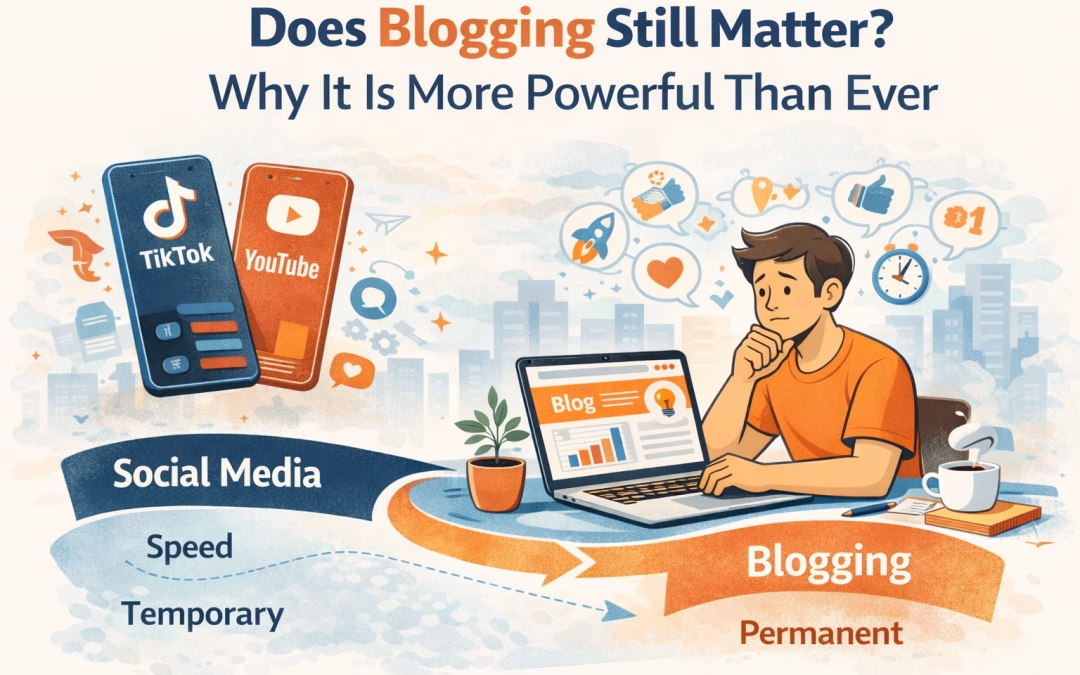
To understand whether blogging is still relevant, you need to understand the difference between temporary attention and permanent presence. Social media is built for speed. It rewards frequency, reaction, and immediacy. Posts appear, perform, and disappear within days. Even highly engaging content fades quickly as the feed moves forward. That system encourages short bursts of visibility. Blogging operates on a different timeline.
A single blog post can:
- Rank in search engines for years
- Be discovered months after publishing
- Continue attracting new readers daily
- Serve as a reference resource
This is the core difference in blogging vs social media.
Social media is rented space.
A blog is owned space.
One is momentum driven.
The other is asset driven.
When you publish on your blog, you are building digital real estate that compounds.
Your Blog Is Your Online Home
Imagine building a house on rented land. That is what building only on social media looks like. You may gain visibility, but you do not control the foundation. Algorithms change. Reach fluctuates. Platforms adjust rules without warning. Your blog is different.
It is:
- A place you fully control
- A structured home for your ideas
- A space where your best thinking lives
- A central hub for your brand
When people search “does blogging still matter,” they are often evaluating visibility. But blogging is not just about visibility. It is about ownership.
Ownership gives you:
- Stability
- Flexibility
- Longevity
And those qualities matter more as the creator economy becomes more competitive.
Blogging Builds Trust Faster Than Short Form Content
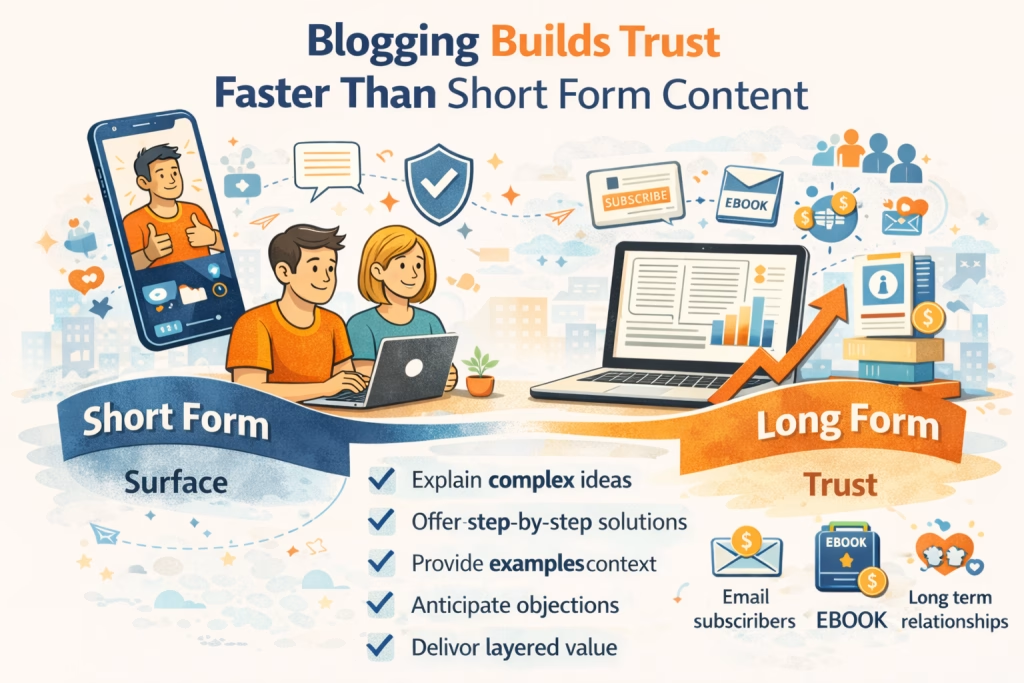
Trust does not come from being seen once. It comes from being understood. Short form content can introduce you to new audiences. But long form blogging allows people to experience your thinking. They can follow your reasoning. They can see your depth. They can observe how you structure ideas.
When someone reads two or three long form posts from you, something shifts. They begin to see you as credible. Long form blogging allows you to:
- Explain complex ideas clearly
- Offer step by step solutions
- Provide examples and context
- Anticipate objections
- Deliver layered value
And trust leads to:
- Email subscribers
- Digital product buyers
- Loyal audience members
- Long term relationships
If you want sustainable growth, trust matters more than traffic spikes.
Blogging and Social Media Work Better Together
This is not a battle between formats. It is a hierarchy. Your blog is the foundation. Social media is distribution. When you write one strong blog post, you can turn it into:
- Multiple Facebook posts
- A YouTube script
- Short form reels
- Email newsletters
- Threads or carousel content
Without a blog, social content often feels fragmented. With a blog, everything connects. Your blog becomes the central idea engine. Social media becomes amplification. That structure makes content creation more strategic and less chaotic.
The Creator Economy Is Expanding, Not Shrinking
There is another important factor to consider. The creator economy is growing every year. More people search for tutorials, guidance, frameworks, and personal stories online. Search behavior continues to expand across industries and niches. People are not consuming less information. They are searching for better information.
Blogging positions you directly in that search ecosystem. When someone types a question into Google, they are expressing intent. They are actively looking for help. Blogging allows you to meet that intent. That is why blogging in the creator economy remains powerful. It aligns with how people naturally seek answers.
Why Blogging Is Still Important for Long Term Growth
When evaluating whether blogging still matters, look at long term impact.
Blogging allows you to:
- Build searchable assets
- Develop authority over time
- Create a base for digital products
- Strengthen email growth
- Reduce reliance on algorithms
It supports:
- Evergreen traffic
- Compounding visibility
- Strategic content ecosystems
Blogging is not explosive. It is exponential. Each post strengthens the foundation. Each article increases surface area for discovery.
Blogging Is a Strategic Advantage
If your goal is:
- Authority
- Ownership
- Long term income
- Digital products
- Sustainable growth
Then blogging is not optional. It is foundational.
Yes, platforms will evolve. Yes, formats will change. But structured, searchable, owned content will always matter. Because people will always search. So does blogging still matter?
Yes.
Not because it is trendy.
Not because it is nostalgic.
But because it builds something permanent.
And permanence wins long term.
by Digital Juan | Jan 4, 2026 | Featured, Start a Blog
Most people start blogging because they enjoy writing. They have ideas to share, experiences to document, or lessons they want to pass on. At first, blogging feels creative and open ended. You publish when you feel inspired. You experiment with topics. You hope readers find you. But over time, something begins to feel incomplete.
You start wondering whether your blog could become more than a collection of posts. You notice certain topics resonate more. You see patterns in what people ask you. You realize your writing is solving real problems.
That realization is the beginning of becoming a blogger entrepreneur. Blogging stops being random expression. It starts becoming strategic creation.
What Is a Blogger Entrepreneur?
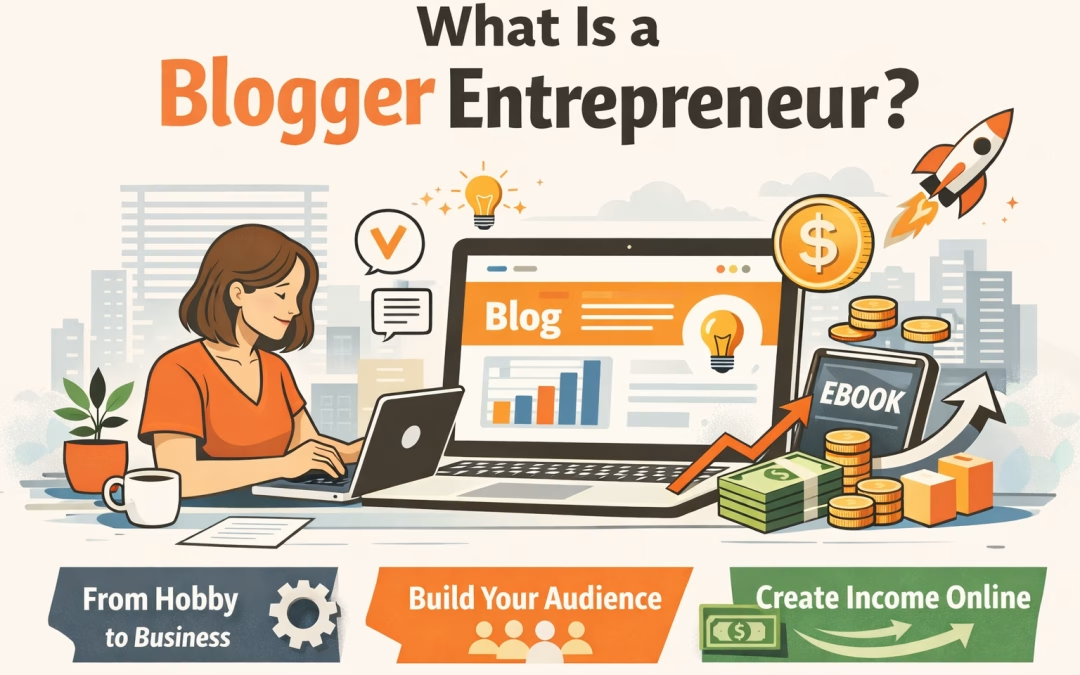
At its core, a blogger entrepreneur is someone who treats their blog as an asset instead of a hobby. That shift sounds small. It is not.
When you see your blog as an asset, you begin to:
- Publish with intention
- Build around specific themes
- Think in terms of long term growth
- Create content that connects together
- Look for structured opportunities
A blogger entrepreneur understands that blogging as a business is about building equity over time.
Instead of asking, “What should I write today?”
You begin asking, “What am I building this year?”
That question changes everything.
Why Digital Products Are the Natural Revenue Stream
Many beginners think monetizing a blog requires:
- Massive traffic
- Display ads
- Brand sponsorships
- Viral content
Those methods can work. But they often depend on external platforms and unpredictable growth. Digital products for bloggers are different.
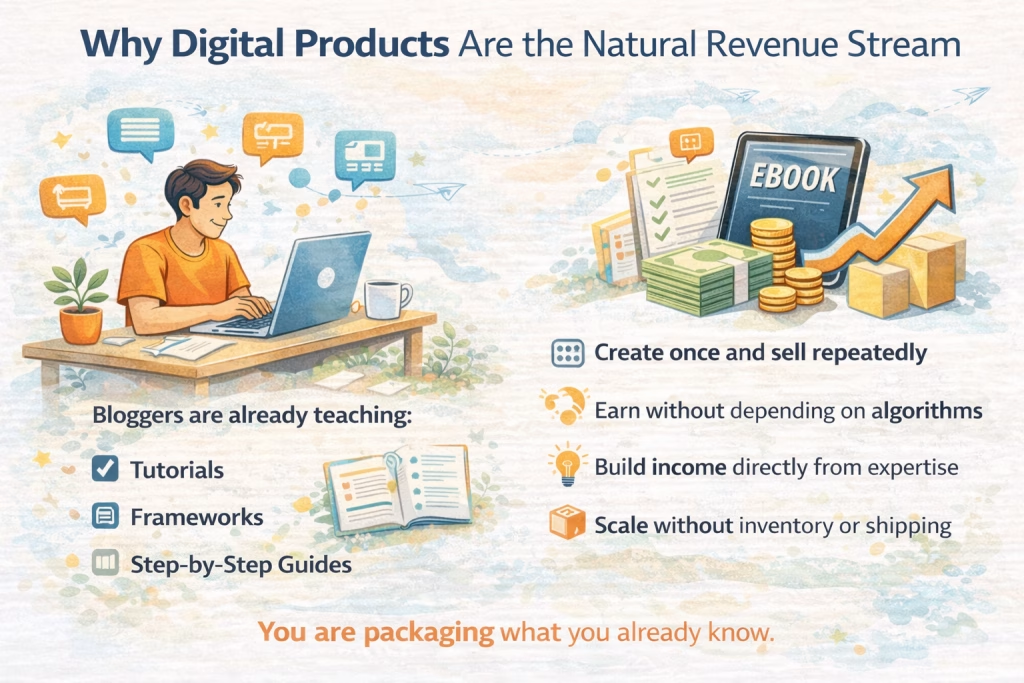
They allow you to:
- Create once and sell repeatedly
- Earn without depending on algorithms
- Build income directly from expertise
- Scale without inventory or shipping
The most important reason digital products work is simple. Bloggers are already teaching.
If you write tutorials, frameworks, or step by step guides, you are already structuring value. A digital product simply organizes that value into a focused, usable format. You are not becoming someone new. You are packaging what you already know.
Your Blog Is the Research Lab for Products
When you look at your blog closely, you will see patterns. Certain explanations appear again and again. Readers ask similar questions. Some posts perform better than others. Specific frameworks repeat.
Those patterns reveal:
- Demand
- Clarity gaps
- Common struggles
- Topics worth expanding
Instead of guessing what to sell, a blogger entrepreneur studies their own content.
For example:
If you have multiple posts about content planning, that could become a template.
If you repeatedly explain SEO basics, that could become a beginner guide.
If readers often ask how to choose a niche, that could become a worksheet.
Repetition is not redundancy. It is structure emerging.
From Writer to Builder
The mindset shift happens internally first. When you begin thinking about digital products, your writing changes. You start organizing ideas more clearly. You connect posts into sequences. You think in systems instead of isolated topics.
Your blog becomes:
- More structured
- More focused
- More intentional
- More aligned with long term goals
This is when blogging transforms into entrepreneurship. You are no longer just publishing. You are building infrastructure.
Ownership Creates Stability
One of the biggest advantages of being a blogger entrepreneur is ownership. Social media platforms are rented space. Algorithms shift. Reach fluctuates. Visibility is unpredictable.
Your blog, however, allows you to:
- Control the platform
- Control the content
- Control the messaging
- Build search driven traffic
- Direct readers toward your own offers
When you monetize a blog with digital products, you are building on owned digital real estate. That ownership creates stability in a constantly changing online world.
The Compounding Effect of Blogging and Digital Products
At first, growth feels slow. One post does not transform your business. One product does not generate instant freedom. But blogging is a compounding model.
Every blog post can:
- Attract search traffic
- Build trust with readers
- Lead to an email signup
- Introduce a digital product
- Generate income
Over time, those actions layer on top of each other.
Traffic builds trust.
Trust builds authority.
Authority supports product sales.
Sales fund further growth.
This is how you turn a blog into income sustainably.
The Identity Shift That Unlocks Growth
Before revenue increases, identity changes. When you create your first digital product, even a simple checklist, something shifts internally. You stop seeing yourself as someone experimenting. You begin seeing yourself as someone building value.
You start to:
- Organize your knowledge more clearly
- Recognize the value of your experience
- Think in systems instead of posts
- Build with long term intention
Authority begins internally before it becomes external. That is the true transformation of a blogger entrepreneur.
Blogging Is Infrastructure, Not Just Content
Blogging is not just publishing articles. It is building digital infrastructure. Your blog supports:
- Visibility through search
- Trust through helpful content
- Income through digital products
- Community through email
- Authority through consistency
When you understand this, blogging becomes directional.
You are not just writing. You are building an asset that grows, compounds, and creates opportunity over time. That is what it means to be a blogger entrepreneur.

by Digital Juan | Aug 7, 2025 | Start a Blog
There was a time when writing good posts and sharing them on social media was enough to build an audience. Those days are gone. The internet has matured, algorithms have evolved, and audiences now expect more than surface-level advice. To stand out, modern bloggers need a blend of creative, analytical, and strategic skills that go far beyond writing alone. This new era is often called the creator economy, a world where individuals build influence, income, and independence through their ideas. In it, bloggers are no longer just writers. They are brand builders, strategists, designers, and data interpreters.
That is where the idea of the blogger’s skill stack comes in. It is the combination of complementary abilities that transform hobby bloggers into professionals who thrive. Storytelling, SEO, design, and analytics are no longer separate disciplines. They are the pillars that hold up a sustainable, growth-focused blog. Let’s explore what that looks like and how you can start building your own stack to stay competitive in the creator economy.
Why Blogging Alone Isn’t a Strategy Anymore
The old model of blogging was simple: write consistently, target some keywords, build backlinks, and hope for traffic. It worked when there was less competition and more organic reach. Today, over 600 million blogs compete for attention online, and readers have countless ways to consume content through YouTube, Substack, TikTok, and beyond. What this means is that blogging by itself is no longer a complete strategy. It is a medium within a much larger ecosystem of personal branding and digital influence.
To grow, you need to think like a creator-entrepreneur. That means understanding not just how to write but how to attract, engage, and retain an audience across platforms. It is no longer about “having a blog.” It is about running a content operation that tells a story, delivers value, and converts attention into trust. The creators who succeed today are the ones who treat their blogs as part of a broader system. They plan like marketers, write like storytellers, and analyze like strategists.
Storytelling : The Foundation of Influence
Behind every influential creator is a story people connect with. Storytelling is what turns data into insight, advice into action, and readers into fans. When you look at great bloggers, whether they write about productivity, travel, or business, they all share one trait: they do not just share information. They narrate experiences.
Storytelling builds emotional connection. It helps your audience see themselves in your journey, which is essential in an age of short attention spans. A well-told story keeps readers scrolling not because they are searching for information, but because they want to know what happens next.
To become a better storyteller, focus on three things:
- Start with conflict. Every strong post has tension , a problem, a question, or a mistake. Begin with something relatable that hooks readers emotionally.
- Reveal transformation. Show what changed, not just what happened. People read blogs for perspective, not just facts.
- Add voice. Your tone, rhythm, and phrasing are part of your brand. Write like you talk. Use real examples. Let your opinions shape the narrative.
When your posts sound like a human conversation rather than a lecture, you naturally build credibility. Readers trust creators who sound real.
SEO : The Engine That Drives Discovery
You can have the best stories in the world, but if no one can find them, your growth stalls. That is where SEO comes in, not as a technical chore but as a creative amplifier. Modern SEO is not about keyword stuffing or link exchanges. It is about intent. The goal is to understand what your audience is truly searching for and create content that answers those needs better than anyone else.
Think of SEO as the system that connects your stories to the people who need them most. When done right, it is not a constraint on creativity; it is a multiplier.
Here is what matters most:
-
Keyword intent. Every keyword reflects a question or desire. Before writing, ask what the reader is really trying to solve. Then shape your story around that.
-
On-page fundamentals. Clear structure, internal links, fast load times, and strong meta descriptions help search engines understand and prioritize your content.
-
Topical authority. Instead of chasing random keywords, build clusters around a niche. The more related topics you cover with depth, the more Google sees you as an expert.
Balancing art and algorithm takes time. But once you align your creativity with search intent, your content starts working for you even while you sleep.
Design : Crafting the Reader Experience
Design is often underestimated in blogging. Many writers see it as an afterthought, but it is actually a powerful communication tool. Good design makes your ideas more accessible. Bad design creates friction and drives readers away. In a crowded creator economy, your design is part of your message. It tells readers whether your content is worth their time before they even start reading.
Strong blog design rests on clarity. Think of white space, readable typography, and logical flow. Every element should help the reader move naturally through your content.
A few design principles that matter:
-
Visual hierarchy. Use headings, bold text, and subheadings to create rhythm. Readers should be able to scan and understand your post at a glance.
-
Consistency. Colors, fonts, and image styles should align with your brand identity. Consistency builds recognition.
-
Mobile optimization. Over half of all blog traffic comes from mobile devices. A layout that looks great on desktop but clunky on mobile will hurt engagement.
Treat your blog as a digital product. Every detail shapes how your audience feels about your work. A clean, thoughtful design shows professionalism, and that builds trust.
Analytics : Turning Data into Direction
Once your blog starts attracting visitors, analytics become your compass. They tell you what is working, what is not, and where to focus next. Without data, you are guessing. Analytics are more than vanity metrics like pageviews. They reveal behavioral patterns that show how readers interact with your content, where they drop off, and what keeps them coming back.
The key is knowing which numbers to care about. Metrics like dwell time, scroll depth, and conversion rate show how effectively your content engages readers. If people spend time on your posts, explore related articles, or subscribe, that is a sign your storytelling and SEO are aligned. But analytics are not just about numbers. They are about insight. The best creators do not chase every metric. They focus on trends that inform better decisions. Use analytics to double down on what resonates. If a certain topic consistently performs well, create more around that theme. If a headline draws high clicks but low time-on-page, your promise might not match the delivery.
Data does not replace creativity. It refines it.
The Modern Blogger’s Mindset
Even with all these skills, mindset is what ultimately separates professionals from hobbyists. Professional bloggers treat their craft like a business. They plan content calendars, study their analytics, and adapt based on audience feedback. They also understand that growth is not linear. Some posts go viral, others do not, and that is part of the process.
The creator economy rewards consistency, patience, and adaptability. Algorithms change, platforms rise and fall, but a strong personal brand anchored by valuable content endures. Skill stacking plays a huge role here. The more intersections you master, such as writing, SEO, design, and analytics, the more irreplaceable you become. Each layer compounds your advantage because few creators combine all four well. Think of it like this: great writing gets attention, SEO scales it, design holds it, and analytics grows it. The synergy is what builds authority over time.
The most successful creators are not the ones who do everything perfectly. They are the ones who learn faster and evolve their skill sets deliberately.
Building Your Skill Stack
So how do you actually build this stack? The key is progressive mastery. You do not need to become an expert in everything overnight. Instead, focus on adding layers strategically. Start with storytelling, because that is your creative foundation. Practice writing narratives that blend emotion and insight. Once your content starts connecting, integrate SEO to make it discoverable.
As your traffic grows, refine your design to create a better reader experience. Then use analytics to track progress and guide your next moves. Each skill supports the next. The deeper your stack, the more leverage you gain.
Here is a practical way to approach it:
-
Learn one new skill per quarter.
-
Document your process publicly and share what you learn with your audience.
-
Audit your blog every six months to refine visuals, optimize keywords, and review performance.
Over time, your blog becomes more than a platform. It becomes a living portfolio of your expertise.
The Future Belongs to Skill Stackers
The creator economy does not reward generalists or specialists alone. It rewards hybrids, creators who merge creativity with strategy, art with data, and storytelling with design. The days of passive blogging are behind us. The next generation of successful creators will think like strategists, write like communicators, and analyze like operators. If you are serious about growing your influence, start building your stack now. Invest in your craft, study your audience, and keep learning across disciplines. Each skill you add multiplies your impact. As your stack grows, so does your authority, independence, and ability to create meaningful work that lasts.
In the creator economy, the bloggers who thrive are not just writers. They are builders.

by Digital Juan | Jul 24, 2025 | Start a Blog
Finding your niche is one of the most misunderstood parts of building a professional blog. Most new bloggers think their challenge is traffic. Or content consistency. Or monetization.
But the real obstacle, especially in the early stages, is a lack of focus. You can publish a hundred posts, chase every trend, and still feel invisible if you haven’t clearly defined who you serve and what you stand for.
Your niche isn’t just your topic. It’s the perspective you bring to it. It’s how you connect your experience with your audience’s needs. And when you define it well, every decision—from what you write to how you grow—becomes much easier.
Let’s break down exactly how to define your niche as a professional blogger so your content feels intentional, credible, and impossible to ignore.
Why Your Niche Matters More Than Your Platform
There’s a pattern you’ll notice among successful bloggers. They don’t chase every platform, algorithm, or hack. They double down on clarity.
A strong niche does three powerful things:
First, it acts as a filter. It helps you say no to distractions that don’t align with your vision. Instead of guessing what to post, you focus on what your audience truly needs from you. Second, it builds trust faster. Readers come to recognize you as the go-to voice for a specific type of insight. Over time, that trust translates into loyal followers, higher engagement, and stronger conversions. And third, it compounds SEO results. When your blog centers around a focused niche, your content naturally interlinks, your topical authority grows, and Google recognizes your expertise.
Here’s the truth: tools, designs, and platforms change. But a clearly defined niche anchors your brand. Think of it like this: You don’t need to be everything to everyone. You need to be essential to someone.
Step One – Identify the Core of What You Know and Care About
Your niche begins with you. That might sound obvious, but it’s where most bloggers skip ahead. They look for “profitable topics” or trending niches before asking the most important question: What do I actually know, care about, and enjoy enough to stay consistent with?
Start by listing three things:
- Topics you could talk about endlessly.
- Skills or experiences people often ask you for help with.
- Problems you’ve personally solved that others still struggle with.
Once you have that list, use what I call the Triangle of Relevance—a simple framework that connects three essential elements:
- Passion: What keeps you curious and motivated long-term?
- Expertise: What do you know well enough to teach, guide, or analyze with confidence?
- Market Demand: What are people actively searching for or paying attention to?
Your niche lives at the intersection of those three things. For example, if you love fitness, have a background in nutrition, and see a rise in remote workers struggling with energy and health, your niche might be “fitness and nutrition for remote professionals.”
It’s specific. It’s relevant. And it’s rooted in something you genuinely care about.
Step Two – Understand the Audience You Want to Serve
Once you know your core topics, shift focus from you to them. Defining your audience means understanding more than age or location. It’s about their mindset—what they’re trying to achieve and what’s holding them back.
Ask yourself:
- Who would benefit most from my insights?
- What specific problems do they face daily?
- What transformation are they seeking?
The key to building a successful blogging niche is empathy-driven research. Don’t just guess what your audience wants—listen.
You can gather insights from:
- Reddit threads related to your topic
- Facebook groups or LinkedIn communities
- YouTube comments on similar content
- Tools like AnswerThePublic or Google’s People Also Ask
What patterns do you notice? What questions come up repeatedly? That’s your signal. Those questions are content ideas waiting to be written. When you understand your readers’ language, your content naturally resonates because it feels like a conversation, not a broadcast.
Step Three – Validate the Market Without Guesswork
Validation protects you from building a blog around something no one’s searching for. Here’s the simplest way to do it:
Start with keyword research. Tools like Google Keyword Planner, Ubersuggest, or Ahrefs show you what people actually type into search bars. Look for keywords that have decent volume but aren’t ultra-competitive.
Next, analyze the content gap. Search your topic and study what’s ranking.
Ask yourself:
- What topics are overdone?
- What’s missing in how people explain or approach it?
- Where can I offer a unique point of view?
Then, use Google Trends to check momentum. A niche that’s flat or declining might still work if it’s underserved, but ideally, you want a space that’s stable or rising in interest.
Here’s a quick test:
If you can find at least 10 to 15 distinct content ideas around your chosen niche, with clear search demand and personal interest, you’ve validated it enough to start. Remember, you don’t need a massive audience. You need a defined one. The tighter your niche, the easier it is to build authority fast.
Step Four – Narrow Down Without Boxing Yourself In
“Niche down” is common advice, but it’s often misunderstood. People hear it and think it means limiting potential. In reality, niching down gives you clarity. It helps your audience recognize what you do best.
Use this simple three-layer approach:
- Broad Industry: The big picture (e.g., Personal Finance)
- Focus Area: The specific domain (e.g., Budgeting for Millennials)
- Unique Angle: The personal twist (e.g., Budgeting for Millennials Working Freelance Jobs)
The deeper you go, the clearer your message becomes. But here’s the balance—you can evolve within your niche. Your topic focus can shift slightly as you grow, learn, or respond to audience feedback. For example, a blogger who starts with “plant-based cooking” might later specialize in “plant-based meal prep for busy parents.” Then, as their authority grows, they might expand into “plant-based living for families.”
The key is coherence. Every piece of content should feel like it belongs to the same universe. Your niche isn’t a box. It’s a foundation you can build on.
Step Five – Position Yourself as the Go-To in Your Space
Defining your niche is one thing. Owning it is another. To become the go-to voice in your niche, you need consistent positioning. That means showing up across your channels—blog, email, social—with a unified message and a recognizable tone. Think of your niche like a story you’re telling. Every article, case study, and post is a new chapter reinforcing your expertise.
Here are three focus points for stronger positioning:
- Cornerstone Content: Create long-form, evergreen pieces that fully cover core topics. These act as the foundation of your SEO and authority.
- Content Ecosystem: Build supporting articles, guides, and case studies that link back to those cornerstone posts. This strengthens both your site structure and topical depth.
- Reputation Loops: Engage in collaborations, guest posts, or podcasts within your niche community. These connections expand your visibility and credibility.
Over time, your readers and search engines will associate your name with that niche automatically.
That’s when you move from being a blogger to being a trusted source.
Step Six – Revisit and Refine Your Niche as You Grow
Your niche will evolve—and that’s not only okay, it’s necessary. Bloggers often fear pivoting because they think it’ll confuse their audience. But the best creators refine their positioning as they gain clarity and data.
Use feedback loops. Check which posts perform best, which topics get shared most, and which emails people reply to. That’s your audience voting with their attention. Then, use that data to adjust. Maybe you notice that your productivity posts for creatives outperform your broader mindset content. That’s a signal to double down. Think of your niche as a living strategy, not a fixed choice. The most successful bloggers aren’t rigid. They’re observant. They notice shifts in audience interest and adapt without losing focus.
Common Pitfalls When Defining Your Niche
Before we wrap up, let’s talk about a few traps that can slow your progress.
- Chasing profit before purpose. Choosing a niche just because it looks lucrative rarely lasts. You’ll burn out if you’re not genuinely interested.
- Copying others instead of differentiating. It’s fine to study competitors, but mimicry kills originality. Your personal story, experience, and voice are what make your niche credible.
- Staying too broad or too narrow. If your niche is too wide, you’ll struggle to build authority. Too narrow, and you’ll run out of content or audience. Aim for focused but flexible.
- Treating niche as permanent. The best niches evolve. Use feedback, analytics, and curiosity as your compass, not fear or rigidity.
Bringing It All Together
Let’s simplify everything we’ve covered. Defining your niche as a professional blogger comes down to five things:
- Know yourself—your strengths, curiosities, and motivations.
- Know your audience—what they need and how they think.
- Validate your ideas—make sure there’s search demand and growth potential.
- Position yourself clearly—so your name becomes synonymous with your topic.
- Refine consistently—stay aware, adapt, and grow with your readers.
Try this simple exercise: write a one-sentence niche statement.
“I help [specific audience] achieve [specific goal] through [specific topic or method].”
That sentence becomes your north star for content and branding. Once you can articulate your niche with that kind of clarity, your blogging strategy stops feeling scattered. You’ll write faster, connect deeper, and attract readers who actually stick around.
Final Thoughts and Takeaways
A niche isn’t something you stumble upon. It’s something you define through insight, self-awareness, and iteration. It’s not about choosing the most profitable corner of the internet. It’s about finding the overlap between your experience, your curiosity, and your audience’s needs.
Here’s how to move forward right now:
- Write your niche statement. Keep it short, clear, and audience-focused.
- Outline your three content pillars. These are the topics you’ll rotate through to stay consistent and relevant.
- Start publishing. You don’t need the “perfect” niche to begin—you refine through action, not overthinking.
The more specific your niche, the more universal your message becomes. Because clarity doesn’t limit you. It amplifies you. Defining your niche is the first real step toward becoming not just a blogger, but a trusted voice in your space—and that’s where lasting success begins.

by Digital Juan | Jul 23, 2025 | Featured, Start a Blog
Every few years, someone claims blogging is dead. The argument sounds convincing: attention spans are shrinking, video dominates every platform, and AI can write articles in seconds. Yet the truth is, blogging hasn’t disappeared — it has evolved.
Look closely, and you’ll notice that many top digital entrepreneurs still rely on their blogs as the foundation of their online presence. They might use YouTube, TikTok, or podcasts to expand their reach, but their websites remain the home base where their brand lives and grows.
A blog builds authority, attracts organic traffic, and creates stable income. In 2026, blogging isn’t a fading art form. It’s a maturing digital career path that rewards those who adapt, stay consistent, and deliver real value.
The Digital Career Landscape in 2026
The digital economy in 2026 is broader than ever. Content creation isn’t a side project anymore — it’s a professional ecosystem. People now identify as digital strategists, creators, educators, and solopreneurs. At the center of that ecosystem lies one timeless need: a home base online.
Social media gives visibility, but blogs give ownership. When you publish on your own platform, you control your message, audience data, and long-term brand story. That control is priceless in a world where algorithms shift daily.
Search engines continue to favor original, high-quality writing. A single in-depth article can still outperform dozens of social posts because it compounds over time. Blogging remains the engine behind SEO authority, personal branding, and trust — the foundation of nearly every sustainable online business.
Why Blogging Still Holds Career Value
Even in a fast-changing creator economy, blogging continues to deliver value on three fronts: authority, visibility, and income.
Authority comes from sharing thoughtful, experience-based insights. When readers search for guidance and land on your blog, they’re not just consuming information — they’re forming trust. Over time, that trust becomes brand equity.
Visibility grows naturally from authority. A well-optimized post can bring organic traffic for months or even years. Unlike a tweet or reel, blog content doesn’t vanish overnight. It builds momentum, ranking higher with each backlink and share.
Income remains the most rewarding benefit. Modern bloggers monetize through:
-
Affiliate partnerships that align with their expertise
-
Digital products and online courses that scale their knowledge
-
Sponsored collaborations built on long-term trust
The formula for success hasn’t changed much: create value consistently, optimize strategically, and speak authentically.
How AI Is Enhancing, Not Replacing, Bloggers
AI has reshaped how we create, but not why audiences engage. While tools like ChatGPT can assist with brainstorming or editing, they can’t replace human judgment, tone, or lived experience.
Smart creators treat AI as a collaborator, not a competitor. They use it to handle time-consuming tasks — keyword research, outlines, or SEO audits — while they focus on storytelling and insight.
In 2026, the winning strategy will be AI-assisted creativity. The best blogs will blend data-driven precision with authentic human voice. Readers don’t want robotic writing; they want content that feels real, thoughtful, and alive.
Shifts in How Audiences Consume Blogs
Audience behavior has matured. Readers no longer reward clickbait or recycled advice. They value trust, substance, and personality.
They want to hear from people who:
That’s why blogs continue to matter. A well-written post still has the power to shape opinions, teach complex ideas, and influence decisions far beyond the reach of a short-form video.
Modern blogs have also become multi-channel hubs. Successful creators use their blog as the anchor for newsletters, podcasts, and online communities. The blog gives permanence to ideas that social media can only flash.
In 2026, the blogs that thrive will focus less on volume and more on depth and credibility. Readers reward creators who respect their intelligence and time.
Monetization Models That Still Work (and Will Grow)
Monetization has evolved, but blogging’s income potential remains strong. The most profitable blogs today rely on diverse, trust-based revenue models.
- Affiliate Marketing
Still one of the most reliable ways to earn. When creators recommend tools or products they genuinely use, audiences respond with loyalty. Micro-niches, where creators serve specific communities, perform especially well.
- Digital Products and Courses
Blog posts often act as gateways to deeper learning experiences. If your content solves real problems, you can naturally guide readers toward premium offerings — courses, workshops, or templates.
- Sponsorships and Partnerships
Brands are moving away from one-off influencer deals. They prefer long-term relationships with credible creators who share aligned values. That’s where established bloggers have a clear advantage.
No matter the model, authenticity drives revenue. Audiences are quick to sense when content feels transactional. Transparency and consistency will always outperform aggressive selling.
How to Future-Proof a Blogging Career
To stay relevant, bloggers must approach their craft like entrepreneurs. That means investing in skill stacking and continuous learning.
Key skills for 2026 include:
-
SEO and analytics to understand what drives traffic
-
Storytelling and voice to connect emotionally
-
Email marketing and community building to retain loyal readers
Treat your blog as a long-term business, not a content hobby. Track your performance, experiment with new formats, and analyze what resonates. When you publish with intention, you position yourself for steady growth. Engagement remains the strongest indicator of success. Reply to comments, nurture your email list, and create feedback loops. The more involved your audience feels, the stronger your brand becomes.
To future-proof your career, be adaptable, data-aware, and human-centered. The combination of creativity and curiosity will always win.
What the Next Five Years Could Look Like
Blogging’s future is intertwined with the evolution of the creator economy. Web3, AI, and decentralization are reshaping how creators build audiences and earn income. Yet one constant remains: ownership matters more than ever. Blogs will integrate more deeply with other content forms. Newsletters, podcasts, and digital communities will all circle back to the same foundation , your website. As algorithms and platforms continue to shift, your blog remains an asset you control completely.
AI will keep improving workflows, but human perspective will become the true differentiator. The more automated the internet becomes, the more valuable genuine thought leadership will be.
The next phase of blogging will favor creators who combine authenticity, independence, and adaptability. Those who build with long-term intent will shape the next generation of digital authority.
Key Takeaways for Aspiring Digital Creators
If you’re considering blogging in 2026, here’s the good news: the opportunity is still wide open.
Focus on these fundamentals:
-
Choose a niche that aligns with your expertise or curiosity.
-
Create content that solves real problems for a defined audience.
-
Use AI as an assistant, not a crutch.
-
Build an email list early and treat it as your core community.
-
Publish consistently, even when progress feels slow.
Blogging rewards patience and persistence. Each post you publish becomes a digital asset that compounds over time. The longer you stay consistent, the more your authority and income grow. Above all, treat your blog as a professional platform. Write with integrity, connect with readers, and keep learning. In a noisy digital world, clarity and honesty cut through everything.
Final Thoughts
The claim that blogging is obsolete misses the point. The internet is built on writing, stories, and shared knowledge , the very things blogging embodies.
In 2026, blogging will continue to thrive because it offers what no short-form content can: depth, trust, and ownership. The tools will change, but the value of authentic connection will not. If you create with purpose, adapt with curiosity, and stay true to your voice, blogging can still be one of the most rewarding digital careers out there. It remains one of the few creative pursuits where consistency builds both freedom and legacy.